This post is also available in:
 Español
 Nederlands
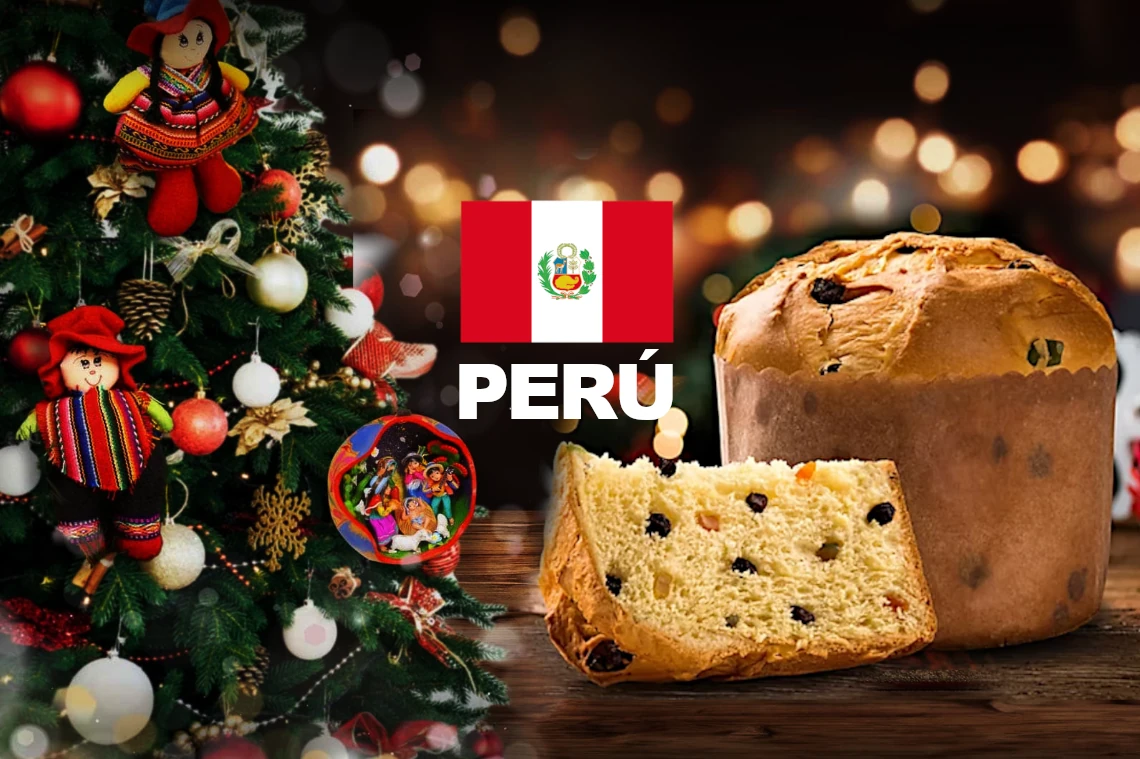
There is a moment that repeats itself in Peruvian homes every 24 December, when the clock has already passed midnight and the meal starts to settle. Someone brings out the box. Nobody needs to say anything: everyone knows what is inside and everyone knows that Christmas really begins when that box is opened.
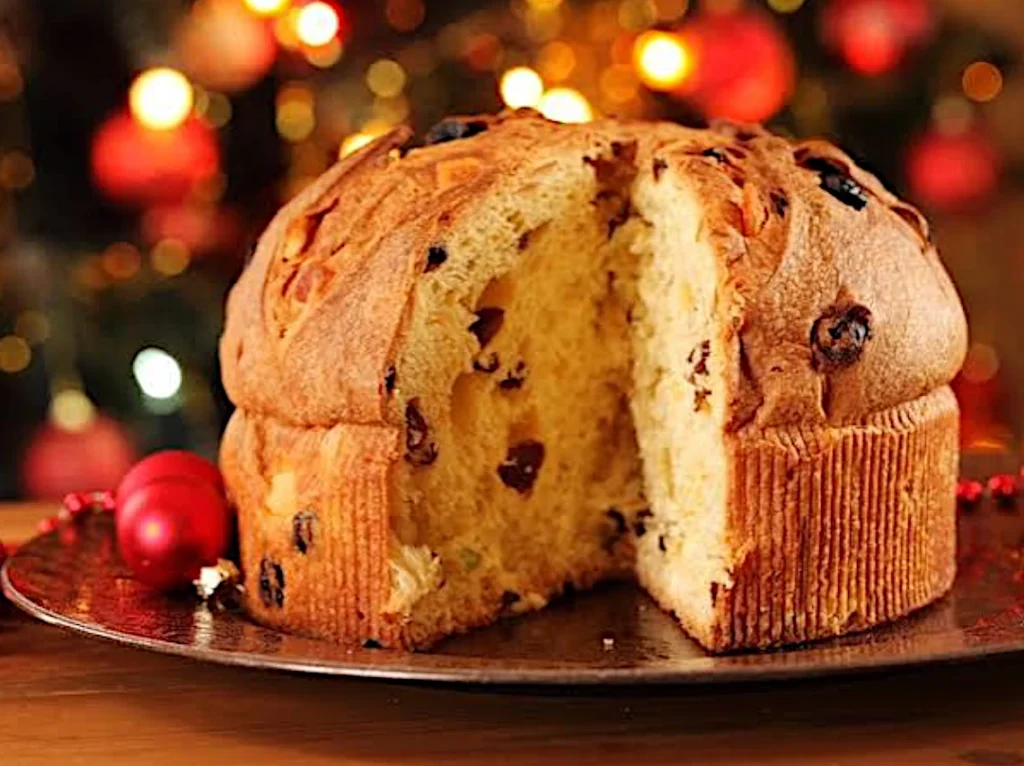
Inside there is a sweet bread, tall, with a yellow and spongy crumb, with candied fruit that looks like small stained-glass windows. It is cut into thick slices, served with thick hot chocolate and eaten with your hands. In Peru it is called panetón, and for millions of people it is more than a dessert: it is the object that marks the date.
The curious thing is that this bread was not born in the Andes. It was born in Milan.
A sweet bread from northern Italy
Panettone is an Italian sweet bread originally from Milan, traditionally served during the Christmas period. Its shape is unmistakable: cylindrical, with a domed top, because the dough rises upwards in a tall mould and is hung upside down after baking so that it does not collapse.
Its history goes back to the artisan tradition of Milanese bakeries, which already in the eighteenth century had it as a typical Christmas sweet and a festive family dessert. The key was always the same: a dough that is worked for a long time and a slow fermentation, the kind you cannot speed up without ruining it.
In other words: the Peruvian panetón is, in origin, an Italian bread. And that is where the story almost nobody tells begins.
How it crossed the Atlantic
The short answer is Italian migration to Peru. And it has a name of its own: Pietro D’Onofrio, an Italian born in Sessa Aurunca, in Campania, who arrived in Lima and signed his name in Peru as Pedro. His company, founded in 1897, started with ice cream and grew into one of the most recognisable brands in the country.
In 1908 he bought a factory, which allowed him to industrialise production, and in 1924 he set up the first chocolate factory with industrial equipment brought from Europe, on jirón Cotabambas in Lima, next to the ice and ice-cream plant. Over the years the company —which passed to his children and today is part of Nestlé— added another product to its range of ice cream and chocolate: the panetón.
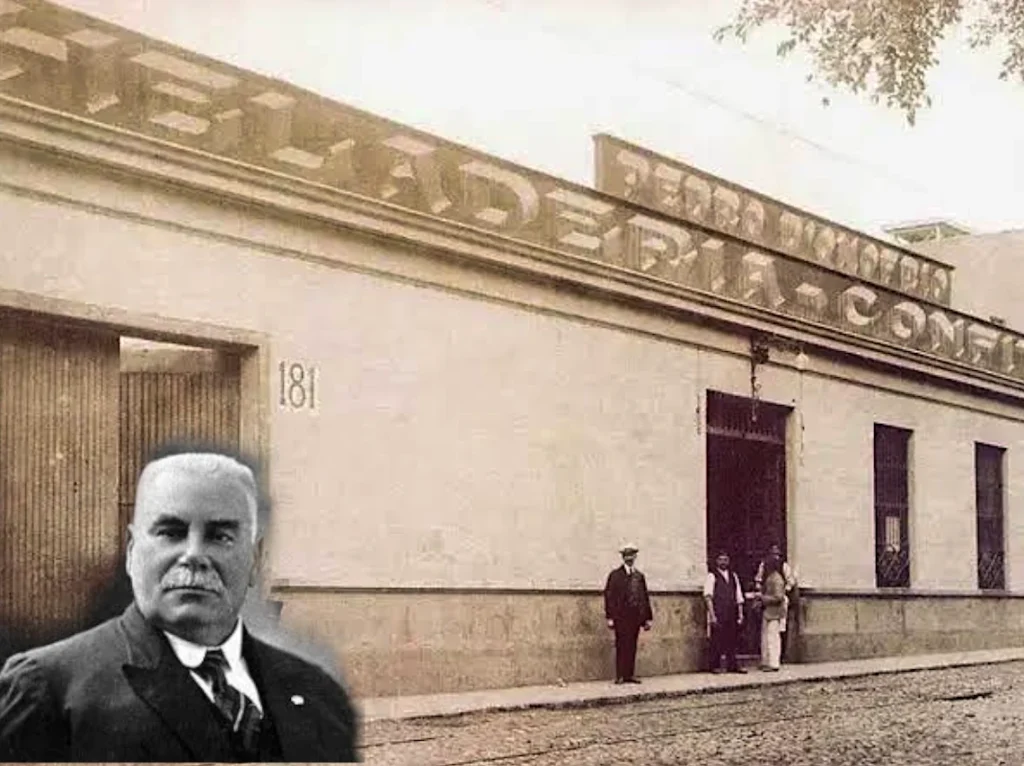
And there is the detail that changed everything. When the Milanese sweet bread was made on an industrial scale, in round cardboard boxes, with a distribution that reached the whole country, it stopped being the whim of a bakery and became a seasonal product any family could afford.
Panetón did not become Peruvian through the recipe: it became Peruvian because it learned to reach every table.
Why Peruvian panetón does not taste like panettone
Honesty is due here: they are relatives, not twins. Italian panettone tends to have a lighter crumb and a more citrusy aroma, with a firm crust and large pieces of fruit. Peruvian panetón is usually sweeter, denser and more generous with candied fruit and raisins, with an intense yellow colour that comes from the yolk and the butter.
The packaging changes too. Panetón is sold in a cardboard box —round or square— and usually carries the maker’s name and a Christmas drawing on the lid. That box is part of the product: in many homes it is kept, reused, and becomes the container where the Christmas decorations are stored afterwards.
And the moment changes as well. In Italy panettone accompanies the after-dinner conversation with sweet or sparkling wine. In Peru it is served with hot chocolate, and that pairing is no accident: it is the combination that fixes childhood memory in place.
The ritual: midnight, chocolate and a box being opened
In Peru the big Christmas meal is the one on the 24th, Nochebuena, and it is served late. When the clock strikes twelve come the embraces, the good wishes and, in many families, the toast. Then it is the turn of the sweet.
The hot chocolate is made thick, almost a cream, often with a bar of drinking chocolate and a touch of cinnamon or clove. The panetón is cut into thick slices, without much care, and everyone serves themselves by their own custom: some spread butter on it, some dip the whole piece in the chocolate, and some pick out the candied fruit and leave it on the plate.
The scene matters because it repeats. A food becomes a tradition when it always appears at the same moment of the year, with the same people and in the same order. Panetón is not the most elaborate dish in Peruvian cooking, but it is the one that has been on that table most often.
If you want to put together a Christmas table with more Peruvian presence, turkey is the other key piece: here you have the Peruvian Christmas turkey and its side dishes.
What a Peruvian looks for once living abroad
Anyone living in the Netherlands knows it: in December panettone is in every supermarket, on a shelf next to kerststol and pandoro. And even though the product is a metre away, it is not the same.
That is why, when a Peruvian family finds panetón in Europe, it does not buy a sweet: it buys a scene. It buys the night of the 24th at home, the voice of a mother calling everyone to the table, the sound of the cups. And that is why panetón is one of the most searched products in Latin American shops on the continent as December approaches.
That is a phenomenon that goes beyond panetón and explains how Peruvian cooking works outside the country. We tell it in the Peruvian ingredients worth always keeping at hand: there are products that are not ingredients, they are anchors.
How to recognise a good panetón
Without going into brands, there are three signs that separate a well-made panetón from an industrial one. The first is the crumb: it should give when pressed and spring back, not fall apart or stay compressed. If it is dry or breaks into pieces, the dough did not ferment long enough.
The second is the aroma. A freshly opened panetón smells of butter, orange peel and yeast. If all you perceive is sugar, the sweetness is covering the dough.
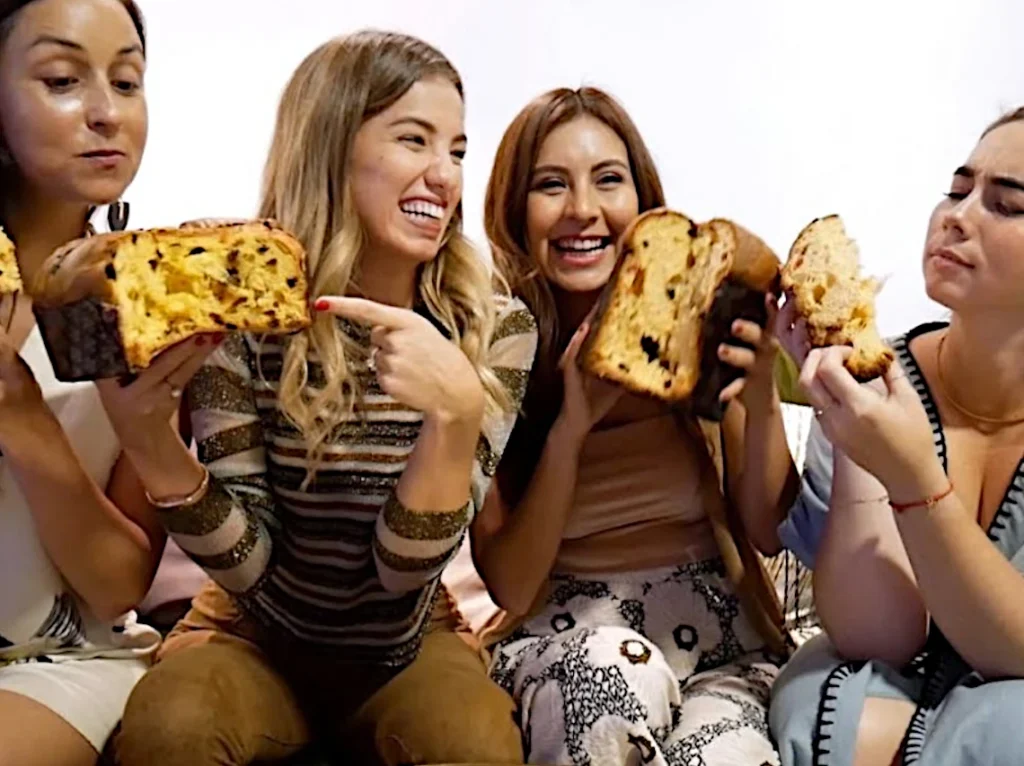
The third is the fruit. The candied fruit should be evenly spread and moist, not dry and clustered at the bottom. And the cut, in the Italian tradition, is made in a cross from the top before serving: a borrowed custom that stayed, and that also lets you see how the crumb is before handing it round.
How to serve it, how to store it
Panetón is served at room temperature. It is not warmed beforehand: the oven dries it out and takes away the soft texture you are after. What does get warmed is the chocolate.
To store it, the cardboard box is not decoration: it has a function. Panetón absorbs smells easily, so leaving it out near cured meat or spices spoils it within hours. Closed in its box in a cool, dry place it keeps for several days; sliced, inside an airtight bag, it stays soft for two or three days more.
And if there is some left over —because a one-kilo panetón is a lot of panetón— there is life after. Toasted with butter it is a breakfast, and soaked in the next day’s chocolate it works as a dessert. In that detail, Peruvian households are rather like Italian ones: nobody throws away a panetón.
From Milan to Lima and from Lima to Europe
The story of panetón is that of a product that travelled twice. First it crossed the Atlantic with Italian migration, settled in Lima, learned to be made on an industrial scale and earned a fixed place at the table on the 24th. Then it crossed the Atlantic in the opposite direction, inside the suitcases and parcels of those who went to live far away.
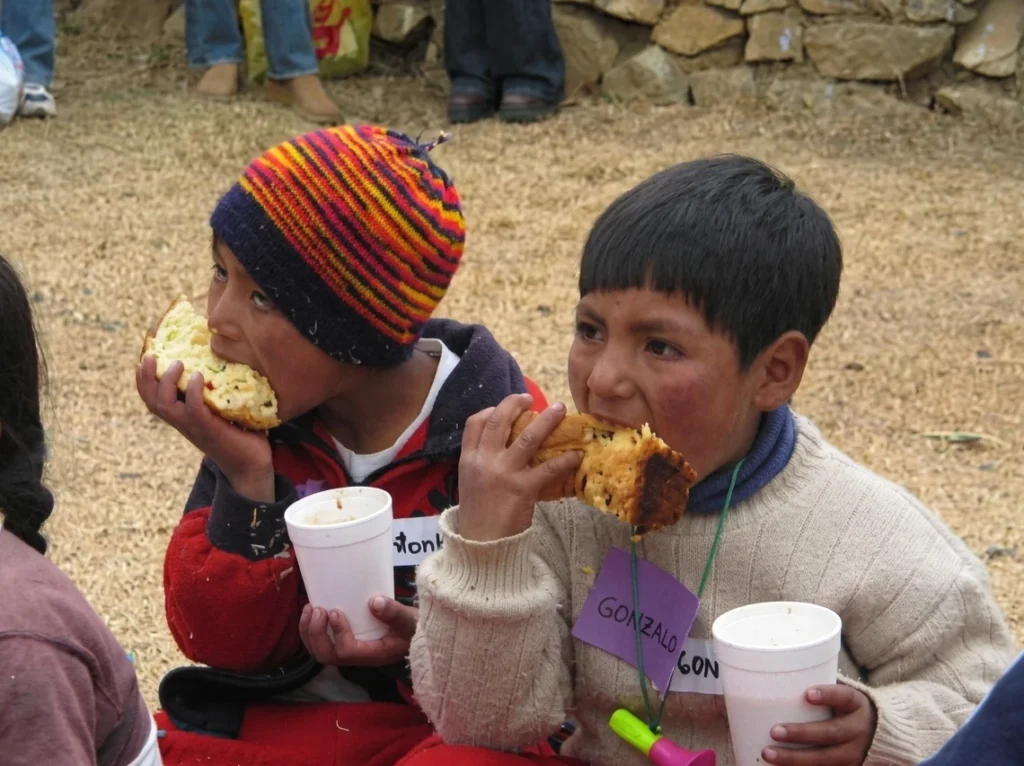
It is quite possible that panetón is, of all Peruvian baking, the one that looks least like Peru in its origin and most like Peru in its use. Because the taste can be argued about, the recipe can be copied and the brand can be changed. What cannot be copied is the scene: the box that appears after midnight, the chocolate served thick and someone saying, with a full mouth, that it is Christmas now.
If this December you want to set the whole table, do not miss the Peruvian dishes you should try at least once. And if you fancy cooking, ají is the next step: start with the guide to types of ají and their heat.
At Peruanos.nl we tell stories like this every week: food, culture and the lives of those building a bridge between Peru and the Netherlands. If you liked it, share it with someone who has also opened one of those boxes far from home, leave a comment with your Christmas memory and subscribe so you do not miss the next one. If you own a shop or a business and want to reach this community, write to us: there are ways to be present without noise.