This post is also available in:
 Español
  Nederlands
There is a scene that repeats itself in almost every Peruvian kitchen, here in the Netherlands and anywhere in the world. Someone opens the fridge, takes out a jar of ají amarillo paste and, with a single spoonful, turns a grey dish into a dish with memory. That tiny gesture, that sauce that suddenly changes colour and releases a sweet aroma, explains why ají is not a spicy garnish: it is the backbone that holds up the flavour of Peruvian cuisine.
Ají is not a single ingredient but an entire family of varieties with distinct profiles. Understanding those differences is the difference between adding heat and cooking: the first gives you warmth, the second gives you a dish that says where it comes from.
Ají is not there to make the dish hot: it is there to make the dish say where it comes from.
The ají family: much more than heat
Botanically, almost all Peruvian ajíes belong to the genus Capsicum. What sets them apart is not only how hot they are, but how they smell, how they taste and how they react to heat or acid. Two ajíes can share the same level of heat and still produce completely different dishes.
Heat is measured in Scoville Heat Units (SHU). Figures like 30,000 or 100,000 SHU are a useful reference, not an exact fact: the intensity of the same variety changes with the soil, the climate, the ripening and even the stress of the plant. Use them as a compass, never as a clinical thermometer.
In the Netherlands something particularly fortunate happens. Although fresh seasonal ají is not easy to find, ají paste is widely available and keeps colour and aroma remarkably well. It is the most practical gateway for anyone who wants to cook Peruvian food for real in Europe without depending on fresh imports.
The three ajíes that hold up Peruvian cuisine
If you had to choose only three ajíes to reproduce the entire Peruvian repertoire, these would be them. They are the base of the sauces, the marinades and the stews served today in Peruvian restaurants across Europe, and their story links to that of ají as the heart of the country’s flavour.
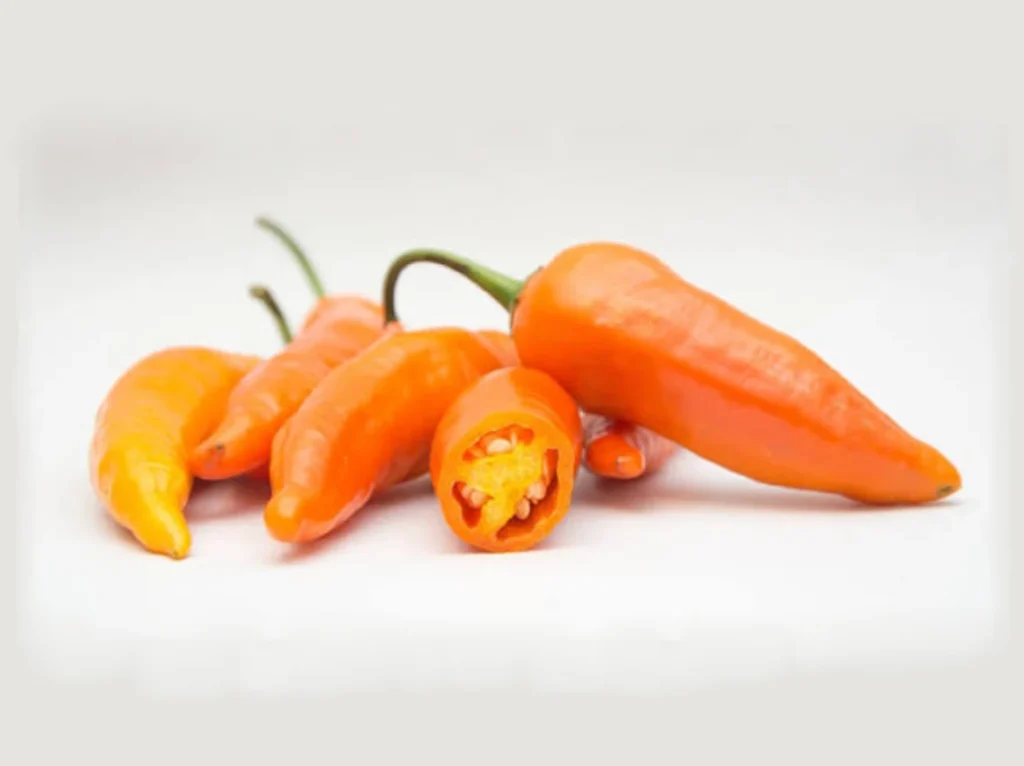
1. Ají amarillo: the fruity king of creamy sauces
- Appearance: long, cone-shaped, intensely yellow when ripe. Also sold dried, whole or as paste.
- Heat and flavour: medium heat (30,000–50,000 SHU), but its real value is a markedly fruity, slightly sweet profile with an unmistakable aroma.
- Culinary use: the essential ingredient of creamy yellow sauces. It gives character to papa a la huancaína, ocopa and ají de gallina. Without ají amarillo, those dishes lose their identity.
It is by far the ají you find most often in the Netherlands, especially as ready-to-use paste that keeps colour and aroma without fresh ají.
2. Ají panca: the smoky red of the anticuchos
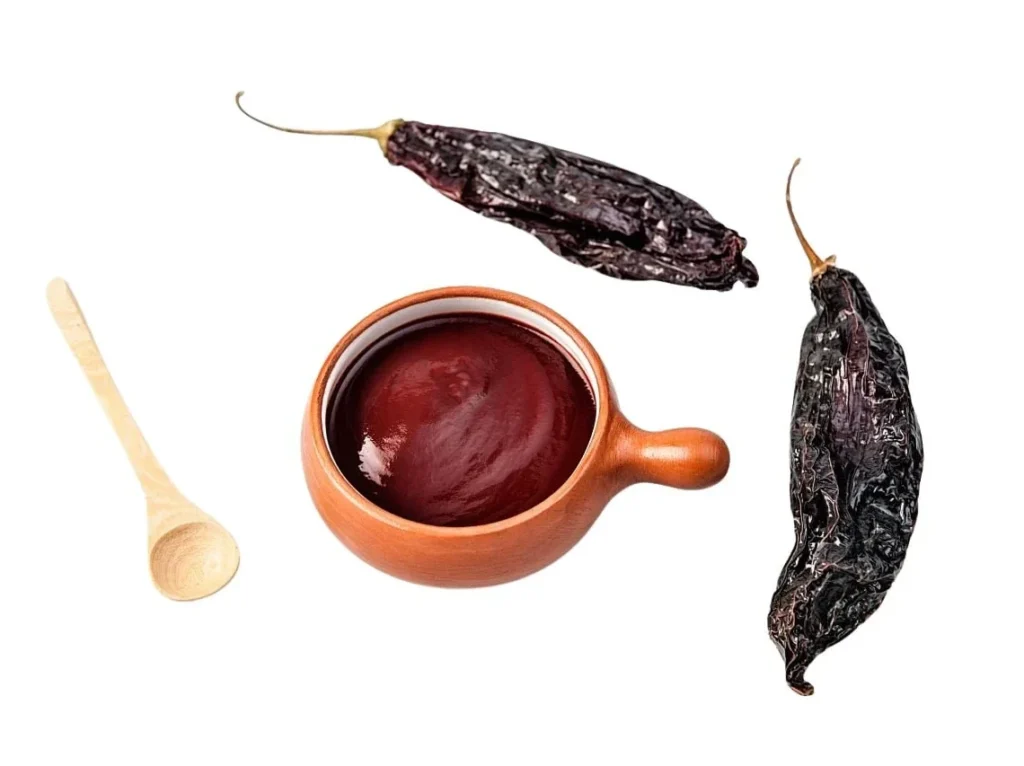
- Appearance: similar to amarillo but dark wine-red, almost brown. Almost always sold dried or as paste.
- Heat and flavour: the mildest variety (1,000–5,000 SHU). Its value lies in an intensely smoky, earthy flavour with sweet notes, not in the heat.
- Culinary use: the ají of marinades and adobos. It defines the flavour of anticuchos and Peruvian pollo a la brasa, and adds a deep red colour to stews and braises.
3. Ají limo: the citrus one that lives raw
- Appearance: small and variable in shape; can be red, yellow, orange or green. Remarkably aromatic.
- Heat and flavour: medium-high heat (40,000–60,000 SHU) with very powerful citrus and fruit notes.
- Culinary use: used raw and finely chopped in ceviche, tiradito and leche de tigre, where its aroma is activated by the citric acid without losing intensity when cooked.

Other ajíes that deserve a place in your kitchen
Peruvian diversity goes far beyond the three pillars, into territories of greater intensity and unique flavours worth knowing.
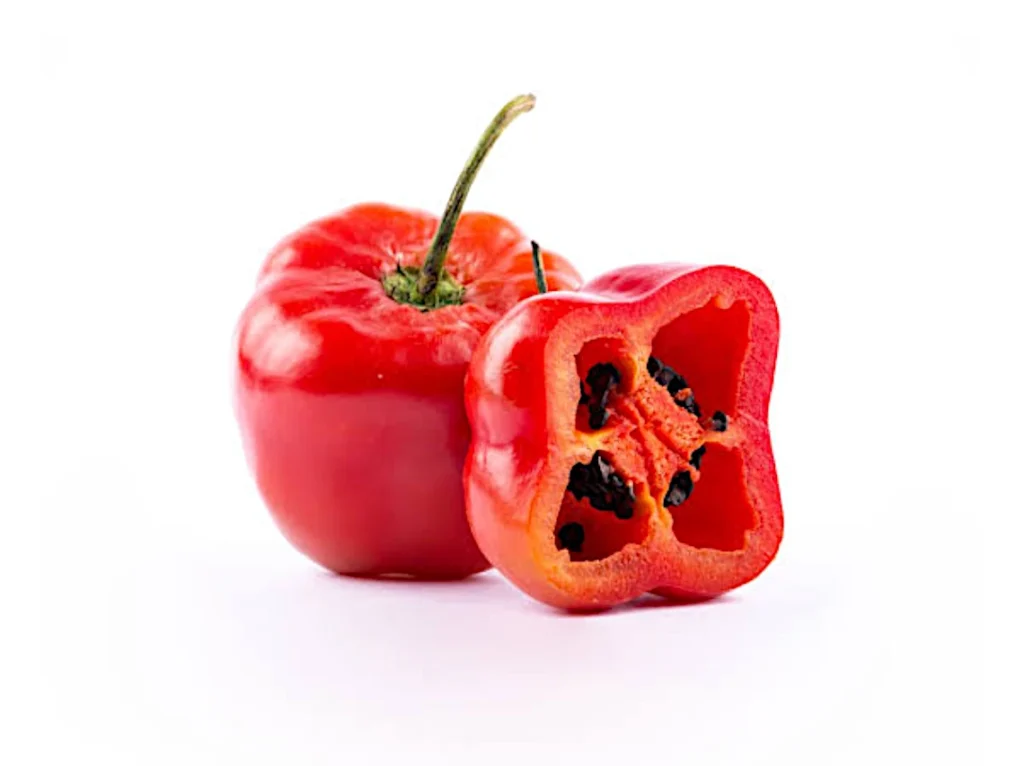
4. Rocoto: the false pepper with black seeds
- Appearance: round like a bell pepper, but with black seeds and purple flowers that reveal it as a different species (Capsicum pubescens).
- Heat and flavour: very hot (30,000–100,000 SHU, comparable to a habanero), with thick flesh and a fruity, fresh flavour.
- Culinary use: the star of rocoto relleno from Arequipa, where it is deveined to reduce the heat, stuffed with minced meat and baked au gratin with cheese.
It is also the ají that adapts best to a cold climate, which explains its presence in European markets and in amateur gardens.
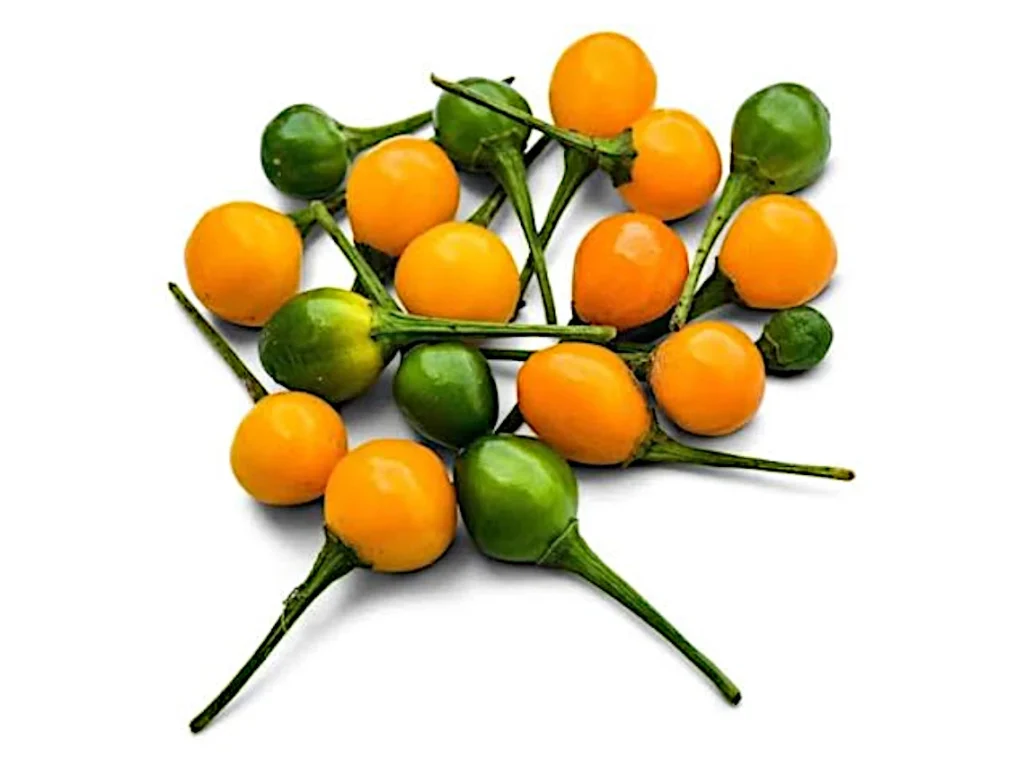
5. Ají charapita: the tiny bomb of the Amazon
- Appearance: very small and round, the size of a pea, intensely yellow.
- Heat and flavour: around 30,000–50,000 SHU, with a lively but short heat followed by a remarkable citrus freshness.
- Culinary use: traditional to the Peruvian Amazon, used above all in raw, pungent sauces for the region’s meat and fish. Highly prized for its low yield.
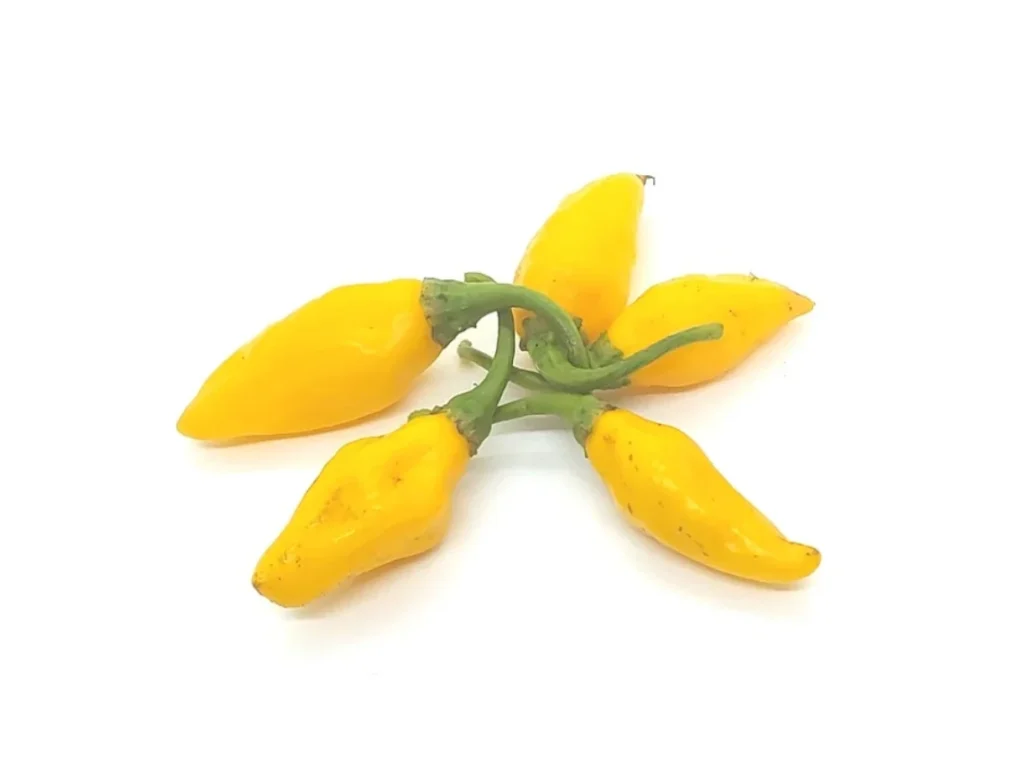
6. Ají mochero: the northern soul of shambar
- Appearance: medium-sized and intensely red when ripe; originally from the La Libertad region, in northern Peru.
- Heat and flavour: moderate, balanced heat with an earthy, slightly sweet flavour and a characteristic aroma.
- Culinary use: the indispensable ají of the authentic Trujillo shambar, a hearty wheat and legume soup. It also appears in sauces for northern anticuchos.
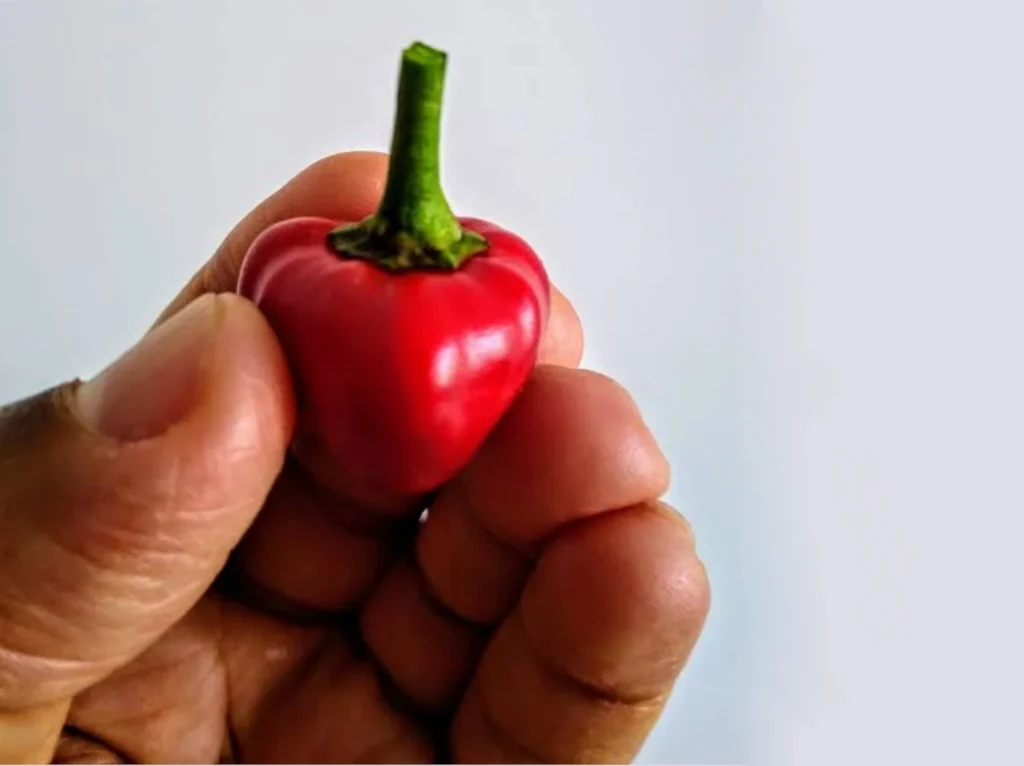
7. Ají cerezo: sweet, round and friendly
- Appearance: small, round and bright red, like a cherry, which is where the name comes from.
- Heat and flavour: low heat, with a sweet, fruity flavour and a very particular aroma.
- Culinary use: thanks to its mildness it is ideal for stuffing with cheese or seafood as an appetiser, and for pickles that add colour without dominating the dish.
8. Ají mirasol: the yellow one that dries in the sun
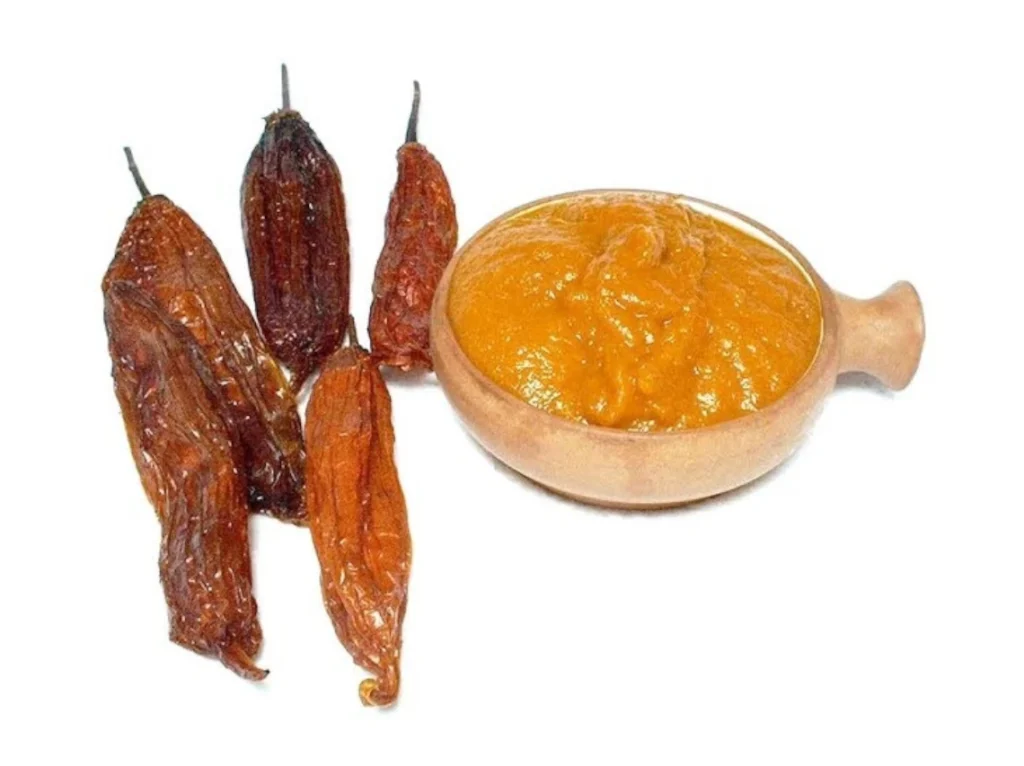
- Appearance: the same ají amarillo dried in the sun, with a reddish-orange, wrinkled colour.
- Heat and flavour: medium heat, with a more concentrated, sweeter and slightly smoky flavour than the fresh one.
- Culinary use: soaked and blended for sauces, dressings and stews; it is the base of many ají amarillo pastes sold in Europe.
How to choose: fresh, dried or paste
Each format serves a different intention. Choosing the right format is almost as important as choosing the variety.
- Fresh: the best aroma and texture, but in the Netherlands it depends on the season and on specialist shops or importers.
- Dried (panca, mirasol): concentrates the flavour and keeps for months in the pantry. Rehydrate in hot water before blending.
- As paste: the most practical option in Europe. Keeps colour and aroma, and saves the soaking. Check that it has no colourings or excess preservatives.
If you are looking for fresh ají out of season, ají amarillo base paste is the most faithful substitute: it keeps the colour and the sweet profile that define the classic dishes.
How to tame (or raise) the heat
Heat is not a fixed value: you can adjust it at home with simple gestures. These are the levers that really work.
- To lower it: remove the white veins and seeds, where the capsaicin is concentrated. In the rocoto, deveining completely changes the experience.
- To balance it: sweetness (fruit, sugar, sweet potato) and fat (cheese, cream, oil) round off the heat without putting it out.
- To raise it: add the ají at the end or raw; prolonged cooking softens the blow.
- Classic mistake: drinking water does not help; capsaicin is not soluble in water. Milk, yoghurt or bread with fat calm it much better.
A heat map to hang in the kitchen
This table sums up the essentials so you can choose without doubting the next time you cook Peruvian food at home.
| Variety | Heat (SHU) | Level | Flavour | Star use |
|---|---|---|---|---|
| Ají amarillo | 30,000–50,000 | Medium | Fruity and sweet | Huancaína, ají de gallina |
| Ají panca | 1,000–5,000 | Very mild | Smoky and earthy | Anticuchos, pollo a la brasa |
| Ají limo | 40,000–60,000 | Medium-high | Citrus and fruity | Ceviche, tiradito |
| Rocoto | 30,000–100,000 | High | Fruity and fleshy | Rocoto relleno |
| Ají charapita | 30,000–50,000 | High and short | Citrus and fresh | Amazonian sauces |
| Ají mochero | Medium | Moderate | Earthy and sweet | Trujillo shambar |
| Ají cerezo | Mild | Low | Sweet and fruity | Appetisers and pickles |
This article is part of a series on Peruvian ingredients. If you want to take it into the kitchen, learn to make your own easy Peruvian ají pastes and solve the dilemma of ají panca or ají amarillo for each dish.
Close the circle: Peruvian cooking at home
Understanding Peruvian ají changes the way you cook. It stops being a seasoning that is hot and becomes an ingredient with history, with character and with rules of its own. The next time a Peruvian dish reaches your table, try to identify which ají holds it up: you will discover a layer of intention that once escaped you.
Learning to cook with ajíes is also a way of keeping a tradition alive. Every sauce you make in your Dutch kitchen is a small bridge between the Andes and your table. We would love to hear which variety surprised you most and how you use it.
If you found this tour useful, share it with someone who likes to cook and tell us in the comments which is your favourite ají. Do you have a recipe or a question about how to use it? Write to us: every contribution enriches this community that celebrates Peruvian cuisine far from home.