This post is also available in:
 Español
  Nederlands
From Apurímac to Utrecht – The story of an Andean cultural ambassador
There are children who grow up among mountains and learn to listen to the silence of the earth before anything else. Alma Inkari was one of them. He grew up in Totora, Apurímac, in a community where Quechua wasn’t taught — it was breathed. Where Pachamama wasn’t a concept learned from a book, but a living presence to live with every day. Where respect for elders, solidarity among all, and harmony with nature were not imposed rules, but natural ways of being in the world. There, Alma was happy, unaware that this connection to the essential would, years later, be the only thing that kept him whole amidst the noise of the world.
“Being born in that community was a blessing,” he recalls. “I grew up happy, surrounded by Andean nature, feeling part of the Pachamama.”
These words don’t sound like empty nostalgia. They sound like the truth of someone who has lived long enough to know what really matters.
The first alpaca wool ball
Alma was 7 or 8 years old when one day the entire village came to a standstill for a football match: the local team against the team from another village. Only eleven selected boys could play. The rest watched from the sidelines, arms crossed, eyes full of longing.
Alma wanted to be part of that excitement. And seeing how the other hundred and fifty children in the village also wanted to play, something sparked in his mind. He remembered that his older brother had an old leather ball, burst and without a bladder. He ran home, stuffed it with alpaca wool, sewed it up with maguey thread, and returned to the village square shouting: “Who wants to play?”
Forty against forty. A ball that didn’t bounce, but rolled. And all the children who had only watched before, ran, laughed, and were happy.
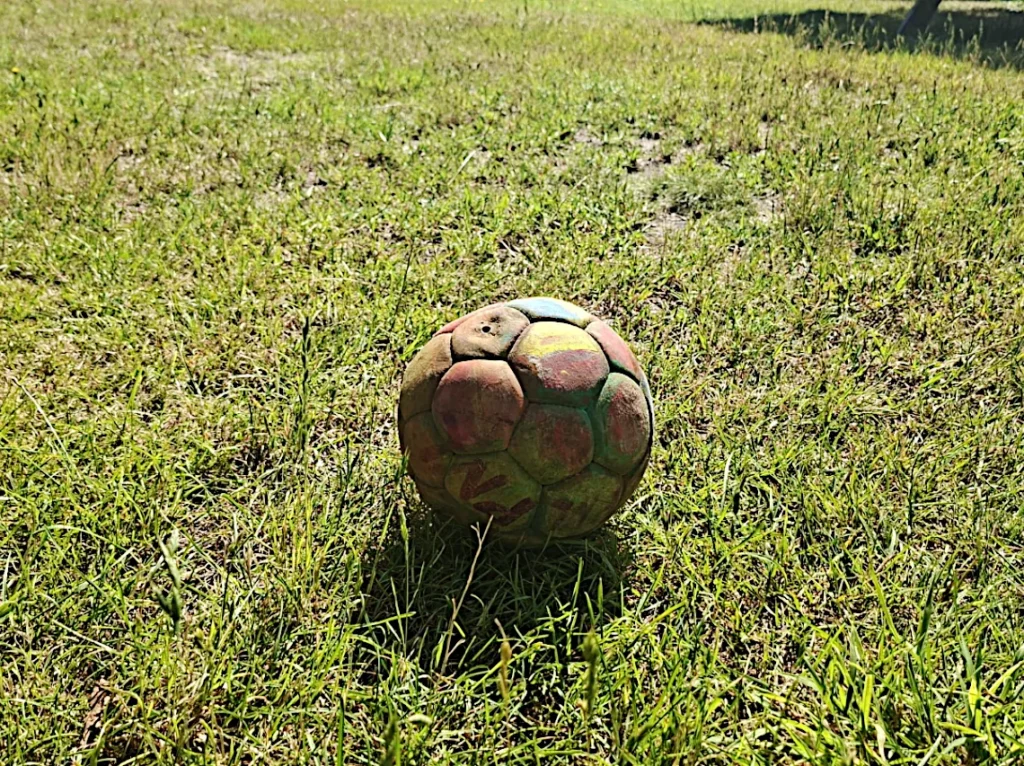
That scene — a boy improvising a ball with whatever he had so that no one would be left out — is, perhaps, the best picture of what Alma Inkari would always carry with him: the certainty that, with creativity and determination, there is always a way to include others.
The long journey that began without understanding
One day Alma was tending his llamas in the highlands near his community, together with his family and other children. The sun beat down on the slopes and the wind whistled between the rocks as the herd moved slowly. It was as if time didn’t exist there. It was his world: the mountains, the animals, the silence broken only by footsteps on the earth. He needed nothing else.
In the distance, Alma saw his aunt approaching. When she arrived, he received the news: his older brother had sent him a ticket from Lima. He had to go study in the capital. There was no room for discussion. In Andean culture, the word of elders is not negotiable. Alma listened to his aunt, remained silent, bowed his head, and obeyed.
At 14 years old, Alma didn’t fully understand what it meant. He only knew that his brother was calling him and that one does not disobey an older brother. There was no anger, nor joy. There was, rather, a strange mix of sadness at leaving the village and excitement at seeing him again. Years had passed since the last time.
The farewell was simple, as everything was in the community. Uncles, cousins, neighbors who had been family all their lives gathered to say goodbye. The llamas stayed behind grazing, oblivious to everything. The wind kept blowing. The Andes remained there, eternal. Alma left without looking back. But he felt the weight of the village on his shoulders throughout the entire journey.
He arrived in San Juan de Miraflores, at an aunt’s house. Alma recalls with a laugh that upon arriving in Lima he greeted everyone on the street — the neighbor, the baker, every passerby who crossed his path — as is customary in the Andes, where no one is a stranger. He soon understood, with the same smile with which he tells it today, that in the big city, that’s not done. People looked at him as if he had landed from another planet. And in a way, he had.
He then moved to Villa El Salvador, to his brother’s house, and studied at Federico Villarreal public school. There he felt for the first time the weight of discrimination. It was a strange feeling for someone who came from a community where mutual respect was as natural as breathing, and where a greeting had never been cause for suspicion.
But he didn’t let himself be defeated. He applied himself to his studies, began reading voraciously, and broadened his knowledge. “I learned more from books than from school itself,” he confesses. And although he doesn’t say it, you can tell that pride in his own effort remains intact.
Quechua as a passport: an accident that changed his name and his destiny
At 18 he travelled to Ecuador. In Quito he heard a group of Ecuadorians speaking Quechua and approached them without hesitation. He asked them what community they were from. They, in turn, asked him where he was from. “Peru,” Alma replied. That’s when one of them looked at him with a teasing smile and said: “Sonso [foolish], why are you pretending to be a foreigner?” Alma explained that he was truly Peruvian, that he wasn’t lying. They became friends. And that moment opened his eyes: Quechua doesn’t understand borders. It is a language that crosses countries, unites communities, and exists beyond the maps drawn by colonizers.
And so, with Quechua as his passport, Alma began travelling across Latin America — Argentina, Chile, Colombia, Brazil — communicating in the ancestral language of the Incas. In 1989, while playing Andean music at a restaurant in Venezuela, a Peruvian diplomat approached him: they needed a music group for an event at the Miraflores Palace. That night, dressed in Inca attire, they sang in Quechua. Everyone danced. Everyone was filled with joy.
The Venezuelan authorities were marvelled by the music and Alma’s performance. Afterwards, the Peruvian ambassador in Venezuela handed him a letter and a mission: to represent Peru and its culture around the world. Thus began his world tour.
But there was something Alma had not yet resolved: his name. In Brazil he felt he needed to be himself and leave behind the imposed name that had nothing to do with his culture or his Inca heritage. He began calling himself Inkari, after the legend. Six months later, an accident nearly cost him his life. When he woke from the coma, he knew it clearly: his full name would be, from that moment on, Alma Inkari.
Some names are chosen. And some names choose you.
Arriving in the Netherlands: the cold, love, and a new life
Fulfilling the mission entrusted to him, Alma arrived one day in Curaçao. An island of Caribbean sea and salty wind, where he shared and showcased Peruvian culture with the same naturalness with which he had once herded llamas on the hills of Apurímac. The island’s Minister of Culture, upon hearing his plans for a European tour, asked him to contact the Dutch authorities. “It is necessary that you share the Andean vision and culture in the Netherlands,” he told him.
That is how Alma, without planning it, arrived in the Netherlands. A country that could not have been more different from his mountains: flat, with grey skies and canals that cut the land in straight lines. He met with Dutch dignitaries, carrying with him the echo of his quenas and the certainty that Andean culture had something to say in this corner of the world.
Alma still remembers the first time he saw the Netherlands from the aeroplane window. Everything was flat. Not just any plain, but an expanse so perfectly horizontal it seemed made with a ruler. He, who had grown up among mountains, hills, and ravines, couldn’t believe what he was seeing. “Where are the mountains?” he thought. And then, with that straightforward logic that only someone raised in the Andes has, he reached a conclusion that still makes him smile today: “The Dutch must have removed them all so that planes can land safely at Schiphol.”
The image is irresistible: an army of Dutch engineers, in their yellow helmets and clogs, dismantling the Andean Alps brick by brick to clear the runway for KLM. Of course, no one had moved any mountains. The Netherlands had always been like that: a country that looks like the sea ironed it flat. But for a child from Apurímac seeing the world from the heights, the only possible explanation was that here people left nothing to chance — not even geography.
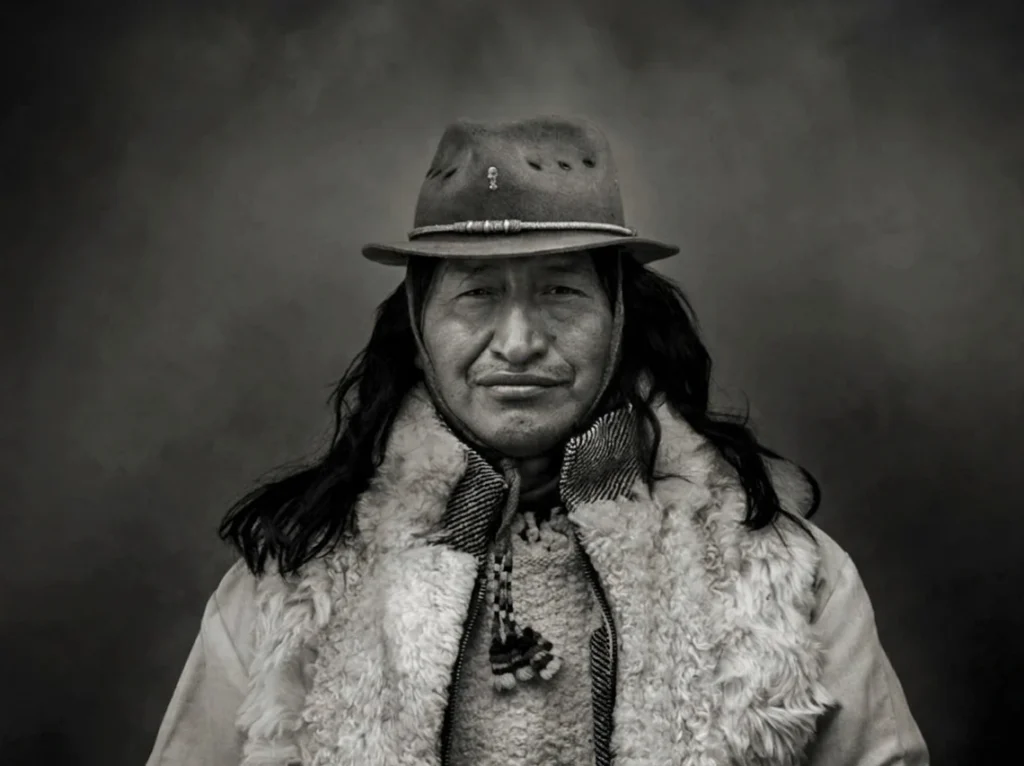
Around the same time, without looking for it, he met his wife. And after many years travelling across Europe, one day he decided to settle down. Here. In this land of windmills and tulips, of bicycles and fine rain.
For many, the Dutch climate and culture are a problem. An invisible wall they never manage to climb. For Alma Inkari, it wasn’t. But his ease in integrating doesn’t come from learning local customs faster than others. His secret is older, deeper: before connecting with a new society, he connects with the harmony of the land. With Pachamama. Wherever he goes, he seeks the pulse of the soil, the direction of the wind, the way light touches the trees. Because when you are at peace with the earth, any land can become home.
“Growing up in an Andean community based on respect and living in harmony really helps you integrate into any society,” he explains. It’s not a hollow phrase. This is someone who has experienced first-hand that the Andean worldview — that way of understanding the world where everything is connected — is a bridge, not a barrier.
The music and the philosophy that time proved right
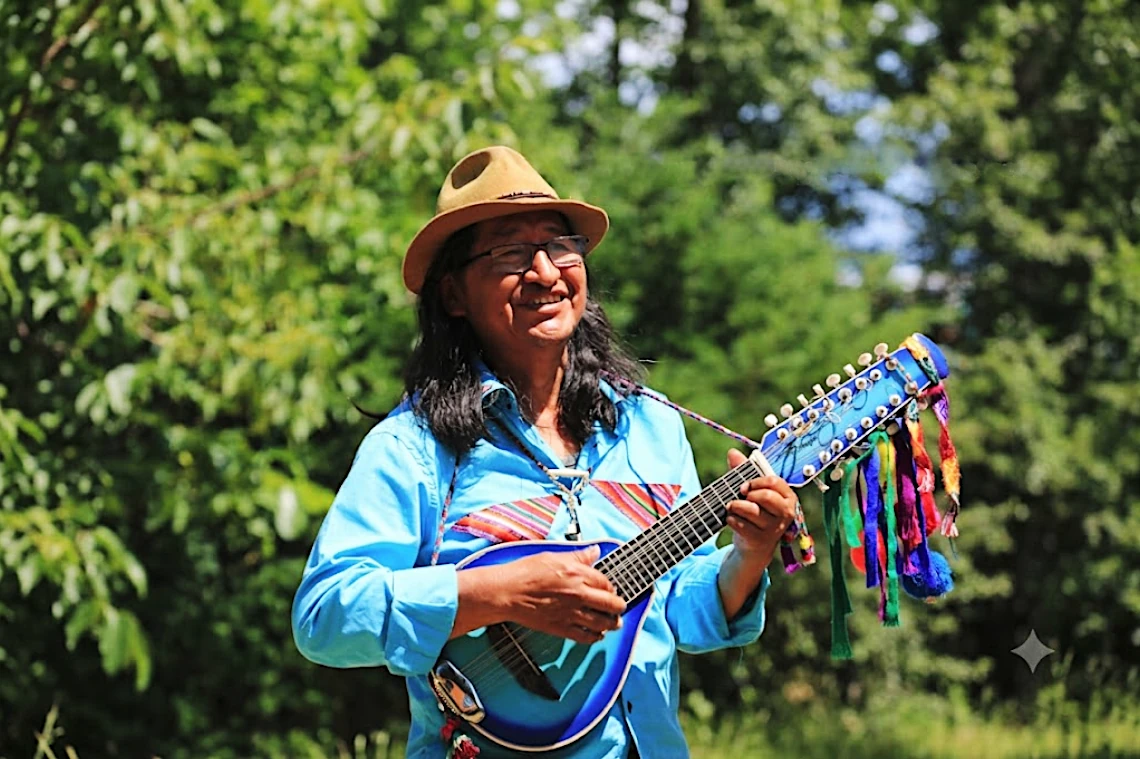
Music is not separate from the Andean worldview. For Alma Inkari it is neither an accident nor an ornament: it is a natural extension of the connection with the earth. “Music connects us with harmony and the land,” he explains. “It is a thank you to life and a respect for traditions.”
He likes to play the quena, the zampoñas. Instruments that don’t sound like virtuosity but like memory, like mountain wind, like something carried in the blood.
Here in the Netherlands he founded InkaPacha, an organisation that brings Latin American artists from the Inca world to this corner of northern Europe. But his mission goes beyond music: InkaPacha exists to share respect, to connect with nature, to create awareness, love, and harmony towards the earth.
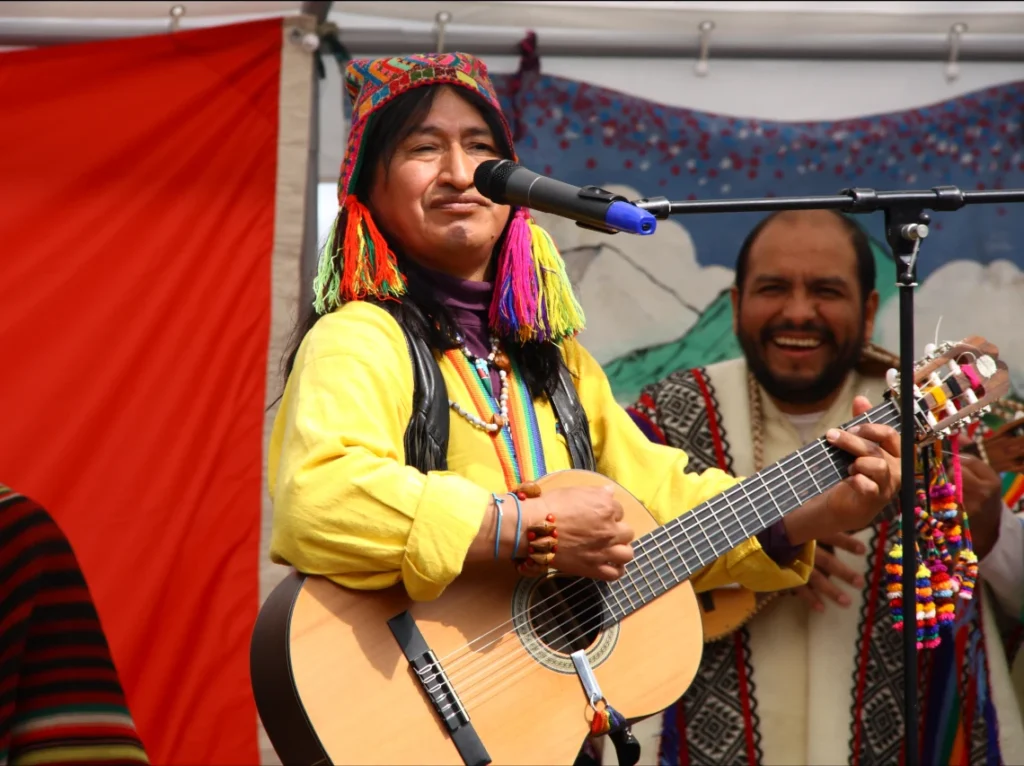
He recalls that in the early nineties he organised an Inti Raymi event and spoke about harmony and respect for the earth. At the time, many Dutch people told him these were backward ideas. “Now time has proved us right,” Alma remembers with a smile.
He has appeared on Dutch television programmes such as RTL and Jack Spijkerman, bringing Andean culture into Dutch homes. But for him, music is not a showcase. It is a way of connecting with harmony and the earth.
Today, through InkaPacha, he promotes plastic clean-up programmes in nature and supports schools in Andean communities. Pachamama is not an abstract idea. It is what must be cared for every day.
The heritage and the Inca code that never fades
Alma is the father of six children and is already a grandfather. All of his children have Quechua names. And his children, on their own initiative, also gave Quechua names to their own children.
“I don’t transmit the culture,” he says, “I practise it. Children are a blank page and they have to create their own stories. I learned in my community that freedom and respect are demonstrated and practised. Children learn from example.”
When asked about a teaching from his ancestors that still guides him, Alma recites the forgotten law of Tahuantinsuyo without hesitation: Ama Quella (Don’t be lazy), Ama llulla (Don’t lie), Ama sua (Don’t steal), Ama wañuninkichu (Don’t kill).
The order matters, he explains. “Only one who is not lazy will not lie. One who lies will steal. And only a thief will kill. If you follow the four Inca commandments, you will always rise like the sun — Inti rina punicunqi.”
His message for young Peruvians in the Netherlands who want to connect with their roots needs no embellishment: “Love the earth. Connect to it, you are a child of Pachamama. Respect others and your culture. Then things will go well for you.”
His plans for the next five years include developing ecotourism from the Netherlands to Peru and showcasing the sacred sites of the Andean world.
This July 26, Alma Inkari will be in Utrecht. It’s not just another stage in his long career: it’s the celebration of a new anniversary of Peru’s independence, and he will do it where he does it best — with music, with dance, with the energy of those who understand celebration as a form of encounter. The EMMA centre in Utrecht will open its doors from one in the afternoon until eleven at night, with Peruvian catering, a pool for the children, and free parking. Entry costs only five euros and children get in free. There’s no better plan for a July Sunday if what you’re looking for is to feel Peru far from home.