This post is also available in:
 Español
  Nederlands
The gold of the Incas that now feeds the world
Imagine a grain so small it fits in the palm of your hand, yet so powerful it sustained an entire empire. A food the Incas called “chisaya mama” — the mother of all grains — and that today is celebrated on tables around the world as a superfood.
That grain is quinoa. And its story begins high in the Peruvian Andes.
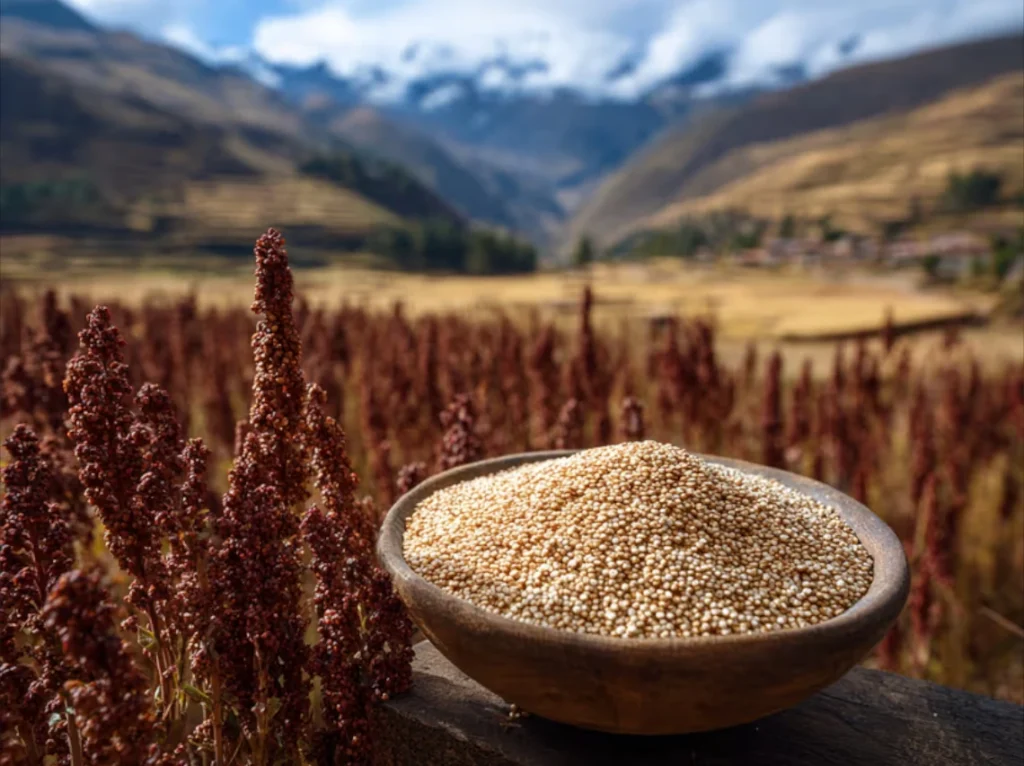
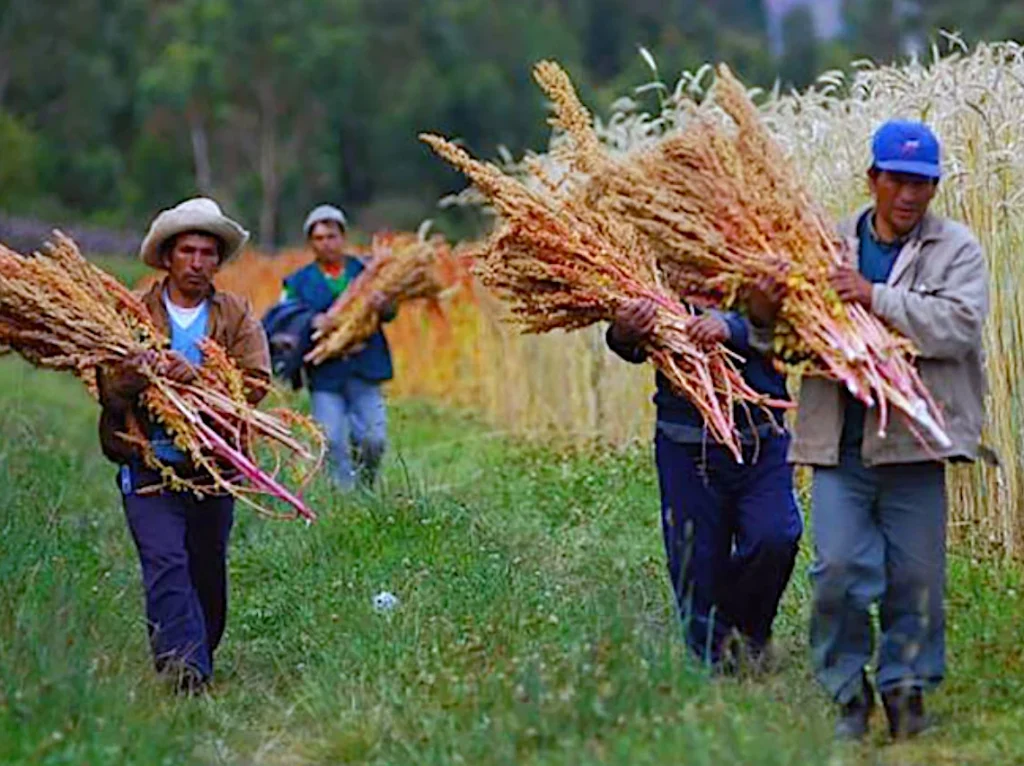
Long before NASA included it in astronauts’ diets and supermarkets in the Netherlands sold it as “quinoa” at gold prices, quinoa was already the heart of Andean nutrition. Cultivated on the shores of Lake Titicaca for over 5,000 years, this small wonder has survived empires, conquests, droughts, and passing trends to become a symbol of Peru’s resilience and ancestral wisdom.
“Quinoa is the only plant-based food containing all essential amino acids. It is not a simple grain: it is a gift from the Andean land to humanity.”
— Food and Agriculture Organization of the United Nations (FAO)
The secret of its resilience
The Andes are not an easy place to farm. At over 3,800 meters of altitude, the soil is poor, the cold is intense, and the wind whips mercilessly. But quinoa learned to thrive where other crops simply cannot. Its deep roots, its ability to withstand frost, and its adaptation to saline soils made it the perfect food for a civilization that grew in the heights.
The ancient Peruvians did not just cultivate it: they revered it. During planting ceremonies, the Inca offered the first quinoa grains to the sun god Inti, as thanks for the harvest. Priests used it in healing rituals, and warriors carried it as provisions on their long treks along the Qhapaq Ñan, the Inca Trail.
Each variety told a different story
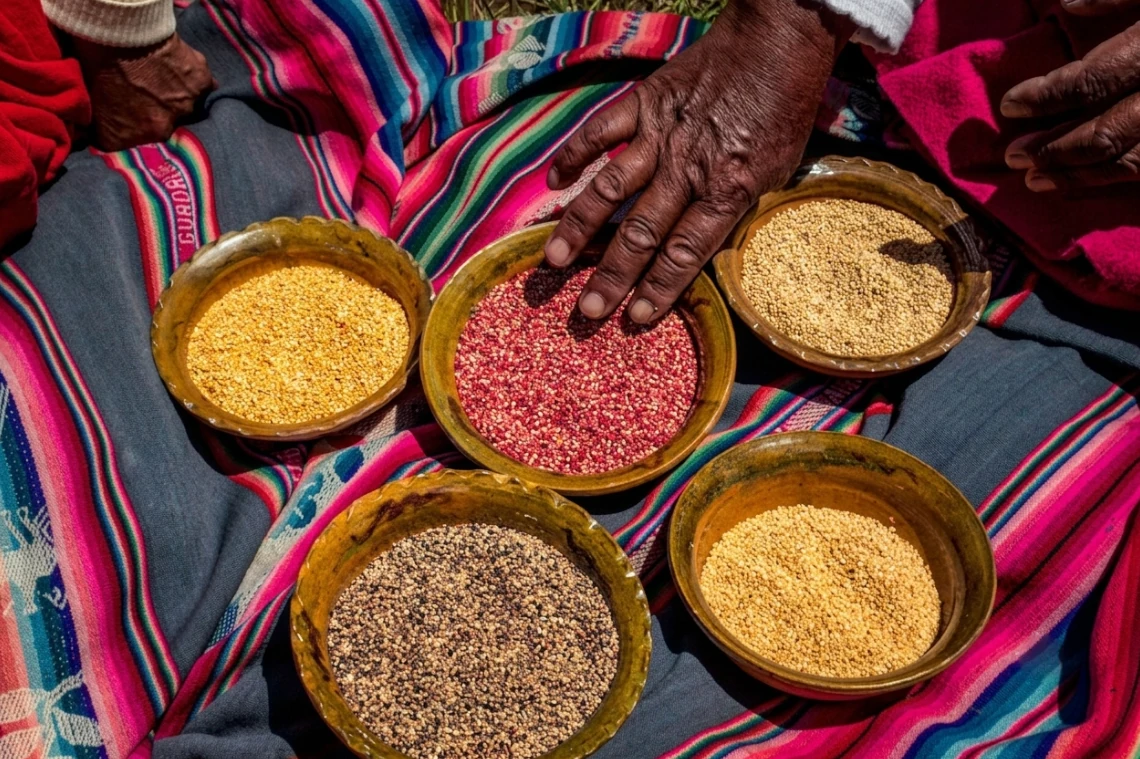
There was white quinoa, sweet and soft, ideal for children’s breakfast. Red quinoa, firmer and earthier, which the chasquis (messengers) carried in their bags for long journeys. Black quinoa, rarer and crunchier, reserved for special ceremonies. More than 3,000 different varieties grow in the Andes, each adapted to a different altitude, microclimate, and tradition.
“In the Andes, quinoa is not just food. It is identity. It is memory. It is the way a civilization said: here we are and here we stay.”
— Juan Carlos Mamani, traditional farmer from Puno
From the Andes to the supermarkets of Europe
Today, walking into a supermarket in the Netherlands and finding quinoa is as normal as buying rice or pasta. But it wasn’t always like this. Until about 20 years ago, quinoa was virtually unknown outside of South America.
It was the FAO who, in 2013, declared the International Year of Quinoa, recognizing its nutritional value and potential to combat world hunger. Since then, global demand has skyrocketed. And with it, the price.
For Peruvian communities in the Netherlands, quinoa has become a bridge between two worlds. A bowl of quinoa with milk and cinnamon tastes like childhood in the Andes. A stir-fry of quinoa with vegetables tastes like home in Europe. It is the food that connects generations, the one that Peruvian grandmothers prepare for their grandchildren born in the Netherlands.
But the quinoa boom also brought challenges. Rising prices meant many Andean communities stopped eating the food they grew, because they could sell it for a better price on the international market. Organizations like the Latin American Agroecological Movement work to ensure quinoa remains accessible for those who cultivate it, promoting fair trade and sustainable production.
How to incorporate quinoa into your Dutch kitchen
If you live in the Netherlands and want to try quinoa, you have plenty of options. You’ll find it at any supermarket or health food store. But the real magic lies in how you prepare it.
Try these quinoa dishes:
– Quinoa with milk, cinnamon, and panela: the traditional Andean breakfast that warms the soul
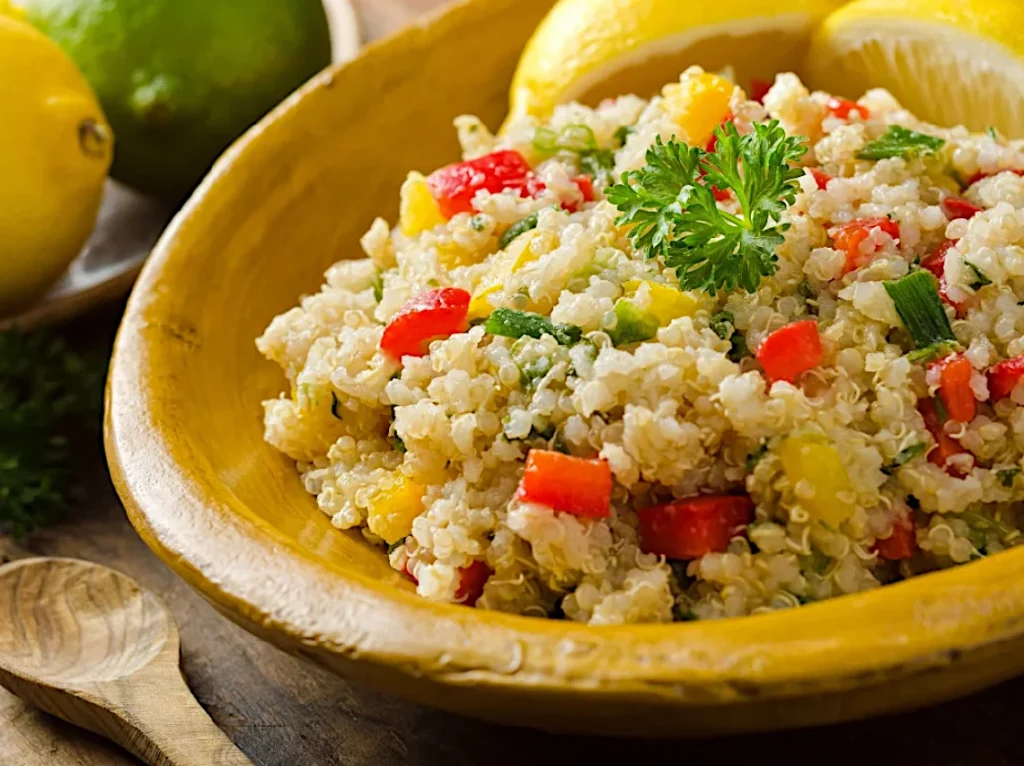
– Quinoa salad with avocado, tomato, and cilantro: fresh, light, and perfect for summer days in NL
– Stir-fried quinoa with vegetables and chicken: a unique, nutritious, and easy weekday meal
– Quinoa burgers with rocoto sauce: to surprise your friends with an authentic Peruvian flavor
– Quinoa chocolate pudding: because even dessert can be healthy
Quinoa cooks in about 15 minutes, just like rice, but with twice the protein and much more fiber. It is gluten-free, easy to digest, and goes with almost everything.
A legacy that keeps growing
Quinoa is not a passing fad. It is the living testimony of a civilization that knew how to read the land, respect its cycles, and feed its people for millennia. Every quinoa grain contains the memory of the Andes, the work of generations of farmers, and the hope of a future where food is fairer, more sustainable, and more connected to the earth.
The next time you prepare a quinoa dish, remember that you’re not just eating healthy: you’re eating history.
Do you like quinoa? Do you have a favorite recipe? Share it in the comments and help us keep this Andean tradition alive from the Netherlands. And if you want to discover more about Peruvian culture, its flavors, and its stories, subscribe to our newsletter.
We look forward to seeing you at peruanos.nl