This post is also available in:
 Español
  Nederlands
As more and more Europeans add maca, lúcuma or camu camu to their diet, a Peruvian scientist is working to bring the nutritional legacy of the Andes closer to the European market, backed by science.
Jeroen wakes up at 6:30 in the morning in Gouda, just like every day. While the house is still silent, he walks into the kitchen and repeats a ritual that only a few years ago would have seemed unthinkable to him. A spoonful of gelatinised maca. Another of lúcuma. A touch of camu camu. Warm water. He stirs the mixture and takes the first sip.
It was not always like this.
Before travelling to Peru, his breakfast looked like that of many Europeans: protein shakes, sports supplements and products with long lists of ingredients that are hard to pronounce. They did their job, but they did not spark much curiosity.
Everything changed in 2023.
During a trip through Peru he discovered foods that, until then, were completely unknown to him. He found the first ones at a market in Cusco. He tasted maca in the Andes, sampled desserts made with lúcuma, drank camu camu in the Amazon and found quinoa in traditional soups. More than new flavours, he discovered a different way of understanding food: products eaten for generations, closely tied to the land and to Peruvian culture.
When he returned to the Netherlands, he started looking for them to add them to his daily routine.
Jeroen is not an exception. More and more Europeans return from Peru with the same curiosity. What for centuries was part of the diet of the Andean peoples —maca, lúcuma, camu camu, sacha inchi or native cacao— is beginning to make its way into kitchens and breakfast tables across Europe.
Behind that change are people working to bring these foods to the European market with scientific knowledge and respect for their origin. One of them is Leyla Alpaca Carnero.
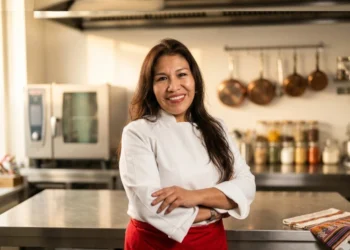
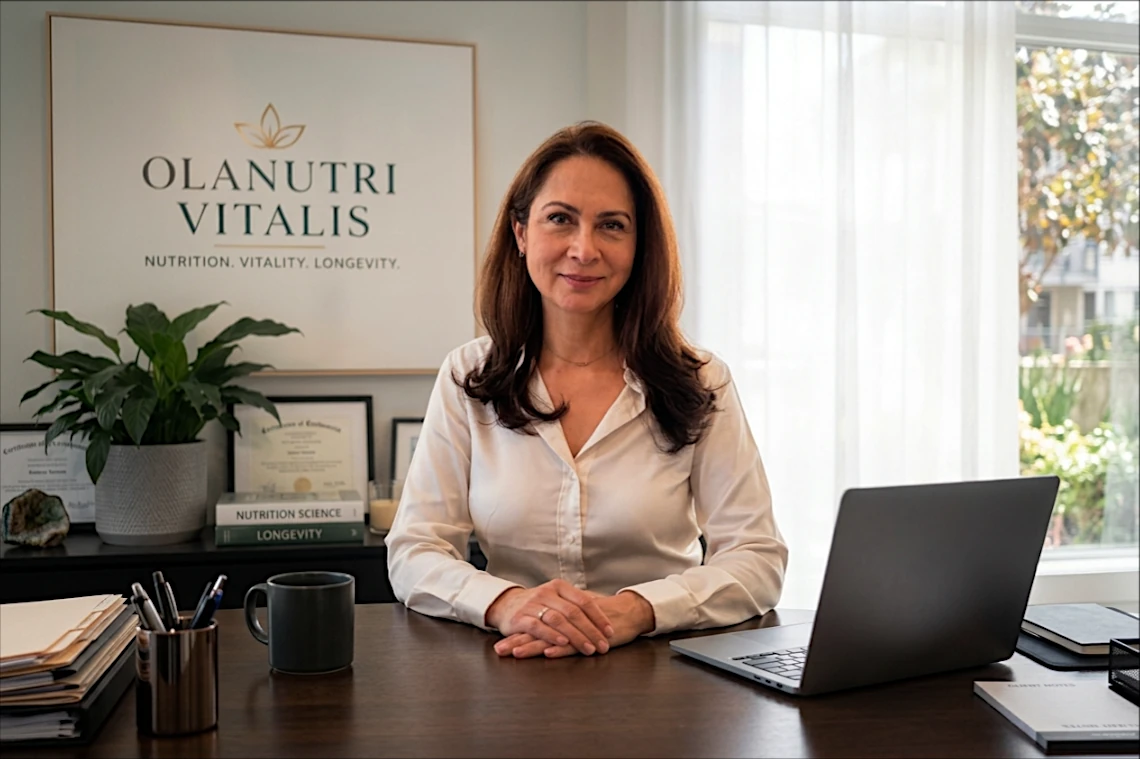
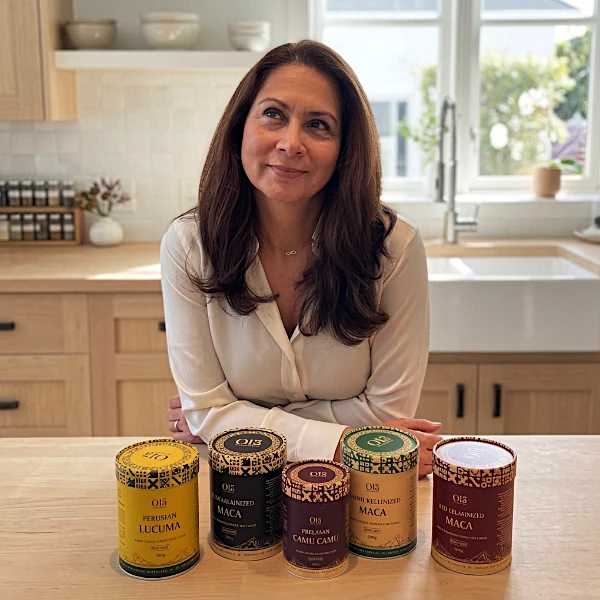
A biologist, microbiologist, with a master’s degree in Industrial Engineering, and also a singer, songwriter and mother of two, Leyla founded Olā Nutri Vitalis with a clear mission: to bring Peruvian superfoods closer to the European consumer without losing sight of their history, their quality and the cultural legacy they represent.
The power of humble foods: the lesson Leyla learned at home
Leyla’s story did not begin in a European laboratory. It began much earlier, in Peru. At home, in her family. That is where she learned that some of the humblest foods of her land could become, years later, a bridge between two continents.
Before maca was a hashtag on Instagram, before lúcuma appeared in smoothie bowls in Amsterdam, those same ingredients had already been in the Peruvian kitchen for millennia. Leyla enjoyed them at home, in Arequipa. Her mother used them daily — in juices, in desserts, in everyday meals — not because they were a trend, but because she had grown up with them and knew what they were worth.
There was no science or marketing involved. There was inherited knowledge, passed down from generation to generation. Her mother always said that those foods were a treasure the world did not yet know about.
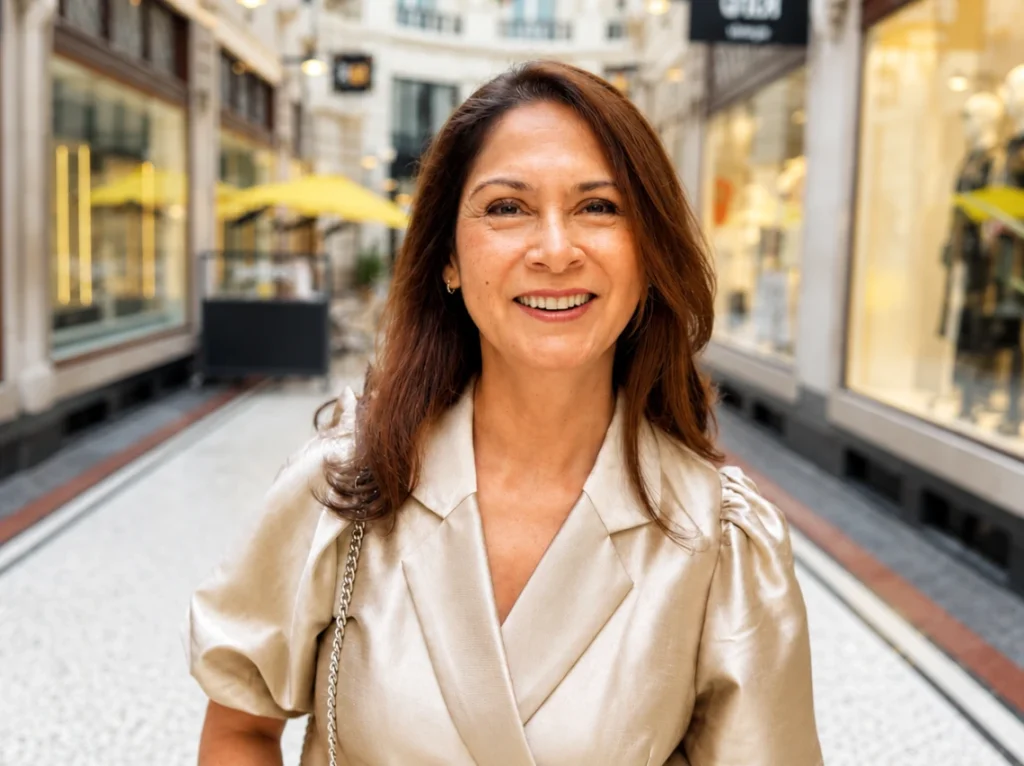
That conviction stayed with her. But Leyla did not only inherit a love for Andean superfoods. She also carried in her blood an entrepreneurial streak that came from her grandfather, whom she never met, but whose story echoed in the family: a man who built “Deportes Alpaca”, a business that in its day was more than a shop — That was for Leyla a message her father always repeated: you could build something of your own, with effort and vision. Without knowing it, Leyla would follow in his footsteps decades later, but on a different stage: taking Peruvian products to the European market.
Years later, when she flew to Mexico and Spain, and then to the Netherlands, Leyla carried with her more than memories of her childhood. She also carried the certainty that in those humble ingredients —the same ones her mother used every day— there was a potential the world was only just beginning to discover. She did not know exactly how, but she felt that one day she would find a way to share them.
Today, looking back, Leyla understands everything. She understands that those moments that seemed small —the table always ready for one more visit, the laughter shared between plates of food, the music playing in the background while the family gathered— were not just scenes from a happy childhood. They were the seeds that had been planted in her and that waited patiently for the conditions to germinate.
A simple and warm childhood in which her parents, without fuss, without speeches, lovingly sowed everything that one day would bear fruit. Leyla only needed to grow up, cross oceans, and embrace those memories to realise it.
From biologist to entrepreneur: the journey that changed everything
With a background in biology and microbiology, Leyla did not plan to become a businesswoman. Before settling in Europe, she had the opportunity to continue her studies and, later, to work in Mexico. That is where she met the man who would become her husband, of Hungarian origin. Years later, when he received a job offer, they both moved to the Netherlands. What began as a family relocation became, without her anticipating it, the turning point of her professional life.

It was in Europe that she began to notice something that intrigued her: people talked more and more about superfoods, but few knew the ones that really came from Peru. In Dutch supermarkets, quinoa and cacao were already known, but maca, lúcuma or camu camu remained a mystery to most.
When Leyla explained where they came from, what properties they had and how they were traditionally used, the reaction was always the same: surprise followed by curiosity. “And where do you buy that?” That question —simple, direct, without artifice— repeated itself so many times that it stopped being an anecdote and became a signal. At that moment Leyla understood something that would change her course: the problem was not that people did not want these products. It was that nobody was bringing them the way they should be brought. Without losing their essence, without simplifying their story, without treating them as just another trend. What she did not know yet was that this realisation, made during informal conversations among friends, acquaintances and European kitchens, would become the birth of Olā Nutri Vitalis.
The step from scientist to entrepreneur was not immediate. For a time, Leyla combined her work as a biologist with the first steps of the business. But the more she learned about the European superfood market, the clearer one thing became: scientific rigour was missing. There was a lot of marketing, but little information backed by science. And that was exactly the gap she could fill.
Olā Nutri Vitalis: the business born from a family belief
Olā Nutri Vitalis is not a run-of-the-mill superfood company. Behind every product there is a selection process that Leyla personally oversees, looking for suppliers in Peru who share her vision: quality, traceability, 100% organic and respect for the producing communities. That rigour has earned it a licence as a Marca País Perú licensee — the official seal PROMPERÚ grants to those who carry the best of Peru to the world.
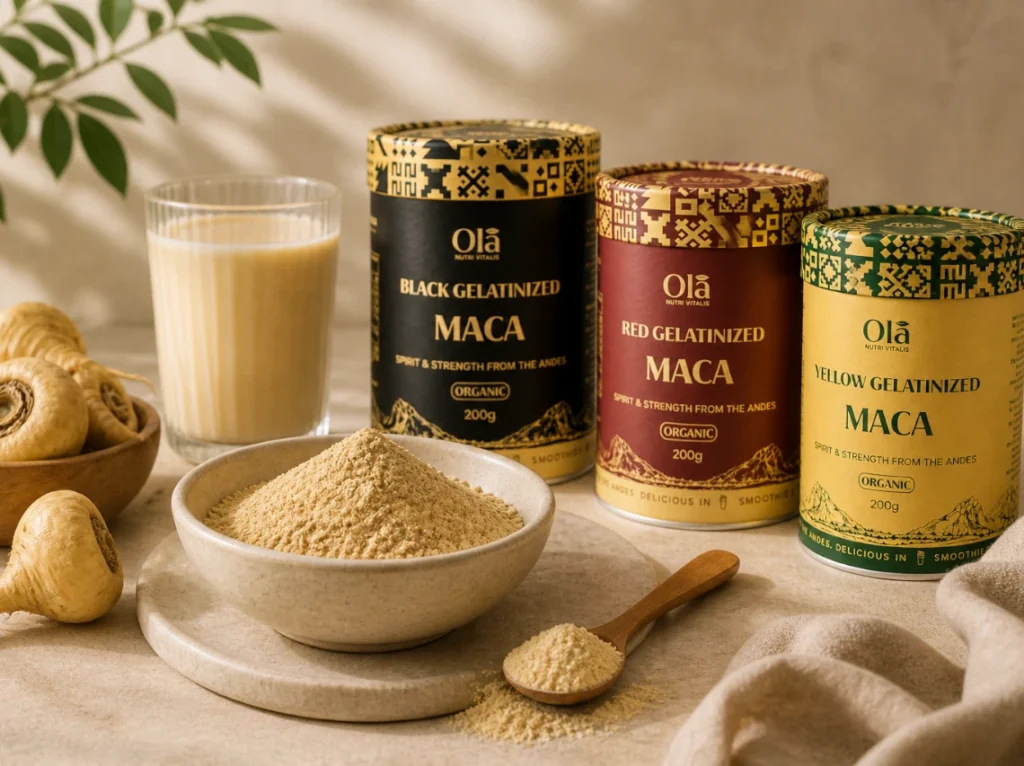
The brand stands out for something Leyla considers essential: it does not sell superfoods as a trend, but as part of a living tradition. Every packet of maca or lúcuma that reaches a European home carries with it a story that began centuries ago, in the Peruvian Andes.
“I don’t want people to buy maca because it’s a trend. I want them to understand what they are eating, where it comes from and why for generations the Andean peoples have considered it a sacred food. That respect for the origin is what makes the difference.”
— Leyla Alpaca
Science —her original training— remains the pillar of the company. Leyla does not limit herself to importing products; she researches, compares studies and selects those that truly offer a verified nutritional value. For her, honesty with the consumer is not a marketing strategy: it is a responsibility.
Peruvian superfoods 101: what you need to know
Maca
Known as the “Peruvian ginseng”, maca grows high in the Andes, above 4,000 metres. There are three varieties: the Yellow, Red and Black trilogy. It is a natural adaptogen that helps the body manage stress, improves energy and supports hormonal balance. It is consumed as a powder, gelatinised or in capsules.
Lúcuma
Considered the “gold of the Incas”, lúcuma is a fruit with a flavour that recalls caramel and maple syrup, but with a low glycaemic index. It is rich in antioxidants, beta-carotene and iron. Perfect as a natural sweetener in shakes, desserts and healthy baking.
Camu Camu
Native to the Peruvian Amazon, camu camu is one of the fruits with the highest concentration of vitamin C on the planet. 100 grams of camu camu can provide up to 40 – 60 times more vitamin C than 100 grams of orange. It is used to strengthen the immune system and as a natural antioxidant.
Sacha Inchi
Also known as Inca peanut or sacha peanut, it is an Amazonian seed rich in omega-3, omega-6 and omega-9. Its fatty acid profile makes it an ally for cardiovascular health. It is consumed as oil, as a powder or as a roasted snack.
Health as a priority: when your body asks you to change
For Leyla, the interest in superfoods is not only professional. It is also personal. It was after becoming a mother that she began to pay more attention to her own diet and that of her family. The pace between work, the children and life in a new country led her to look for options that gave her energy without turning to processed foods.
“When you have children, your priority changes. You start asking yourself what you are eating, what you are giving them. And that is when you realise that the simplest thing is often the most powerful”, she says.
That awareness led her to integrate Peruvian superfoods into her daily life in a natural way, without obsessions or extreme restrictions. A spoonful of maca at breakfast. Lúcuma to sweeten. Camu camu for her defences. Small gestures that, over time, became habits.
Her scientific training gives her an advantage: she does not get carried away by trends or miracle promises. Every product she offers at Olā Nutri Vitalis goes through a filter of evidence. It is not enough for it to be traditional; it has to be backed by data.
Music as a second language
If there is something Leyla values as much as science, it is music. A singer and songwriter, she found in songs a way to connect with her Peruvian roots while living in Europe. For her, music is not a hobby: it is another language, another way of communicating what words cannot always say.

There is a deep connection between her artistic side and her work with superfoods. Both are born from the same place: the desire to share what Peru has given her. Just as Peruvian music is beginning to sound on European stages, Andean ingredients are beginning to appear in kitchens that had never tasted them before.
“Music has always been part of my life. Since I was a child, there was singing at home. My father is a singer and from him we inherited the artistic streak, my sister and I formed a duo “Leyla & Lissette”, and to this day music accompanies me. It is another way of expressing what I carry inside”, she shares.
The multilingual family: Spanish, Hungarian, English and Dutch
Leyla and her family live between languages. At home they speak Spanish, Hungarian, English and Dutch, depending on the moment and on who is speaking. Her children are growing up listening to the stories of a Peruvian mother who came to Europe for her husband’s work and who, without planning it, ended up building a bridge between continents through food.
Raising children in a multicultural environment has its challenges, but it also grants a unique perspective: understanding that borders are invented, and that what really matters —food, music, family— is shared beyond languages.
“I want my children to know where they come from. That they know Peru, that they understand why their grandmother put maca and lúcuma in the juices, why their grandfather instilled in them a love of music and art, and that they know their great-grandfather built a business from scratch. That they know they can do the same, wherever they are.”
— Leyla Alpaca
Three words that define her path
If Leyla had to summarise her story in three words, they would probably be these: root, science and bridge.
Root, because everything she does today was born in Peru, in a family kitchen where superfoods were not a trend, they were everyday life. Science, because her training as a biologist and microbiologist is the compass that guides every decision at Olā Nutri Vitalis. And bridge, because her mission is to connect two worlds —the Andean and the European— through the most basic and at the same time most profound thing: food.
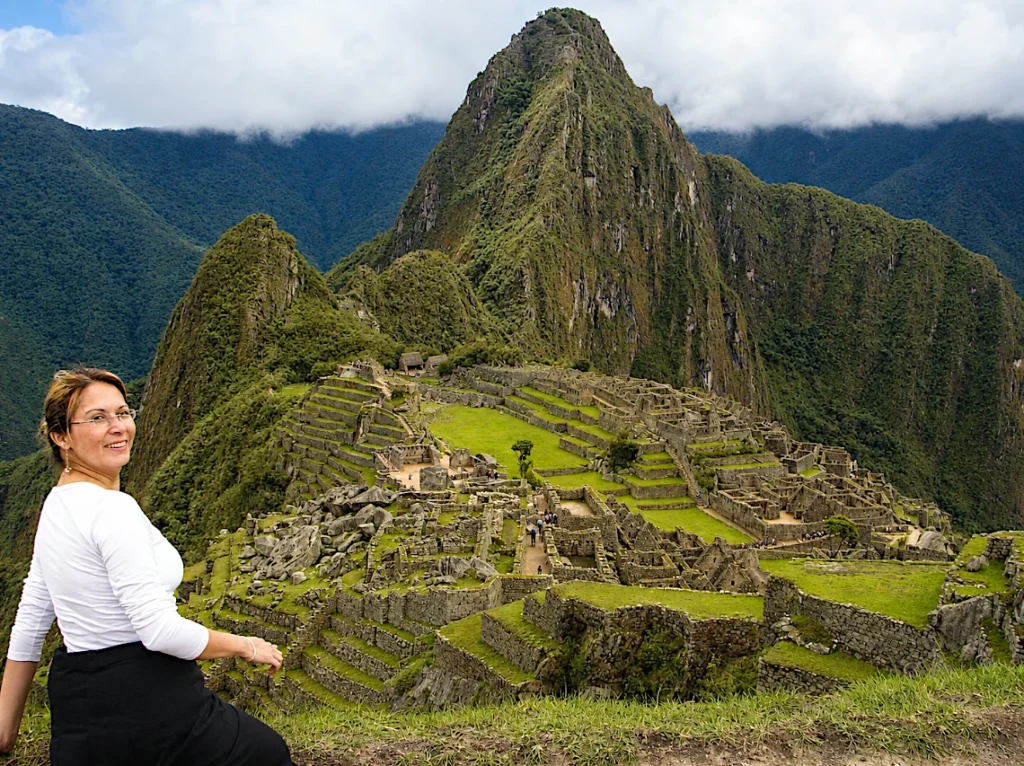
While Jeroen keeps taking his maca every morning in Gouda, and while hundreds of Europeans discover that lúcuma sweetens better than sugar, Leyla keeps working. With the same conviction she learned at home, with the rigour science gave her and with the certainty that the humble foods of her land still have a lot to say in the world.
The silent revolution of Peruvian superfoods is not being led by a multinational. It is being led by a Peruvian biologist who one day decided that her family legacy deserved to cross the ocean.
Leyla did not wait for anyone to give her permission to share what is hers. With scientific training, family convictions and the determination of someone who knows she can build bridges where others only see distance, today she keeps working so that Peruvian superfoods reach more European tables. If this story resonated with you, you can follow her path and discover more about her work by visiting her website. Behind every product there is a story —and Leyla’s has only just begun.
At Peruanos.nl we believe that stories like Leyla’s deserve to be told, read and celebrated. If this article reminded you of the flavours of home, inspired you to look at what you eat with different eyes or made you proud of the roots we carry within, give us a like and tell us in the comments what you thought. You can also share it on your social media. Help us keep giving a voice to those who build bridges between Peru and Europe. And if you would like to receive more stories like this, subscribe to our newsletter so you don’t miss a single one.