This post is also available in:
 Español
 Nederlands
There are smells that arrive before words do. The smell of ají amarillo, for instance: you open the jar and out comes a blast of bottled sun, something sweet, something hot, with a base note of ripe fruit. For anyone who grew up in Peru it is not a condiment. It is a morning at the market, a pot on the fire, a voice calling you to eat.
For years that smell arrived in Purmerend inside a cardboard box. Her mother sent it from Peru: a parcel with the taste of home wrapped in packing tape. Opening it was a small event. And not only for her.
Because as soon as the box appeared, the questions started: where did you get that, and aren’t you bringing me any? What had begun as a household matter started to look like a business.
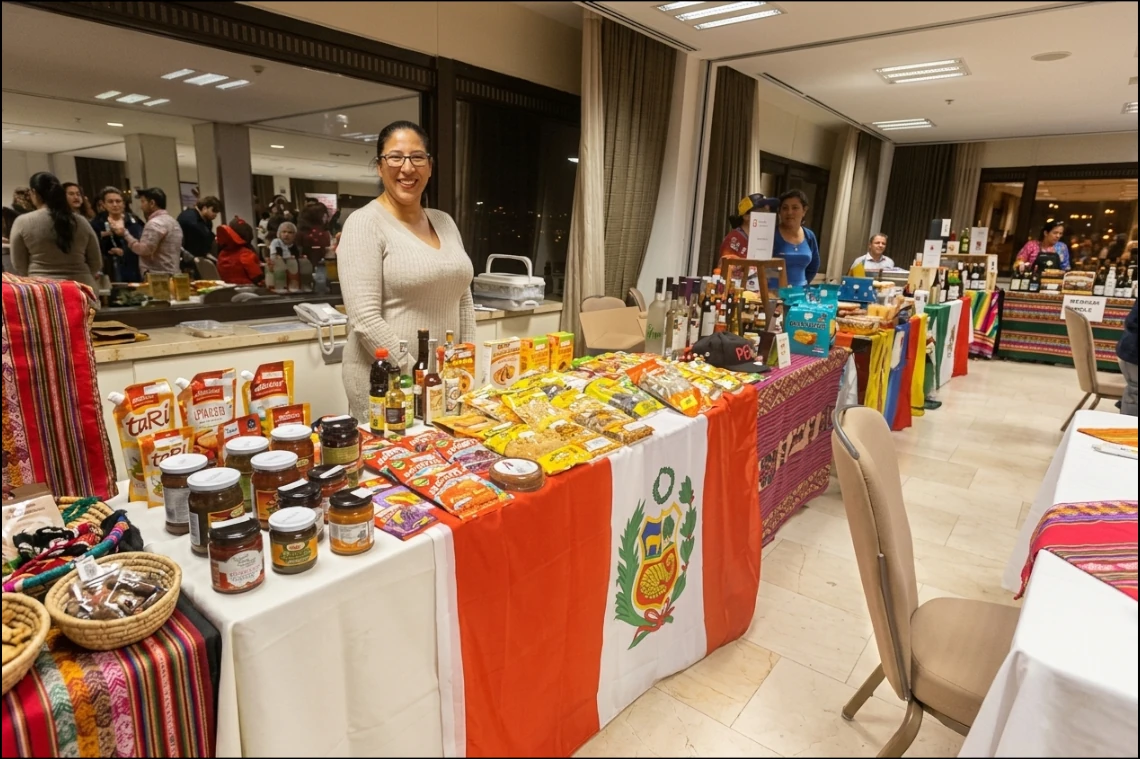
That woman is Miryam Koenis. She was born in Mollendo and grew up between Puno, Lima and Arequipa, following her father’s work. She arrived in the Netherlands on 9 June 2008, for love. Today she runs a shop in Purmerend selling Peruvian and Latin American products that began, literally, with the boxes her mother sent her.
A house that moved every five years
Her father worked out in the provinces and the family moved every five years: Puno, Lima, Arequipa. New school, new friends, starting from scratch again. And so on until one of those moves left her in Lima, in the Rímac, the only neighbourhood she talks about as if it had been home.
«People in those days were great fun, very easygoing», she remembers. And she keeps a scene that has never faded: Puno, six years old, a school performance, and her dancing folk songs without a trace of shyness.
At home they ate whatever there was, and whatever there was was dictated by the country. In the early eighties Peru was going through a crisis that hit almost every family: money did not stretch and prices would not stop rising. It was not just her house. It was the whole country. In her case that often meant rice with egg. When things improved, the tradition arrived: lentils every Monday. Her mother set it and nobody ever questioned it.
Two bags of sweets and a rule she never broke
There is an anecdote that explains what Miryam does today better than any CV, and the main character is not her: it is her mother. In those crisis years, with half of Peru juggling to make it to the end of the month, many households got by on whatever could be sold: in the street, at the market or at school. Hers was no exception.
But her mother did more than survive: she turned necessity into a school. Instead of giving them money, she gave them product and customers: one bag of sweets each and a school full of classmates. And she handed it over like someone handing over a mission. Miryam always came back with an empty bag.
Her older sister also came back with an empty bag, but for a different reason: she was embarrassed to offer. That is the good part of the story. Miryam asked for her bag, took it with her and sold the whole lot. Two bags per girl, one salesperson. And nobody in the family seems to have found it strange.
She had a rule of her own that she applied to everyone: no credit. «You pay me, I give it to you», not even when the customer was the person she shared a desk with and the debt would have been a single sweet. Without knowing it she was learning the whole trade: the product, the dealing and the collecting, exactly what she does today with more than two hundred products. And something you only understand from far away: that sweets were not a business, they were life. You discover that when you leave.
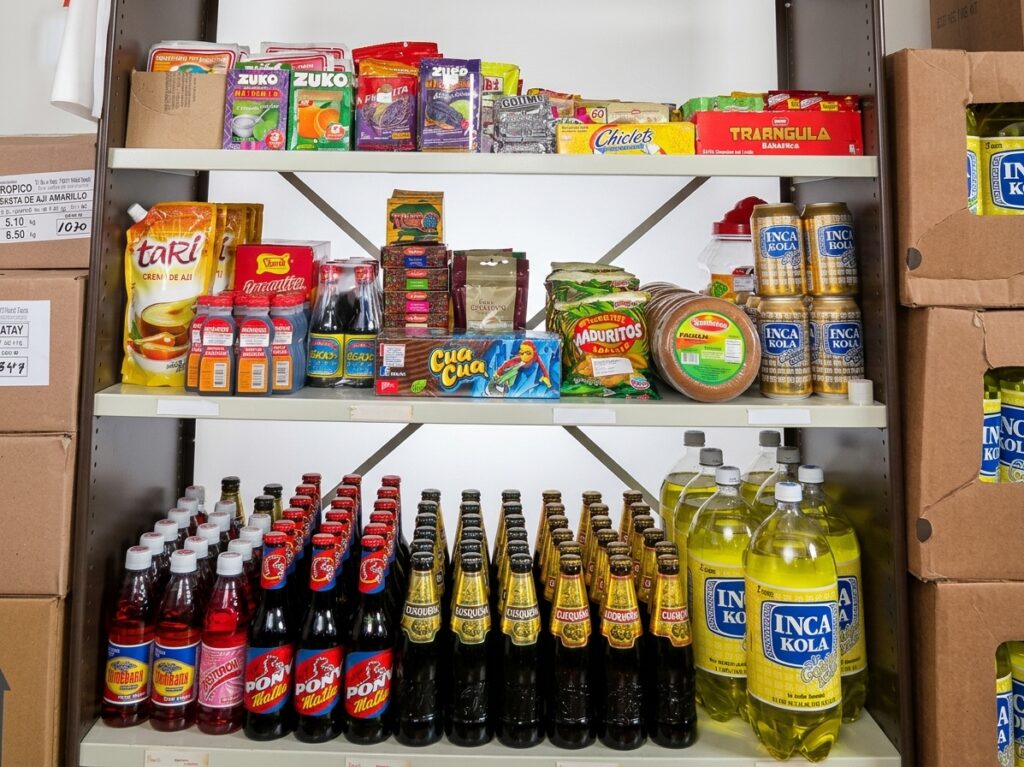
Because Miryam’s shop is not an import warehouse. It is a map of Peruvian cooking laid out on shelves, and every product is a recipe someone is trying to recreate seven thousand kilometres from home. Centuries of history in a jar of sauce.
That is what you discover when you live abroad. Inside Peru a jar of ají is a jar of ají: it runs out and you buy another. Abroad, the same jar is a date, a house, a voice. That is why Miryam’s customers do not thank her for the delivery: they thank her for the memories.
A 9 June that split her life in two
She left Peru on 9 June 2008. Not for work or study: for love. She had spent four years in a long-distance relationship, with an ocean in between and conversations counted in hours, and a decision had to be made about which country they would live in. The scales tipped towards the Netherlands for a distinctly unromantic reason: it suited her more to come than it suited him to go.
A decision like that is not made in an afternoon: you think about it, you sleep on it, and you sleep badly for several nights. «Leaving everything, my family, my friends, everything everything, was very hard», she says, and that «everything everything» holds more than can be named. But she adds that it was worth it.
The Netherlands was her only destination: from Peru to here, with no stop in between.
And her arrival had a detail not everyone gets: her husband’s family welcomed her with signs in Spanish. Not one or two. Signs. They had studied Spanish so they could talk to her. When someone learns your language before meeting you, they are saying without saying it that your presence matters.
The language, the holidays and saying goodbye to a mother
The hardest part was not the weather or the food: it was the holidays. The whole family around a table that was too small. Here they were celebrated with a video call, and there was one exact moment, the worst of the night: the screen went dark, the house fell silent and the party carried on at the other side of the world without her. That is what nobody tells you about migrating: that you can want the life you chose and still, at eleven at night on 25 December, the house goes quiet.
The language was something else. As an adult you do not learn it: you conquer it word by word, and along the way the jokes get left half-finished and so do the conversations where she smiles without knowing what the laughter is about. The warmth was hard too: here friendship takes more patience; people are kind, but the door opens slowly.
There was a blow that adaptation does not fix. Her mother fell ill an ocean away: the phone as a waiting room and the helplessness of being able to do nothing. She died a few years ago. «Not having my parents to help me and advise me when something happened», she says, and there lies the weight: it is not that they are not nearby, it is that they are no longer here. Her husband was her support; even so, there are calls that can no longer be made, and one day something good happens and the number your hand reaches for no longer exists.
“Everything happens for a reason, and it will pass and get better.”
— Miryam Koenis
From a parcel to a shop
The shop grew out of a household need: to have her own products. The decisive push came from frozen ají amarillo, which became a hit: from then on people started asking her for everything.
The name has its story too. She started out doing catering with a friend, and the three of them sat down to decide it. The friend contributed «Que Rico», she contributed «van», her husband contributed «Miryam». When the line of business changed and she moved from catering to products she wanted to change it, but the name was already known and catchy. It stayed.
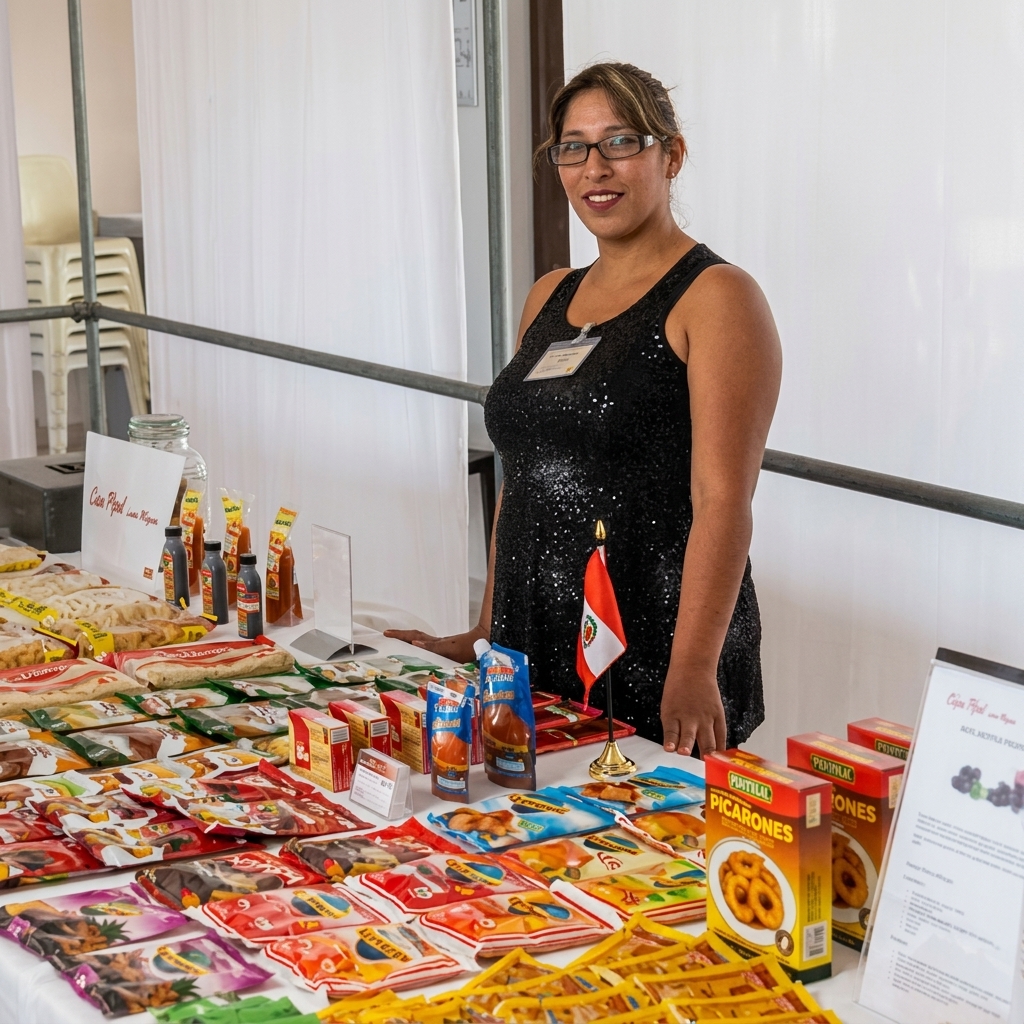
With her husband she registered the company with the chamber of commerce; then came the suppliers and the website, which he built. Today she imports from Peru, but also from Spain, Germany and Belgium.
The ají amarillo that changed everything
What she sells is pantry goods: pastes, sauces, drinks. The best seller is ají amarillo, the most used ingredient in Peruvian cooking: without it there is no huancaína, no causa, no ají de gallina.
Her customers have changed: today there are Dutch buyers, Latin Americans and fusion restaurants buying wholesale.
The hardest part of the business is logistics, and she says so without dressing it up. The best part is the contact: when people recognise her, they thank her for bringing back memories of their childhood or their youth. People who open a box and stand still for a second.
“I love seeing people happy.”
— Miryam Koenis
What she would tell someone who has just arrived
Her advice to another Peruvian who arrives and wants to start a business has four steps: adapt, learn the language, set yourself a goal and research the market. And one more: do not trust too easily. «There is a lot of envy».
About herself she has learned that she is capable of far more than she believes. That she does not fall easily and, if she does, she gets up fast. And that, despite the shyness and the panic of speaking in public, she does it anyway and draws courage from wherever she can.
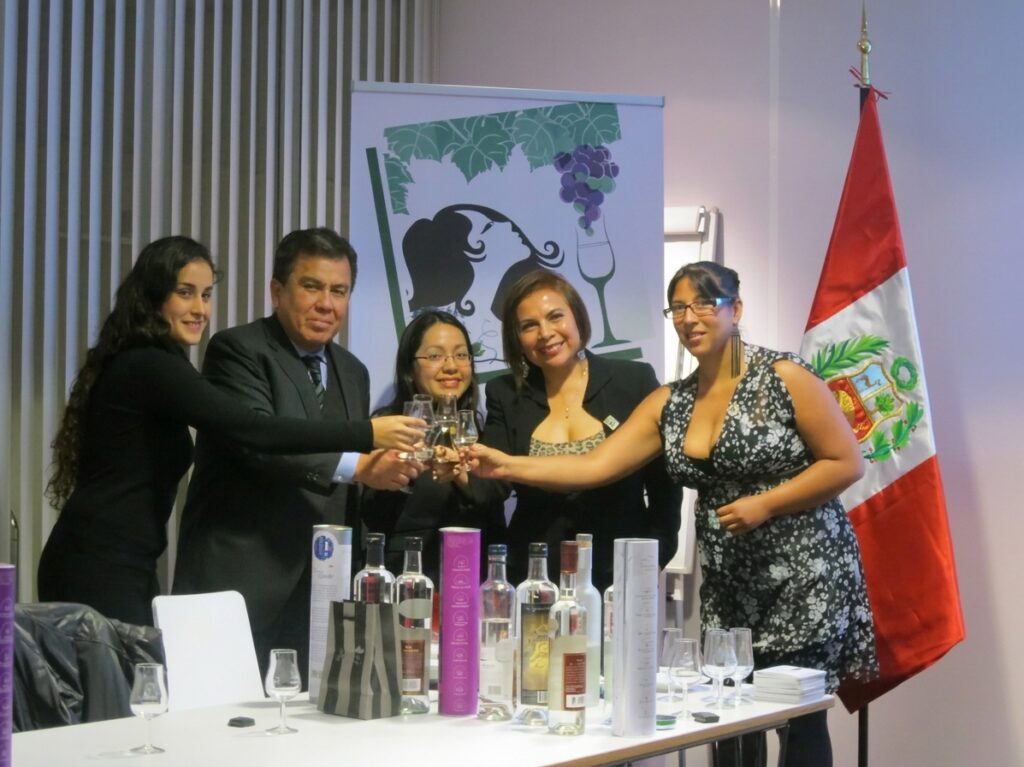
About the future she has no single dream: to keep bringing people what they miss most and perhaps to become a supplier to other companies. And she wants it to be known that Peruvian products are not only for cooking Peruvian food: they work for fusion, for many other things, and many of them have pre-Inca history.
In Purmerend, between shelves of ají and sauces, something is kept that cannot be imported in a container: the memory of a kitchen. Miryam ships it out in boxes, and at the other end someone opens a jar and, for a second, is home again.
At Peruanos.nl we believe that stories like Miryam Koenis’s deserve to be told, read and celebrated. If this article reminded you of the person who used to send you parcels from Peru, made you think about the first time you found your ají amarillo in Europe or left you wanting to cook something from home, leave us a like and tell us in the comments what you thought. You can also share it on your social media. Help us keep giving a voice to those who build bridges between Peru and the Netherlands. And if you would like to receive more stories like this one, subscribe to our newsletter so you don’t miss any.