This post is also available in:
 Español
Where stones speak and time stands still
Imagine standing on a hilltop, surrounded by massive stone blocks that defy logic. You are at Sacsayhuamán — a place where the past still breathes and the whispers of a legendary civilization echo through the cracks of ancient stone.
This is not just a fortress. Sacsayhuamán is a gateway to a mystical world — the heart of an empire that achieved extraordinary levels of architectural, spiritual, and astronomical sophistication. From its colossal walls to its alignment with celestial bodies, every corner of this archaeological marvel raises questions that modern science still struggles to answer.
Who really built it? How did they manage to fit stones weighing over 100 tons with such precision that not even a sheet of paper can fit between them?
Welcome to Sacsayhuamán, the Fortress of the Incas — a living monument that continues to amaze archaeologists, travelers, and dreamers from all over the world.
Where is Sacsayhuamán?
Sacsayhuamán is located just 2 kilometers north of Cusco, the ancient capital of the Inca Empire, nestled in the heart of the Peruvian Andes. Its strategic position on a hill offers a commanding view of the city and surrounding valley, reinforcing its importance as both a military and ceremonial site.
“Inca architecture at Sacsayhuamán not only defies logic, it challenges our modern understanding of ancient engineering.”
— Dr. Jean-Pierre Protzen, archaeologist, University of California
How to get there from Europe?
Getting to Sacsayhuamán from Europe is easier than you might think. International flights from Amsterdam, Paris, Madrid, and other major cities arrive in Lima, Peru’s capital. From there, a short domestic flight of about an hour takes you to Cusco — your gateway to the Andes.
A masterpiece of Inca engineering
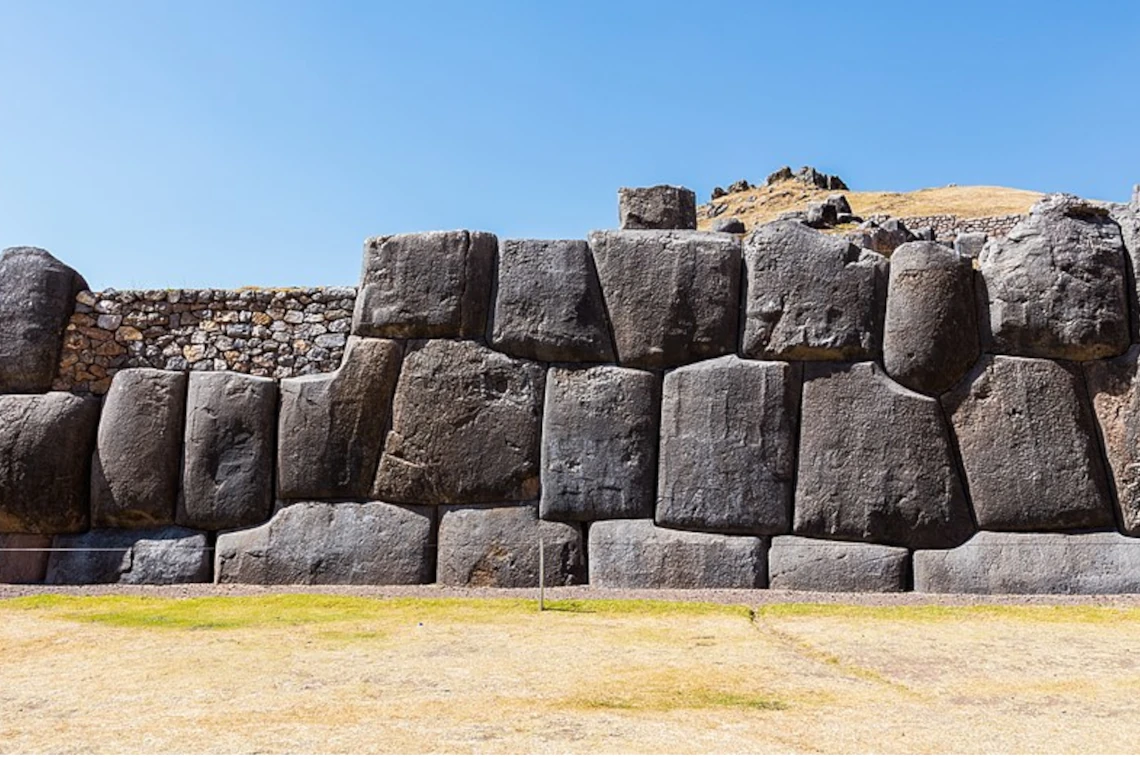
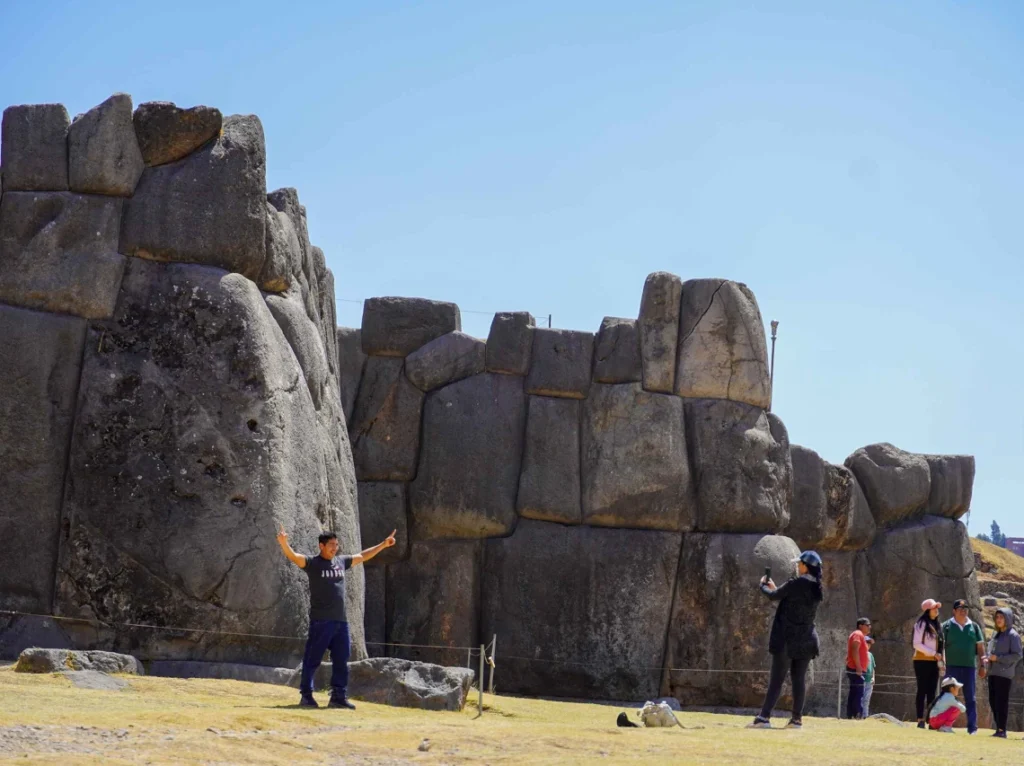
The walls of Sacsayhuamán are built from massive limestone blocks, some weighing over 120 tons. Most impressive of all: they were carved, transported, and fitted together with millimetric precision — without the use of iron tools, wheels, or mortar.
The stones have irregular shapes that fit together like a 3D puzzle. This technique provided seismic resistance — crucial in this earthquake-prone region — and created a unique aesthetic that adds to the mystery of the site.
Fortress, temple… or both?
For centuries, Spanish chroniclers described Sacsayhuamán as a military fortress. However, modern research suggests it also had ceremonial and spiritual functions. In fact, it is believed to have been the setting for sacred rituals dedicated to the sun god, Inti.
The site is aligned with solstices and other key astronomical events. Some researchers suggest it may have served as a solar observatory and ceremonial center, closely connected to Qorikancha, the primary Sun Temple in Cusco.
“Sacsayhuamán is not just a fortress; it is a temple that embraces the heavens and the soul of the Inca people.”
— María Rostworowski, Peruvian historian
The mystery of the stones
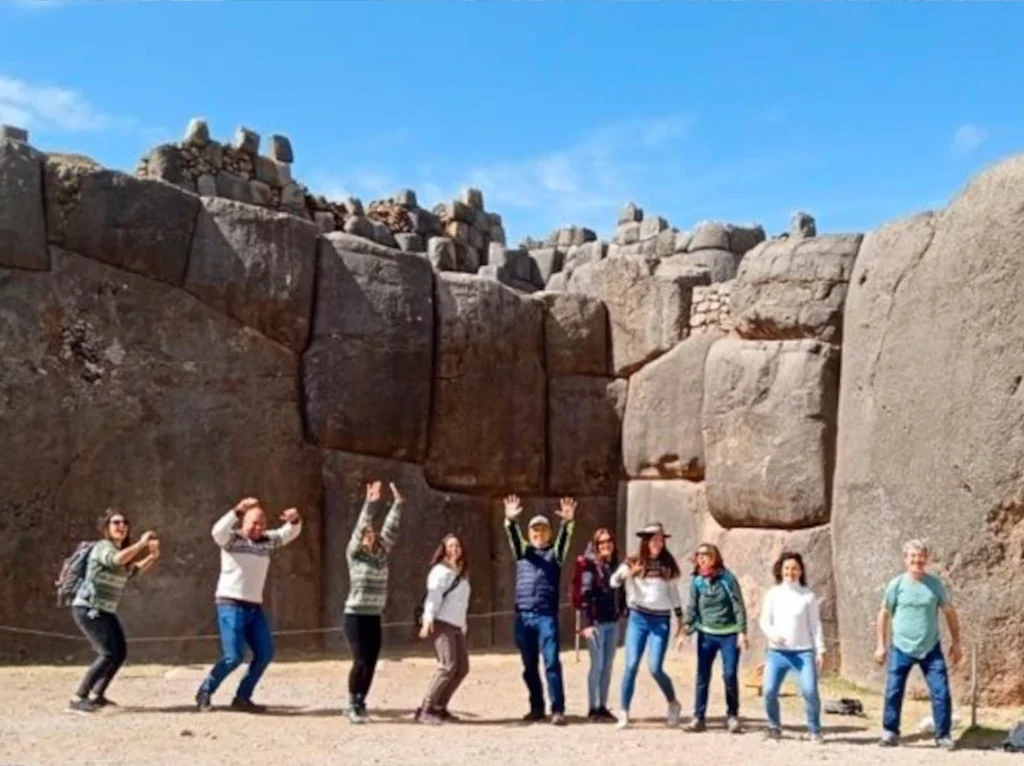
One of the most fascinating aspects of Sacsayhuamán is how the giant stones were moved and manipulated. There are no written records of its construction, which has fueled numerous theories — from advanced engineering knowledge to extraterrestrial influence.
But beyond the mystery, what remains is clear evidence of a people who deeply understood their environment, revered the land, and looked to the stars for guidance.
The battle of Sacsayhuamán: the end of an era
In 1536, during Manco Inca’s rebellion against the Spanish conquistadors, Sacsayhuamán became the site of one of the bloodiest battles of the colonial period. The fall of the fortress marked the beginning of the end for the Inca Empire. Many of its walls were later dismantled to build colonial structures in Cusco, though the largest stones remain in place.
Sacsayhuamán today: an unforgettable experience
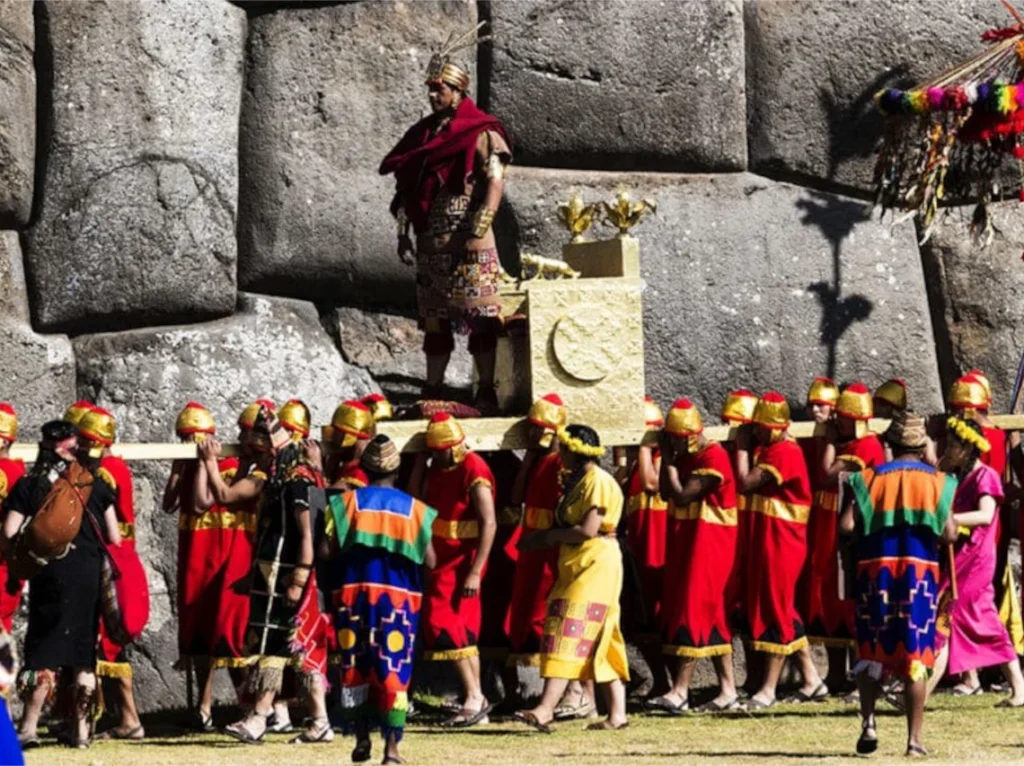
Today, Sacsayhuamán is one of Peru’s top tourist attractions. Every year on June 24th, the Inti Raymi (Festival of the Sun) is celebrated here, drawing thousands who come to witness the revival of ancient Inca rituals. It’s a unique opportunity to immerse yourself in Andean spirituality and see the Inca legacy come to life.
Travel tips:
- Acclimatization: Cusco is over 3,400 meters (11,000 ft) above sea level. Rest on your first day.
- Local guides: A guided tour will greatly enrich your visit.
- Dress well: Wear comfortable clothing, sunscreen, and proper walking shoes.
A legacy that transcends time
Sacsayhuamán is more than just an archaeological site. It is a symbol of the connection between humanity, nature, and the cosmos. A silent reminder of a civilization that, without modern tools, built something that still leaves us in awe.
Ready to experience the magic of the Andes?
If you’re looking for a journey that awakens your curiosity and connects you with one of history’s most fascinating cultures, Sacsayhuamán awaits. Let yourself be enchanted by its ancient stones, sacred legends, and the powerful energy of the Peruvian Andes.
Discover more about our cultural tours and Peruvian experiences at Peruanos.nl and begin your journey into the heart of the Inca Empire.