This post is also available in:
 Español
  Nederlands
Invisible Echoes in the Desert
On the silent, arid plains of southern Peru, where the wind whispers ancient secrets, lies one of humanity’s greatest enigmas. The Nazca Lines, gigantic drawings forming impossible figures, have challenged archaeologists, scientists, and dreamers alike.
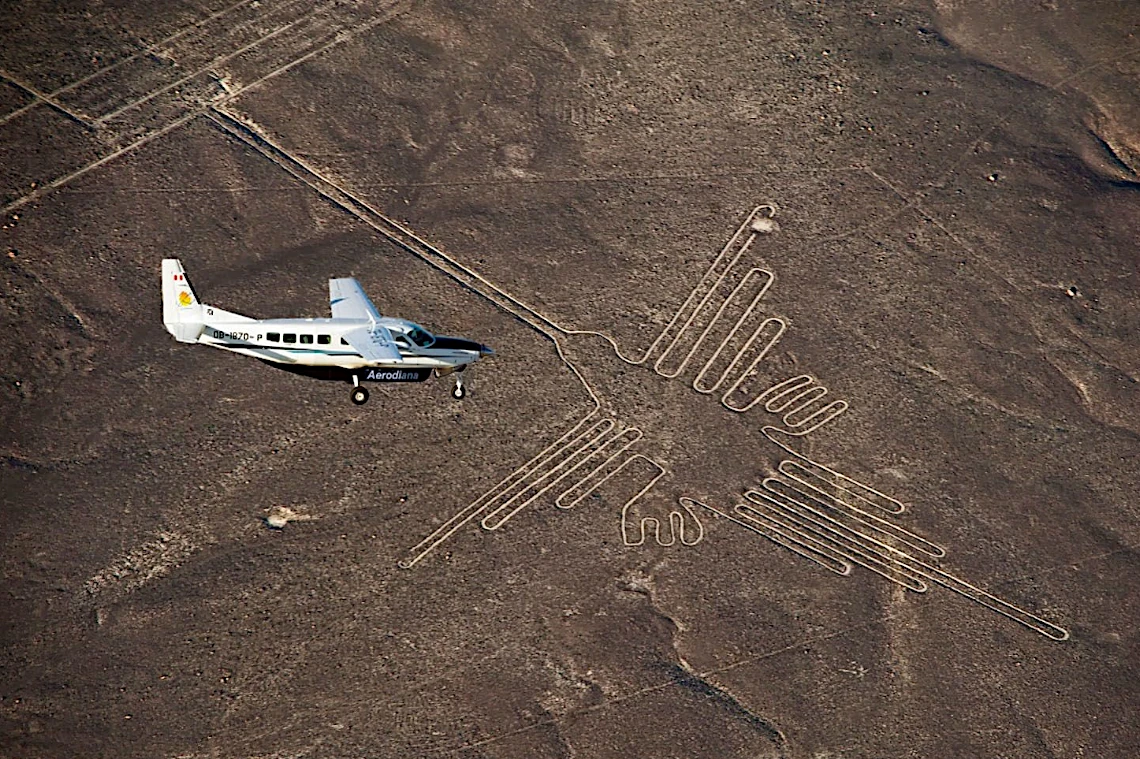
From the ground, you only see dusty paths. But from the sky, the desert transforms into a sacred canvas: 300-meter hummingbirds, spiders of perfect proportions, spirals that seem to lead to another dimension. Who created them? How did they achieve such precision without modern technology? And why can they only be fully appreciated from above?
This is a journey through the shadows of the past, where every answer only deepens the mystery.
What Are the Nazca Lines Really?
Although local inhabitants always knew of their existence, the outside world only learned of the Nazca Lines in 1927, when archaeologist Toribio Mejía Xesspe first documented them. However, it was in the 1930s and 1940s, with the rise of aviation, that the true magnitude of this enigma came to light.
From the air, the lines revealed their impossible nature: perfect figures, some over 300 meters long, drawn with precision that defies all logic. German mathematician Maria Reiche, who dedicated her life to studying them, reached a startling conclusion:
Theories That Try to Break Nazca’s Silence
With each new excavation, more questions arise than answers. The true purpose of the Nazca Lines remains as elusive as the morning mist in the desert.
Various hypotheses have attempted to shed light on this mystery. Each one, in its own way, seems more fascinating than the last.
1. A Celestial Calendar Written in Sand
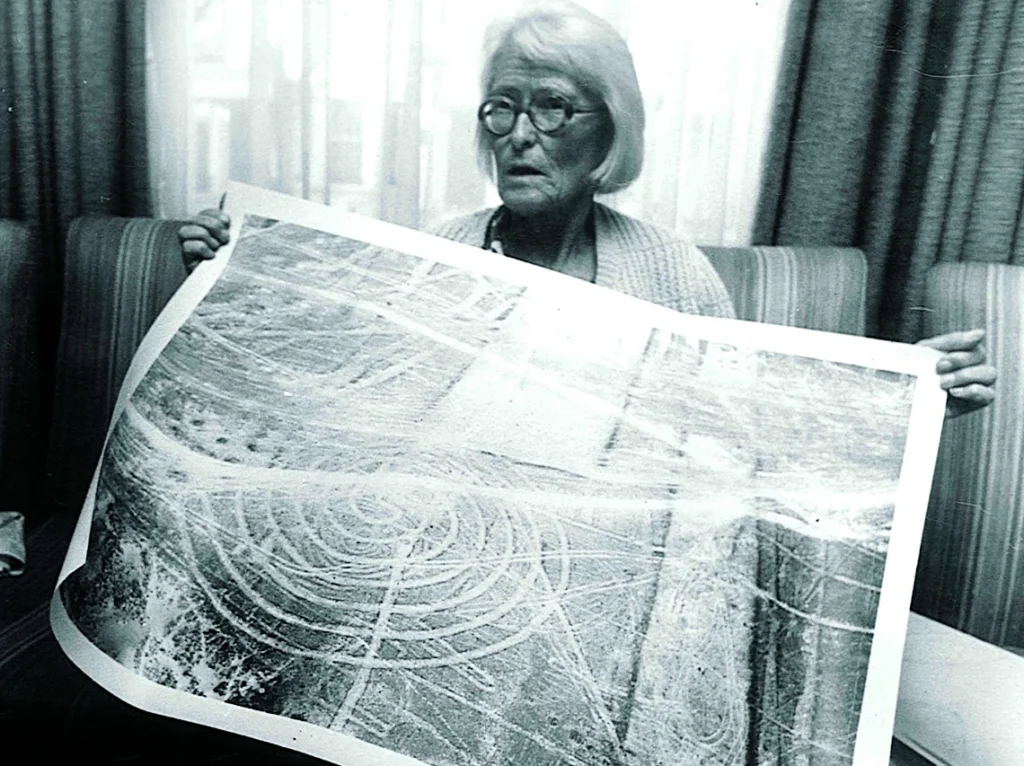
German mathematician Maria Reiche, known as “The Lady of Nazca,” dedicated more than fifty years of her life to studying the lines. She proposed that they were a gigantic astronomical calendar, where the movements of the sun, moon, and certain constellations were forever etched into the earth.
Some lines point toward the solstices, to the extreme positions of the sun on the horizon. Other tracings seem to follow the course of stars like Sirius or constellations like Orion.
However, not all figures fit perfectly into this interpretation, leaving room for new questions: why so many animals? Why geometric figures that cannot be directly linked to astronomical events?
2. Ritual Pathways: A Spiritual Journey
For some contemporary archaeologists, the Nazca Lines were not meant to be observed from the sky, but to be walked.
The paths would have been part of complex pilgrimage rituals, invocations to deities ruling over fertility, water, and the continuity of life in a hostile environment.
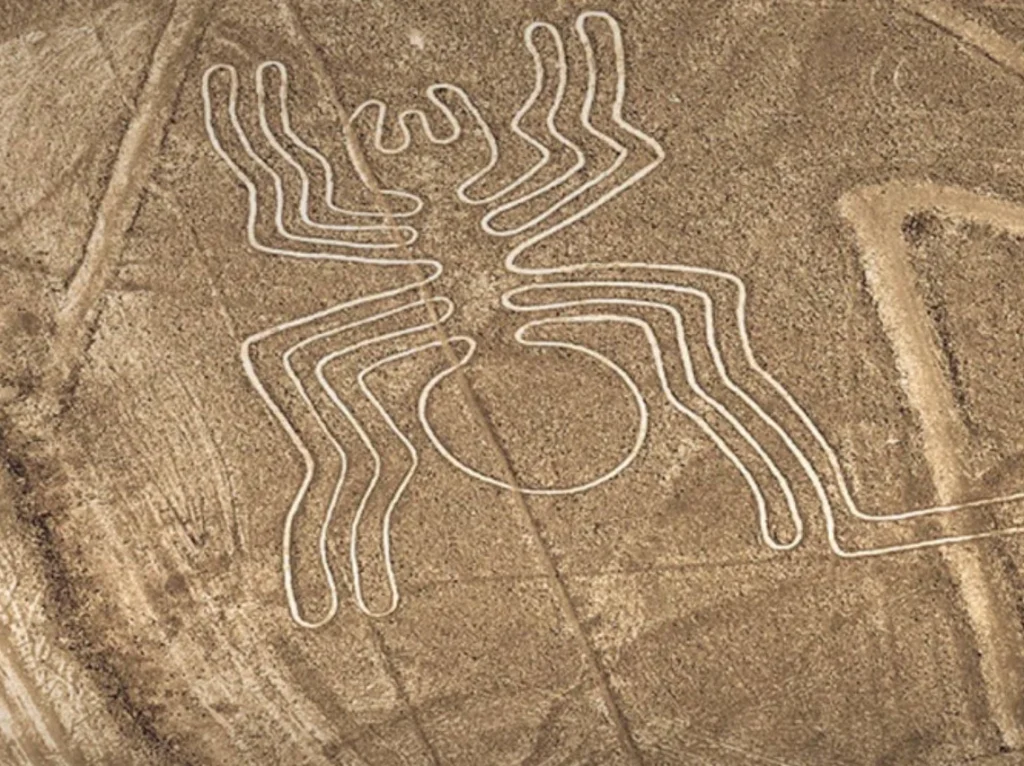
Walking along a line hundreds of meters long, surrounded by a silent, lifeless landscape, could induce altered states of consciousness, connecting the individual with the divine.
Ceremonial remains found near some lines — fragments of intentionally broken pottery or small offering altars — reinforce this theory.
But even here the question arises: why choose such enormous figures, visible only from heights impossible for their era?
3. Messages for the Celestial Gods
In Andean cultures, the sky was never an empty place: it was inhabited by powerful beings, gods of water, wind, and sun.
Some researchers believe the lines were designed to be seen by those celestial entities.
In an act of devotion and desperation, the Nazca carved their prayers into the ground, hoping to be heard by the invisible eyes watching over their lives from above.
The precision of the figures, many created without the ability to see their progress from an elevated point, adds an even deeper layer of mystery: how did they achieve such a feat?
4. Extraterrestrial Contacts: Echoes from Other Worlds
The most audacious (and for some, most seductive) proposal suggests the lines were created as messages or landing signals for extraterrestrial civilizations.
Swiss writer Erich von Däniken was one of the main proponents of this idea in his book “Chariots of the Gods”.
According to this theory, the beings that inspired these figures were not mythological gods, but visitors from other worlds, whom the Nazca tried to imitate or contact.
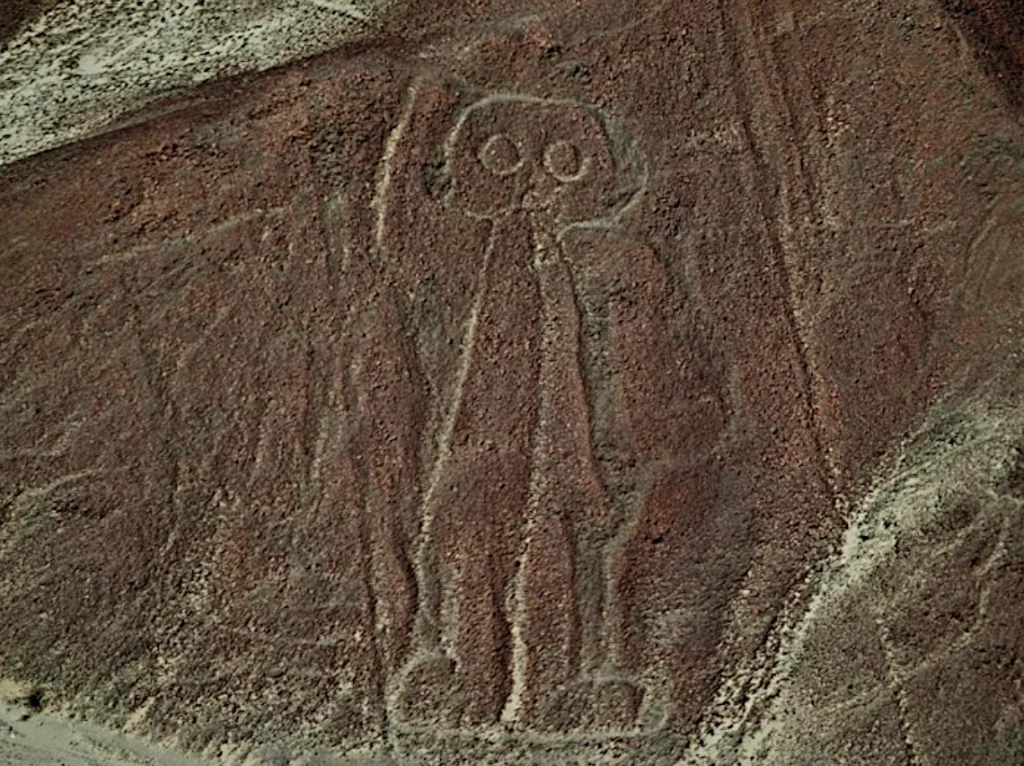
Although it lacks serious academic support, this hypothesis captures the popular imagination and keeps the mystique of Nazca alive.
Is it so far-fetched to think that those who watched from above did not walk among us?
5. The Secret Water Map
More recent research proposes an idea as pragmatic as it is fascinating: that the lines mark the presence of underground aquifers.
The Nazca culture, experts in managing canals and aqueducts (constructions like the puquios are proof of this), may have designed these geoglyphs to mark the location of vital water sources in an environment where every drop was a treasure.
In this interpretation, art, necessity, and spirituality intertwine in a silent dance upon the sand.
How Were They Able to Create These Wonders?
The process, though seemingly simple, hides a monumental logistics operation.
The Nazca removed the dark stones from the surface to expose the lighter sand beneath, creating contrast paths.
Using wooden stakes and ropes, they marked the straight lines. For curved or complex figures, it is presumed they used grids and basic patterns transferred to scale.
The most astonishing part is the precision achieved: some lines maintain their alignment for kilometers without deviation.
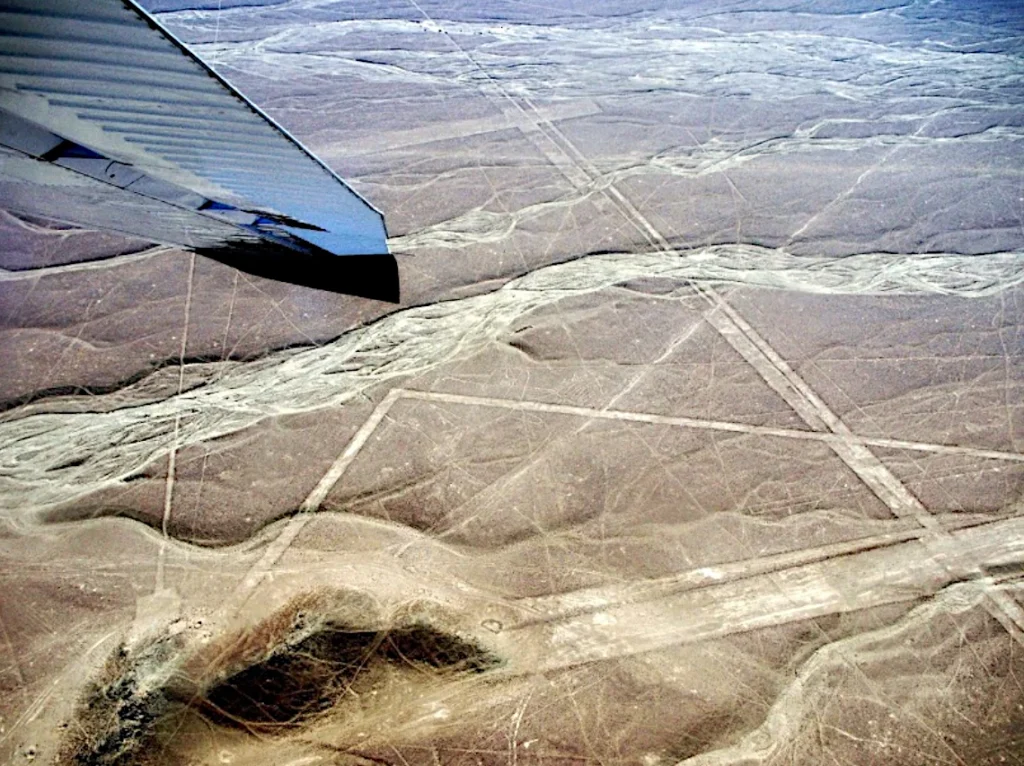
But here another troubling question arises: how did they maintain the correct perspective of proportions without being able to rise more than a few meters?
Some researchers speculate about the use of temporary elevated observation platforms, while others do not rule out knowledge of rudimentary balloons made of fabric and reeds.
Was it simple human perseverance, or was there lost knowledge in their techniques?
A Silence That Endures
The Nazca Lines are not just an archaeological wonder. They are a crack in our understanding of the past.
Every line drawn in the sand, every gigantic figure that still defies explanation, is an echo of a civilization that looked to the sky searching for answers — perhaps the same ones we are still searching for.
Perhaps the most fascinating thing about Nazca is not what we know, but what still refuses to be revealed to us.
Dare to Keep Exploring the Secrets of Peru? The enigma of the Nazca Lines is just the beginning. At Peruanos.nl we invite you to discover more mysteries, legends, and wonders of Peruvian culture. Leave us your opinion: which of these theories do you think comes closest to the truth? Share this article and open a door to wonder for your friends and acquaintances.