This post is also available in:
 Español
  Nederlands
Shamanism: a doorway to the invisible
Imagine for a moment that someone existed who could communicate with the spirits of nature, who could heal illnesses that Western medicine doesn’t fully understand, who could guide people through dreams and visions. Someone who knows every plant in the jungle not just by its scientific name, but by its “spirit,” by the song that activates it, by the exact moment it must be harvested.
That someone exists. In the traditions of thousands of peoples around the world. And in Peru, that tradition is more alive than ever.
Shamanism is not a religion. It has no holy book, no founding prophet, no ecclesiastical hierarchy that dictates right and wrong. It is rather a collection of spiritual practices that have existed ever since humans began to wonder what lies beyond what their eyes can see.
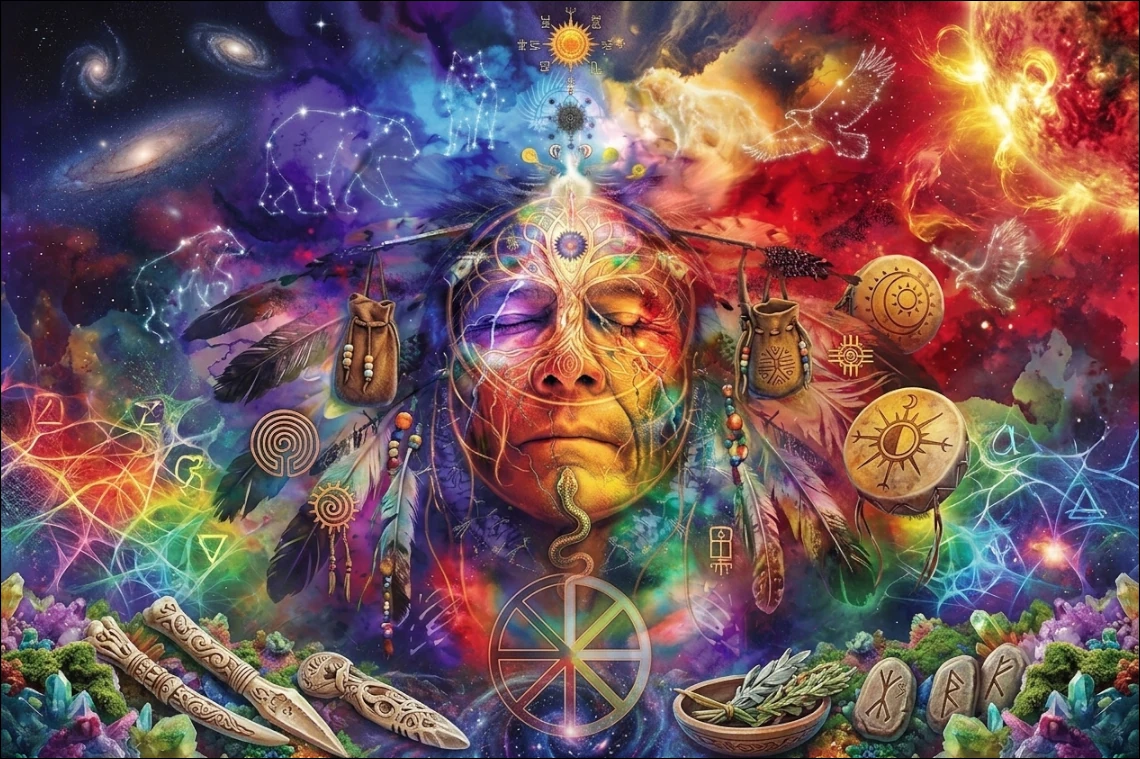
In its simplest form, shamanism is built on a powerful idea: everything has a spirit. The mountains, the rivers, the animals, the plants, the wind. And there are people with a special sensitivity — Shamans — who can navigate between the physical and spiritual worlds to bring healing, knowledge, or balance to their community.
But shamanism is much more than that. It is a way of understanding life, illness, health, and the cosmos that has survived centuries of colonization, persecution, and modernity. And today, curiously, it is more relevant than ever.
Where does the word “Shaman” come from?
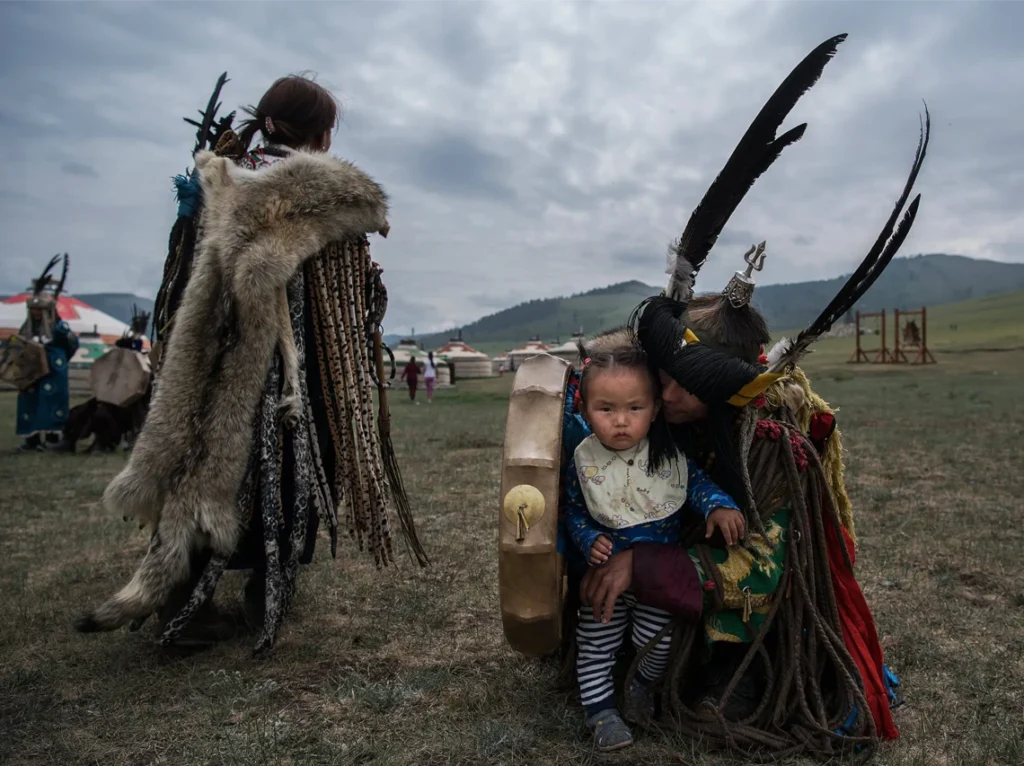
The word “Shaman” has a surprising origin. It doesn’t come from Latin, Greek, or any indigenous American language. It comes from Siberia. Specifically, from Tungusic, a language spoken by the Evenki, a nomadic people of hunters and reindeer herders living in the Siberian taiga.
They called their spiritual specialists šamán (шаман). But what does šamán actually mean in Tungusic? Linguists believe the term is related to the verb “to know” or “to know deeply.” The Shaman was literally “the one who knows” — he who understands what others cannot see: the spirits of the forest, the language of animals, the hidden causes of illness.
What’s curious is that the indigenous peoples of America never used this word. For them, the spiritual specialist has other, much older and more local names: Curandero, Vegetalista, Paqo, Maestro. Each region, each ethnic group has its own term and approach.
But the term “Shaman” has proven useful as an umbrella to describe a phenomenon that appears in virtually all human cultures: the existence of people who act as intermediaries between the visible and invisible worlds. From the Shamans of the Arctic to the Sangomas of southern Africa, through the Curanderos of the Peruvian Amazon.
So next time you hear the word “Shaman,” remember: you are pronouncing a Siberian word thousands of years old that nonetheless describes something that exists in all cultures of the world.
Signs that shamanism is more alive than ever
You don’t have to look far to see that interest in shamanism is growing. Look around you:
- Netflix and streaming platforms are full of documentaries about ayahuasca, shamans, and transformational experiences. “The Last Shaman,” “Ayahuasca: Expanded Consciousness” — audiences devour this content.
- Wellness and lifestyle magazines increasingly publish articles about spiritual retreats, sacred plants, and ceremonies. It’s no longer a niche topic.
- In major European cities centers are appearing that offer ayahuasca ceremonies, temazcals, Ikaros singing circles, and healing sessions with Peruvian shamans. Amsterdam, Berlin, Barcelona, London are hotspots.
- Social media is filled with people sharing their experiences with sacred plants, showing tattoos of Shipibo symbols, or recommending retreats in the Peruvian jungle.
And the most interesting part: it’s not just about exotic tourism. More and more professionals — psychologists, therapists, coaches — are paying close attention to shamanic traditions, seeking to integrate their knowledge with modern psychology.
Peruvian shamanism: three traditions in one
What makes Peruvian shamanism special is that it’s not a single tradition but three major currents that coexist and enrich each other.
1. The Amazonian tradition (Vegetalistas)
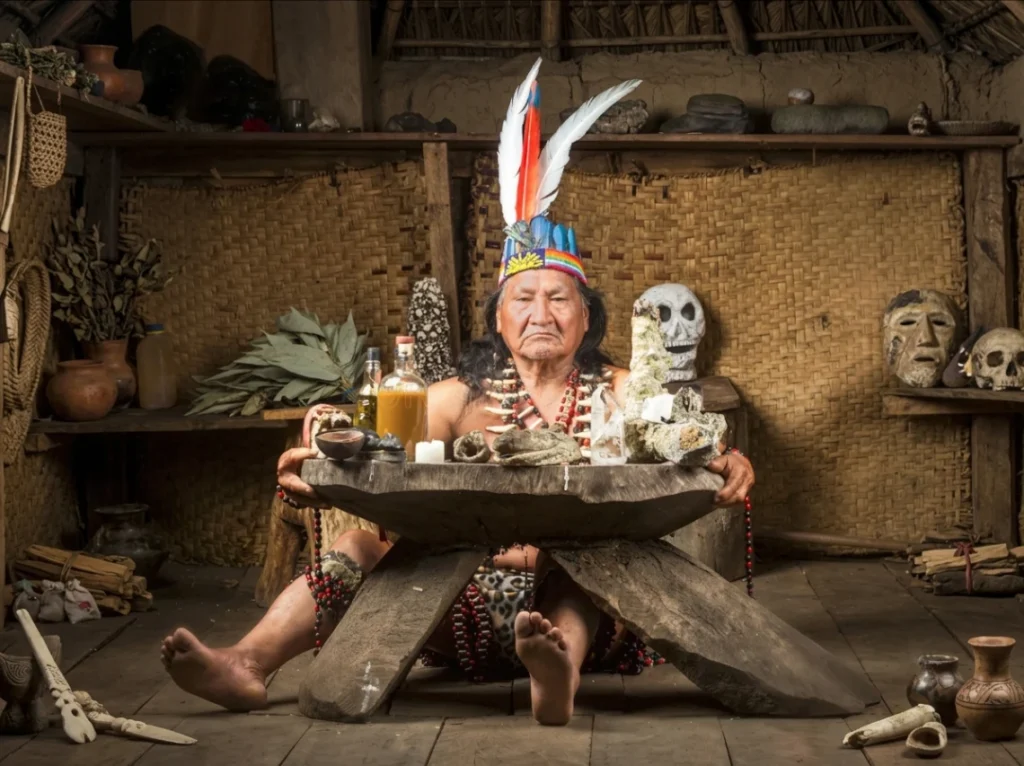
In the Peruvian jungle, the Vegetalistas work with the “master plants”: Ayahuasca, San Pedro, Mapacho, Chiric Sanango, Ajo Sacha. Their training is rigorous. They spend years in isolation, following strict diets, taking plants to learn directly from their spirit. The most internationally known are the Shipibo, whose art of the Ikaros (sacred songs) is recognized as cultural heritage. But there are dozens of Amazonian ethnic groups with their own shamanic traditions.
2. The Andean tradition (Paqos)
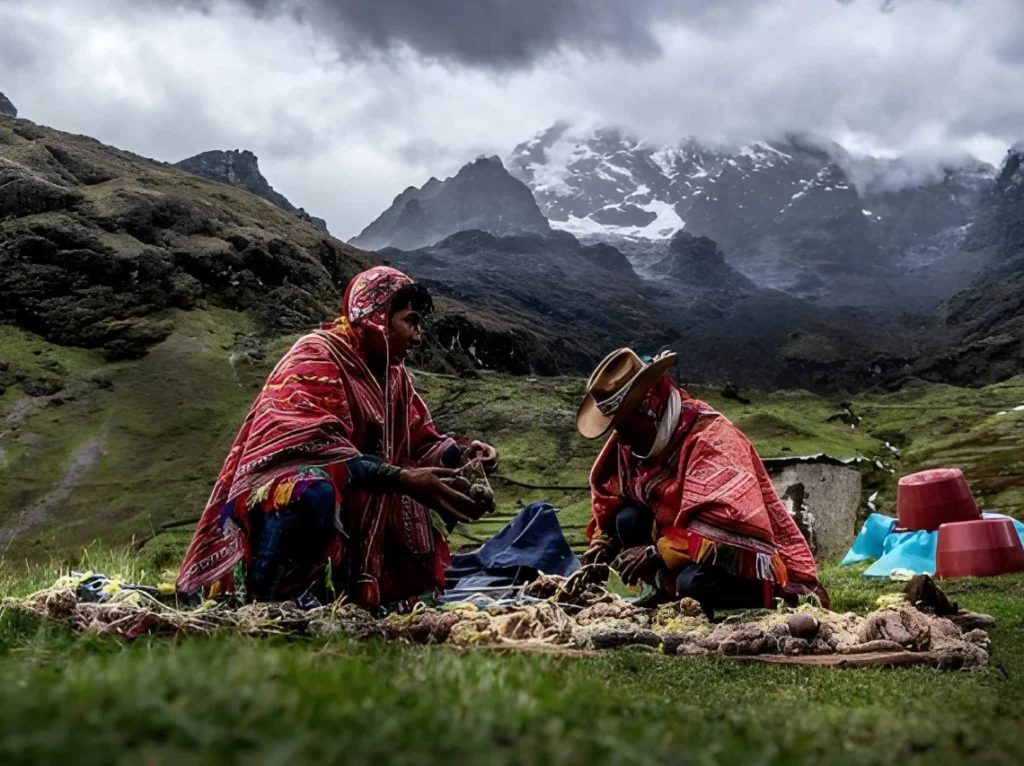
In the Andes, the Paqos maintain a tradition that dates back to the Incas and their predecessors. Their spiritual world revolves around the Apus (mountain spirits), the Pachamama (Mother Earth), and sacred lakes like Titicaca. They make pagos or offerings to ask for protection, health, or to give thanks to the earth. Unlike the Amazonian Vegetalistas, the Paqos do not use psychoactive plants. Their power comes from direct connection with the earth, the mountains, and the stars.
3. The northern tradition (Curanderos)
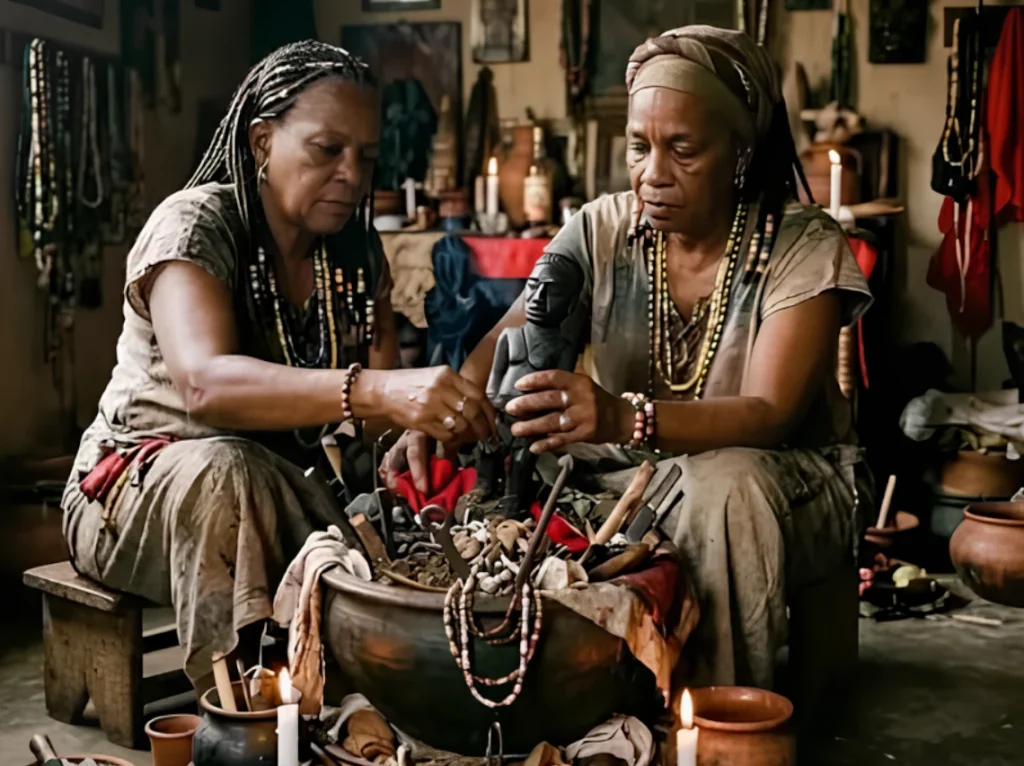
On the northern coast of Peru (Lambayeque, Piura), the Curanderos work with a unique tradition that blends indigenous Moche, Spanish, and African influences. They are known for their “mesas” — altars filled with power objects such as stones, swords, crosses, and sea shells — each with a specific spiritual meaning. San Pedro (Huachuma) is their main sacred plant, and their ceremonies are usually at night, full of symbolism and tradition.
Why is interest growing so fast in Europe?
This is the million-dollar question. And the answer has several layers.
First, the exhaustion of the Western lifestyle model. People are tired of chronic stress, disconnection from nature, the medicalization of everything. They seek experiences that restore a sense of connection and purpose. Shamanism offers exactly that: a way to reconnect with something greater than oneself.
Second, the mental health crisis. Anxiety, depression, and burnout are at record levels. Many people feel that conventional psychology and medication don’t provide all the answers. And they are starting to look toward ancient traditions that have worked with the mind and spirit for millennia.
Third, legal openness in countries like the Netherlands. Here, certain sacred plants like Ayahuasca are legal or tolerated in ceremonial contexts. This has made the Netherlands a European destination for those who want to experience these traditions without traveling to South America.
And fourth, the testimonial effect. More and more people know someone who has had a transformative experience. A friend who returned from a retreat saying “his life had changed.” A colleague who found relief for her anxiety after a ceremony. Word of mouth remains the best advertising.
Not everything that glitters is gold
With the boom in interest, problems have also appeared. Shamanism has become a business for some, and not everyone who calls themselves a “Shaman” has the proper training or ethics.
Be careful with:
- “Express Shamans” who offer ceremonies after a weekend course. A real Vegetalista’s training takes years, not days.
- Exorbitant prices for retreats costing thousands of euros that promise to “cure” all kinds of problems in a week.
- Cultural appropriation without respect for the traditions and communities that keep them alive.
- Promises of miraculous healing that can lead vulnerable people to abandon necessary medical treatments.
Properly understood shamanism doesn’t promise miracles. It doesn’t tell you it will solve all your problems in one night. A good Shaman will tell you that the path is long, that the most important work is yours to do, and that sacred plants are tools, not magic solutions.
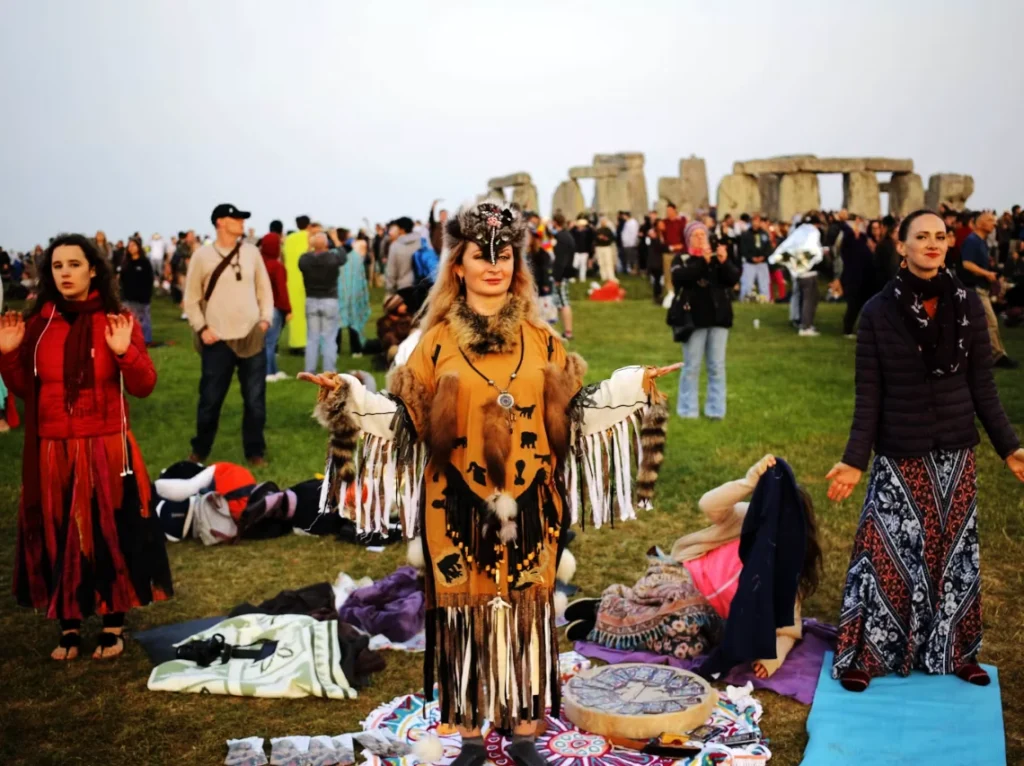
Why start here?
If you’ve made it this far, you’re probably curious about this world. Maybe you’ve heard about Ayahuasca in a documentary. Maybe a friend told you about their experience. Or maybe you’ve been feeling for a while that there’s more than what you see and touch every day.
Peruvian shamanism touches on fascinating topics: sacred plants, ancient rituals, connection with nature, and the search for healing. We don’t pretend to be the ultimate authority — there are no dogmas or absolute truths here, only useful information for those who are curious about this world.
So if you’ve ever wondered what shamanism really is, if you’re curious about what it feels like to participate in an ancient ceremony, or simply want to understand why so many people are talking about this… we invite you to keep exploring.
What do you think of this article? Leave a comment, share it with someone who might be interested, and subscribe so you don’t miss future content. Follow us on social media and be part of this community. Your participation makes this space grow!