This post is also available in:
 Español
  Nederlands
There is a sound every Peruvian recognises instantly: the metallic click of a bottle cap opening and the brief hiss of escaping gas. Then comes the sweet scent of lemon verbena and, with the first sip, a yellow, festive flavour that resembles nothing else. In Peru it is not just a soft drink: it is the companion of lunch, the witness of celebrations and, for millions far from home, a short trip back.
Behind that bottle lies a story of migration, of loss and of a family that refused to give up. A story in which a company born in an Andean country achieved something almost no one manages: beating the most powerful giant in its industry at home.
The boy from Doncaster who chose the Pacific
Joseph Robinson Lindley was born in Doncaster, in the English county of Yorkshire, in 1859. He married young to Martha Stoppanie and started a large family with her. The Second Industrial Revolution had transformed Europe, but it had also closed doors for many; the limited prospects in his homeland convinced Joseph to look for a better future on the other side of the ocean. His destination was not North America or a British colony, but Latin America.
The journey began in Chile, where the family collected failures and learned to get back up. With five children, the Lindleys headed north and reached the port of Callao in 1910. Peru offered them what they were looking for: an opportunity. And they, in time, would give the country one of its most recognisable hallmarks.
Santa Rosa, the factory that began in the Rímac
The Lindleys settled in the Rímac district, across the river, and started from zero. They founded the Fábrica de Aguas Gasificadas Santa Rosa, a name honouring the patron saint of Lima. Competing was hard: opposite them were companies with more technology, more capital and more years of experience.
Their advantage was something else: the family. While Martha prepared the syrup by hand, Joseph — who by then signed as José — and their children washed and filled the bottles one by one. That is how their first products were born, Lemon Squash, Orange Squash, Uvital and Lindley Dry, which began to be delivered around Lima. José, however, was looking further.
1935, the year Peru got its own drink
In 1918 the family bought its first semi-automatic machine, able to fill fifteen bottles a minute. Prosperity brought gratitude, and with it an idea: to create a drink that tasted of Peru, made with national ingredients and honouring its Inca heritage — the same heritage you still find in the history of the Incas and the Mayas. After years of testing they found the formula: a combination of thirteen native herbs, with lemon verbena in the leading role.
On 18 January 1935 the drink reached the market. The date was no accident: it coincided with the fourth centenary of the founding of Lima. José Lindley was clear about one thing: the intense yellow colour had to evoke gold, the precious metal of the Incas. And the slogan said it all: «There is only one Inca Kola and it is like no other».
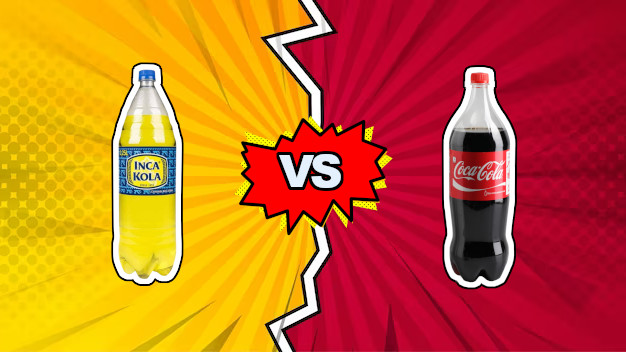
Inca Kola did not beat Coca-Cola with a marketing budget, but because Peruvians decided that its flavour was the flavour of home.
The arrival of Coca-Cola and the battle for the table
In 1936, barely a year later, the all-powerful Coca-Cola landed in Peru. The American company joined forces with the Barton family, owners of the Pureza bottler, and soon distributed its products across the country. Coca-Cola saw no serious rival in the yellow drink; everywhere it went, it had swept away the competition. But it underestimated something that cannot be bought or imported: a people’s pride in the flavour of home.
The following years were hard for another reason. Between 1932 and 1948 the family lost its leaders: patriarch José died in 1932, at 73; his eldest son, also José, in 1936; Nicolás in 1945; and in 1948, Martha. The company not only faced fierce competition: it had lost its key figures.
Isaac Lindley and the family that decided not to give up
The family met in extraordinary fashion to decide the company’s future. From that meeting a leader emerged: Isaac Lindley, determined to keep the legacy alive. His first big decision was to focus all efforts on Inca Kola as the flagship product.
In 1950 came his smartest move: a franchising model on a national scale, with local bottlers that carried the yellow drink to every corner of the country. Distribution was no longer a problem; it was an army.
The chifa, the move that won hearts
Something harder to manufacture was added to distribution: emotion. Johnny Lindley, Isaac’s creative son, understood that a drink is chosen not only for its flavour but for the table it is served at. He linked Inca Kola to Peruvian food and especially to the chifa, the Chinese-rooted cuisine that was already part of the national landscape.
The drink stopped being a soda and became the natural companion of dishes that are now on every table, such as those gathered in our guide to 7 Peruvian dishes every Dutch food lover should try. The campaigns «The Inca Kola Hour» and «The Drink of Peru» did the rest. In the 1980s Inca Kola already controlled 35% of the Peruvian soft-drink market, while Coca-Cola was stuck at 21%. The news travelled the world: a family business had won on its own ground.
When the giant had to negotiate
Growth did not stop at the borders. In the 1990s Inca Kola had bottling plants in the United States, in several Latin American countries and even in Thailand. In Peru, McDonald’s broke its exclusivity with Coca-Cola in order to offer the yellow drink in its combos.
The family knew, however, that global competition was something else. In 1996 talks with Coca-Cola began and, three years later, they reached an agreement: the American company bought 40% of the shares for 300 million dollars. The Lindleys kept control of production in Peru and the right to bottle Coca-Cola products; the multinational took charge of global distribution, especially in Asia, where the flavour suited the local cuisine. The Peruvian brand remained Peruvian.
A bottle that still tells who we are
The story of Inca Kola is, at heart, that of a family that found opportunities where others saw obstacles. As Isaac Lindley summed it up: «He who works with his hands, his head and his heart achieves the impossible». It is also a reminder that cultural identity can be an asset: a flavour, a colour and a memory turned into a brand.
For the Peruvian community in the Netherlands, that yellow bottle has a double meaning. You find it in restaurants and shops across the country, and you only have to open it to see the table of home again for a moment. It is the same drink that accompanies a chifa in Amsterdam or a lunch in Breda, and also a bridge for those who were not born in Peru but want to understand its cuisine and history, just like other ingredients that are now part of our daily life in Europe.
From that factory in the Rímac to the tables of half the world, Inca Kola’s journey proves that a good story, told with pride, travels further than any advertising budget.
Did you know the origin of Inca Kola? Tell us in the comments which dish you would pair it with and share this article with anyone who enjoys Peruvian history. And if you want to keep exploring, subscribe for more stories about Peru and its people.