This post is also available in:
 Español
  Nederlands
There are smells that shouldn’t cross oceans. And yet they do. The smell of pollo a la brasa, cumin, ají, burning wood — it all fits into a kitchen in a small Dutch town, and from there it spreads like an echo that reaches all the way to Lima. Jenny Martínez knows this. She smells it every time she opens the oven. And every time someone tastes her chicken, she smiles: Peru has just landed at someone else’s dinner table.
Jenny has lived in the Netherlands for 22 years, is the mother of four children, and has spent over a decade turning the most emblematic dish of Peruvian gastronomy into her hallmark. But before the smell of pollo a la brasa filled her Dutch home, there was a girl who learned the value of hard work from her parents, a bridal shop that failed, and a husband who tasted her cooking and realized his wife had something that the Dutch needed to try.
What money can’t buy: a childhood in the neighborhood
Jenny grew up in Los Olivos, a district of Lima where the street was an extension of the home. Children played endlessly, in noisy groups that only scattered at the sound of a whistle — the universal code parents used to call their kids in for dinner or homework. In the days before cellphones, that whistle was like an urgent WhatsApp: one you can’t ignore, one that goes off and you know you have to answer immediately. And when it sounded, there were no excuses. You had to go inside. That’s how it was, spending time with neighborhood friends — no fancy toys, no great luxuries, but with something money can’t buy: a childhood full of what truly mattered.
In her memory, food was always a celebration. At home, every birthday began with the same question, spoken with a conspiratorial smile: what do you want to eat? Choosing her favorite dish was the greatest gift in the world, and for days Jenny and her siblings lived in anticipation until that one moment. Her parents, no matter what had happened that week, always knew how to make that day special. She watched them in the kitchen, felt important because she had chosen the menu, knew everything was made with love — that, more than the food itself, was what they were truly celebrating.
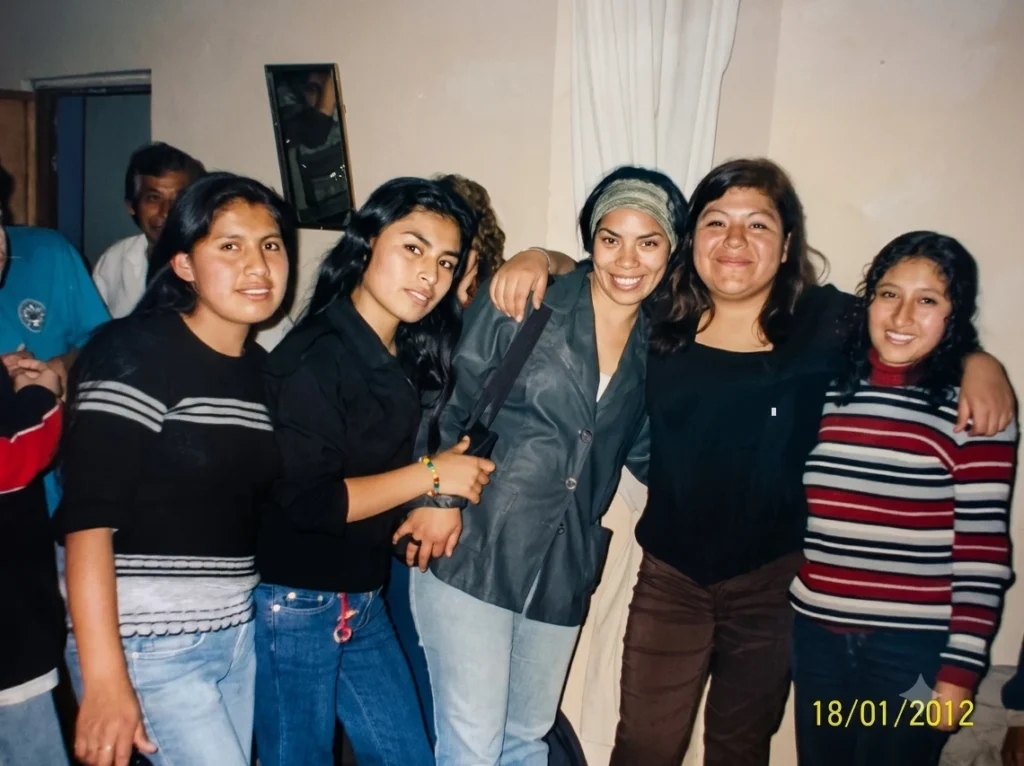
Leaving school is that moment every child knows: hunger and craving come together, with a rumbling stomach after a long day. For Jenny, the air at the school gate was filled with smells that stopped her in her tracks. Outside her school, the world smelled of crispy papa rellena, bread with chicken and ají pollero. Jenny still remembers the face of the woman who stood faithfully at the gate every day, with delicious food that made any tiredness disappear. Today, when she closes her eyes, she can feel those smells again: fried fish, papa a la huancaína, street ceviche. Those smells haven’t gone away. They come back like a photograph you don’t need to see to remember.
The parents and the restaurant that taught without meaning to
Her parents ran a small restaurant. It was so good that on Sundays people would wait on the street for a table. Her mother was a natural organizer — she knew how to find the best ingredients, even if she had to go all the way to Caquetá — and her father was a master of customer relations. They complemented each other like the two halves of a perfect recipe. And without Jenny knowing it at the time, something was planted in that simple, noisy, spice-filled kitchen that would bloom much later, on the other side of the Atlantic.
Before leaving for the Netherlands, Jenny balanced her teaching studies with weekend work at a liquor store. On one of those evenings, on her way home, life forced her to look straight into the eyes of something she had never imagined. A moment when danger paralyzed her completely, so real that it needed no name to be felt. Jenny came out unharmed, but that feeling — knowing you can die and that you won’t — stayed with her. That night she understood that life can change in a second, and that waiting for the perfect moment to act is a luxury you can’t always afford.
That’s how her first business was born: she started making chocolate cakes and jam to sell at her parents’ restaurant. It went so well that orders piled up. Without knowing it, she was practicing for what her life in Europe would become. The instinct was already there.
The leap: a sister, a new country
Jenny had no intention of leaving Peru. She had her life, her friends, her studies, a feeling that she was on the right track. But her two sisters were already living in the Netherlands, and one of them, Carmen, insisted daily: “You have to come to the Netherlands.” The doubt lingered for months, until she finally took the flight that would bring her to a new beginning.
The first three years were the hardest. The cold wasn’t just climatic. The food, the people, the rhythms — everything was radically different. Jenny had studied education and had a very active social life in Lima. Upon arrival, she had to learn to read and write all over again, this time in a language that sounded like nothing she knew. In Peru, you have a hearty, warm lunch in the middle of the day; here, bread with cheese and a glass of milk was the norm.
In 2008, Jenny started working at an agricultural company specializing in seed research and development. There she met her current husband, who worked on monitoring cash register systems. They met at work, ran into each other later at a party, and the rest — as she herself says — is history. But the moment she truly felt that the Netherlands was her home came later, with the birth of her first child. There, together with her husband and her son Nicolás, she knew she was no longer an outsider. She was a woman building a home.
Between two cultures: four children who know who they are
Today, Jenny has four children, half Peruvian, half Dutch. And to all of them, she has passed on the culinary heritage of her country. They know Peru’s national dishes. They know that criollo cuisine is a fusion that carries stories of slavery and migration. That Peru is a melting pot in every bite. Jenny tells those stories while she cooks, like a torch passed from generation to generation.
At home, Peruvian customs blend seamlessly with Dutch ones. Christmas Eve is celebrated on the 24th, New Year’s with rituals, and the kitchen is where both cultures meet without asking permission.
The turning point
The years went by. Money got tighter, and Jenny needed extra income. She tried a bridal shop with dresses imported from Spain — it was, in her own words, “a really bad idea.” Brides came stressed to her home, things didn’t work out, and she felt she wasn’t truly connecting with people. It wasn’t her place. It was a quick failure, but it left a deep lesson: it’s not about selling something, but about sharing something you truly carry inside you.
Until one day she made pollo a la brasa at home. With her father’s recipe, with the love you learn when you grow up watching your parents cook for a line of patient diners. Her husband tasted it and said a sentence that would change the course of the coming years:
“My husband tasted it and said: ‘This is delicious. The Dutch need to taste this. You have to sell this, it’s incredibly good.'”
And that’s how it all began.
2012: The first chicken
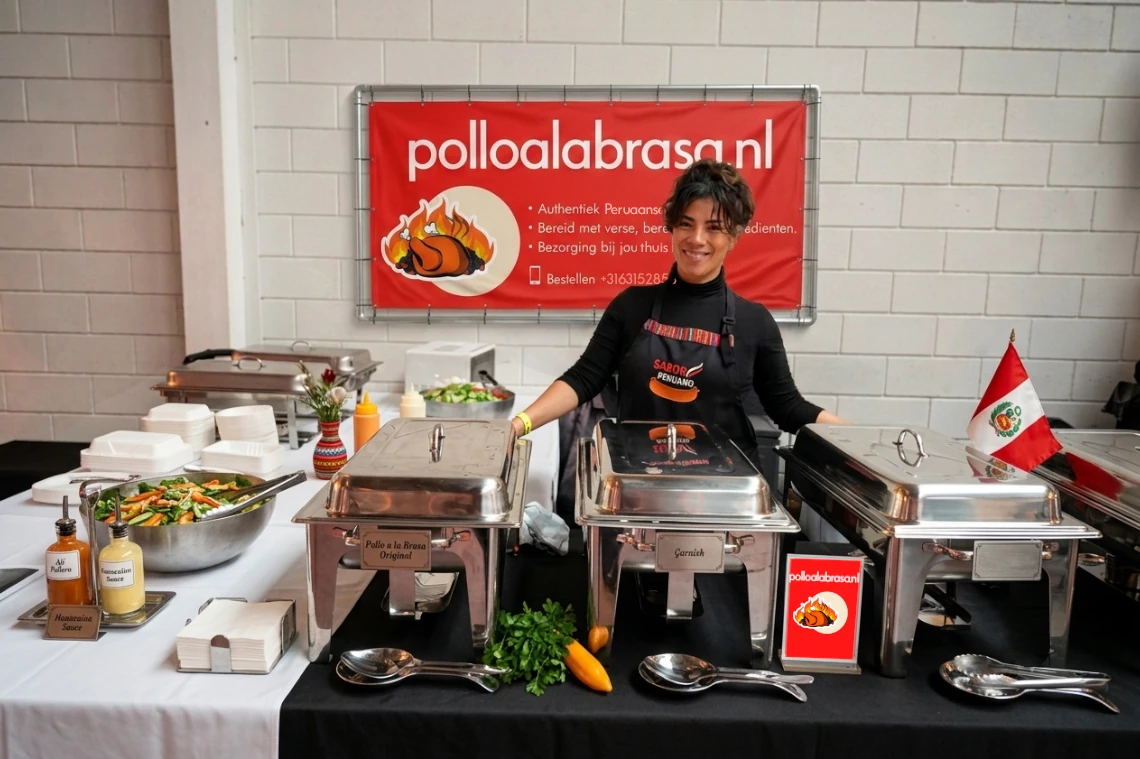
Her first event was in 2012, organized by two Peruvian businesswomen. Jenny came with her husband, put her chickens on the table, and the success was immediate — especially among the Peruvian community, who found in her cooking a piece of solid ground in the Dutch cold. But soon there was more: Dutch people started trying it too.
At first, Jenny had doubts. Dutch taste is accustomed to simplicity: meat with salt, potatoes, vegetables. Pollo a la brasa, with its spices and intensity, is almost a sensory event. But everyone who tried it was impressed. She hasn’t had a single complaint. On the contrary: introducing someone from another culture to the taste of Peru for the first time has become her deepest motivation.
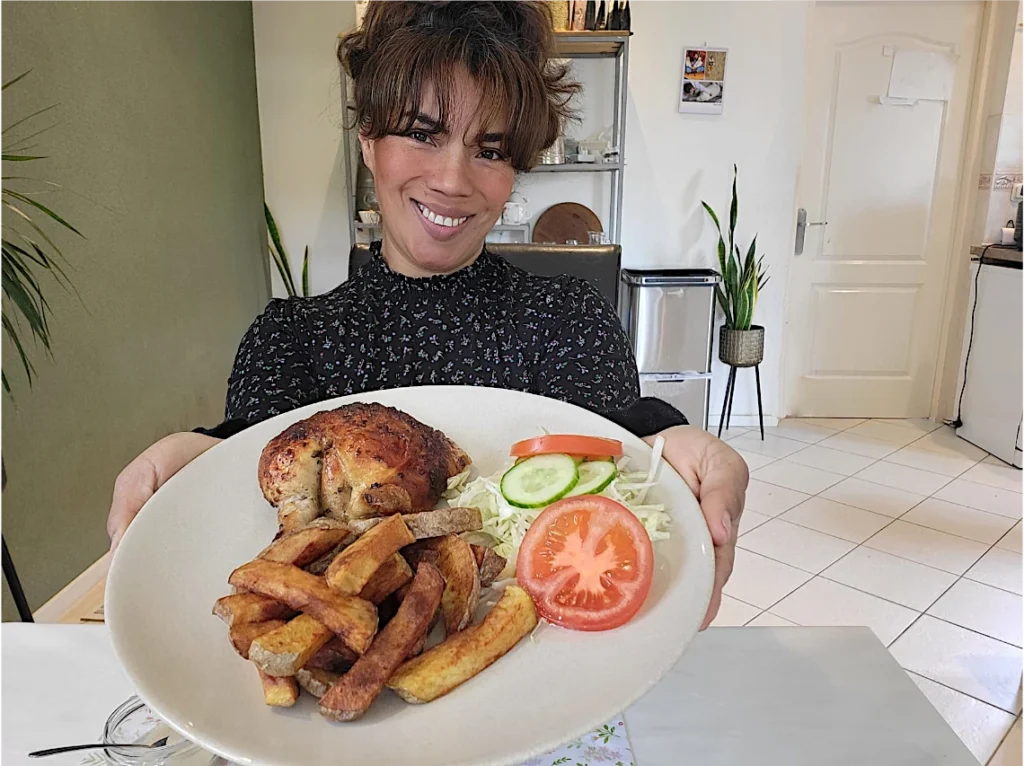
Jenny lives in a small town where access to international restaurants is limited. That turned out to be, far from an obstacle, her advantage: for many of her neighbors, her pollo a la brasa is the first time they taste something truly Peruvian. And they come back. They always come back.
A family secret worth its weight in gold
What’s the secret of her chicken? She won’t say. A family legacy isn’t something you just sell. But the most important thing isn’t the exact recipe — it’s what’s behind it: decades of tradition, a care you can’t learn from a book, the echo of a family that cooked with what they had and made people line up on the street.
That love is tangible. Her chicken has been tasted by people from Pakistan, Suriname, Italy, Poland — nationalities Jenny has long lost count of — and everyone left happy and amazed. For her, every dish that comes out of her kitchen is a small embassy. A reminder that Peru isn’t just a place on the map, but a flavor that fits at any table in the world.
“Pollo a la brasa is not just food, it’s also a feeling.” — Jenny Martinez
The dream of her own pollería
Jenny isn’t satisfied. She sells from home, participates in events, but her dream is clear: her own shop. A pollería where people can walk in, sit down, and eat her pollo a la brasa fresh from the oven, with the smell of cumin and ají filling the room. A place where Peru is tangible.
She says it with the certainty of someone who has already walked the hardest road: arriving in a new country, starting over, trying, failing, trying again, and finding in a dish the reason not to give up.
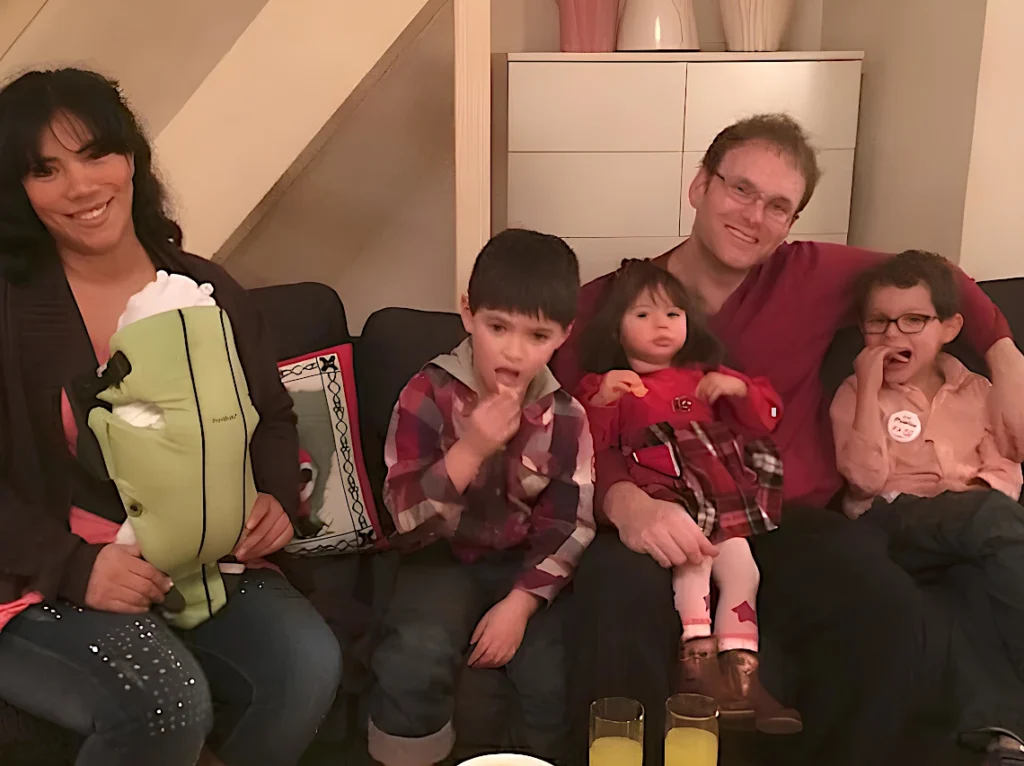
If Jenny has learned anything in all these years, it’s that entrepreneurship isn’t just about selling. It’s about doing something you love so much that the effort no longer feels heavy. The hardest part, she admits, isn’t the kitchen or the product. It’s the administrative side — the taxes, the bookkeeping — which her husband patiently handles while she does what she does best: cook with her heart.
Jenny Martínez’s story is the story of so many Peruvians building their country from afar, one dish at a time. A woman who turned a family recipe into a bridge between two cultures, who raised four bicultural children without letting go of her roots, and who proves that Peru fits anywhere in the world as long as there’s an oven burning and someone willing to share.
And if you want to try Jenny’s pollo a la brasa, keep an eye on her upcoming events and follow her on social media.
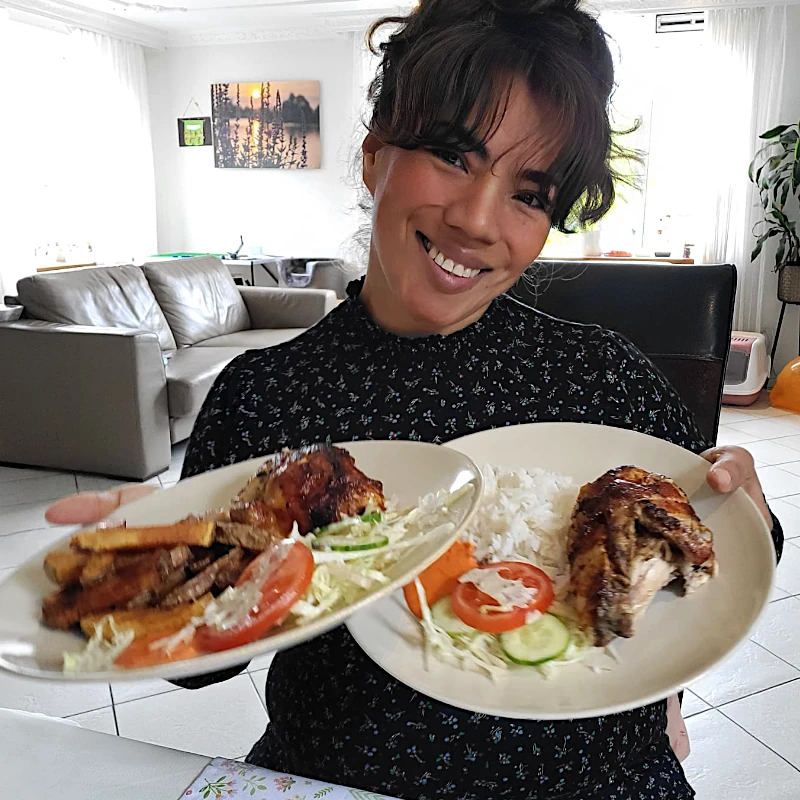
Do you know someone with a story like Jenny’s? Let us know in the comments. Share this article with your friends to help spread Jenny’s story.
At peruanos.nl, we continue to celebrate the talent and entrepreneurial spirit of our Peruvian community in the Netherlands.