This post is also available in:
 Español
  Nederlands
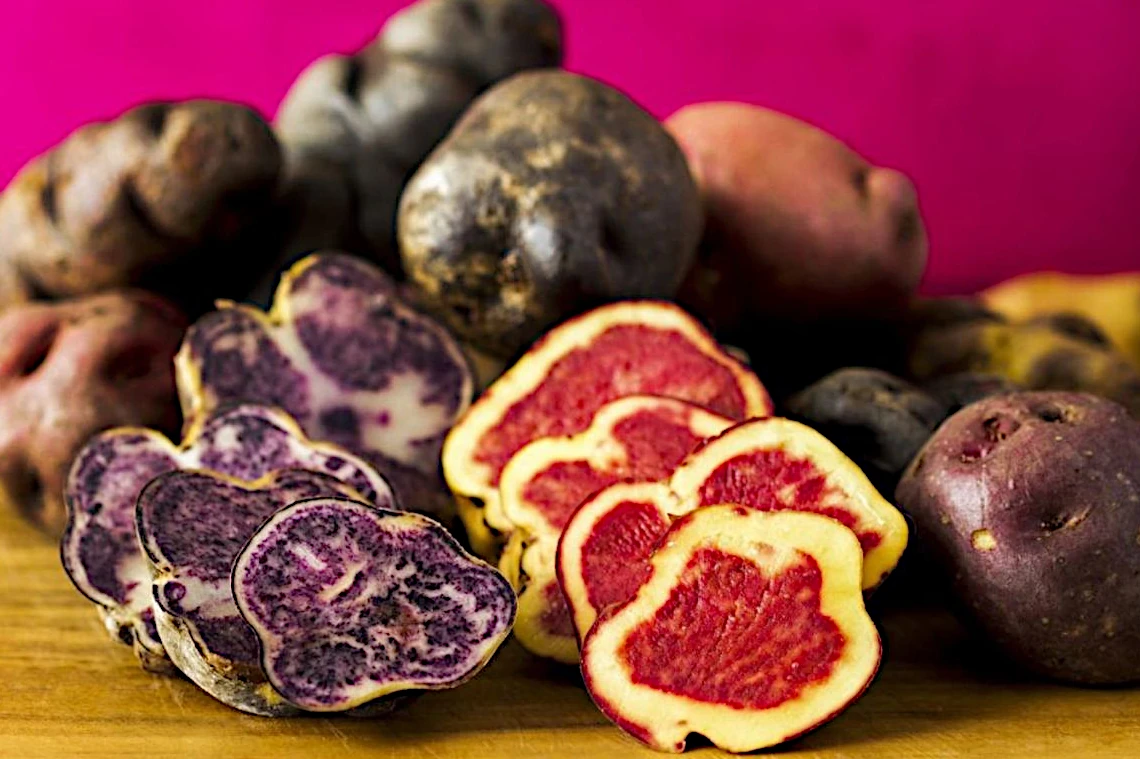
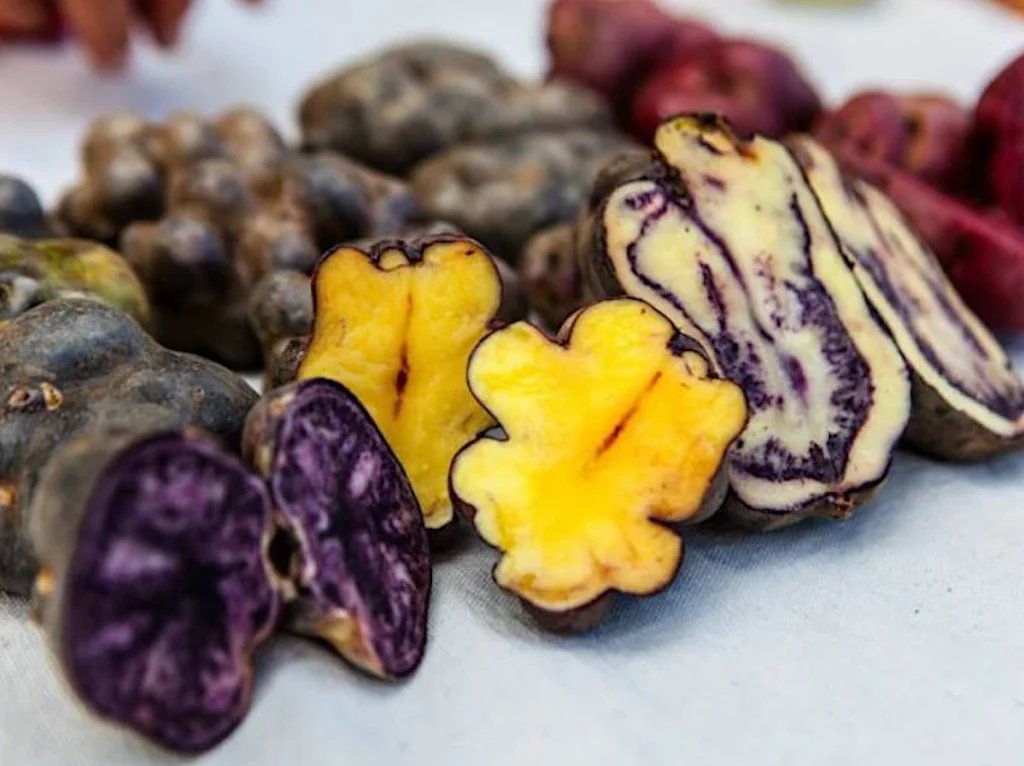
There’s a purple potato, almost black, with flesh of such an intense violet that it tints the water when boiled. Another that looks like a stone, rough and earthy on the outside but golden and creamy within. One so small it fits in the palm of your hand, and another elongated and twisted like tree roots.
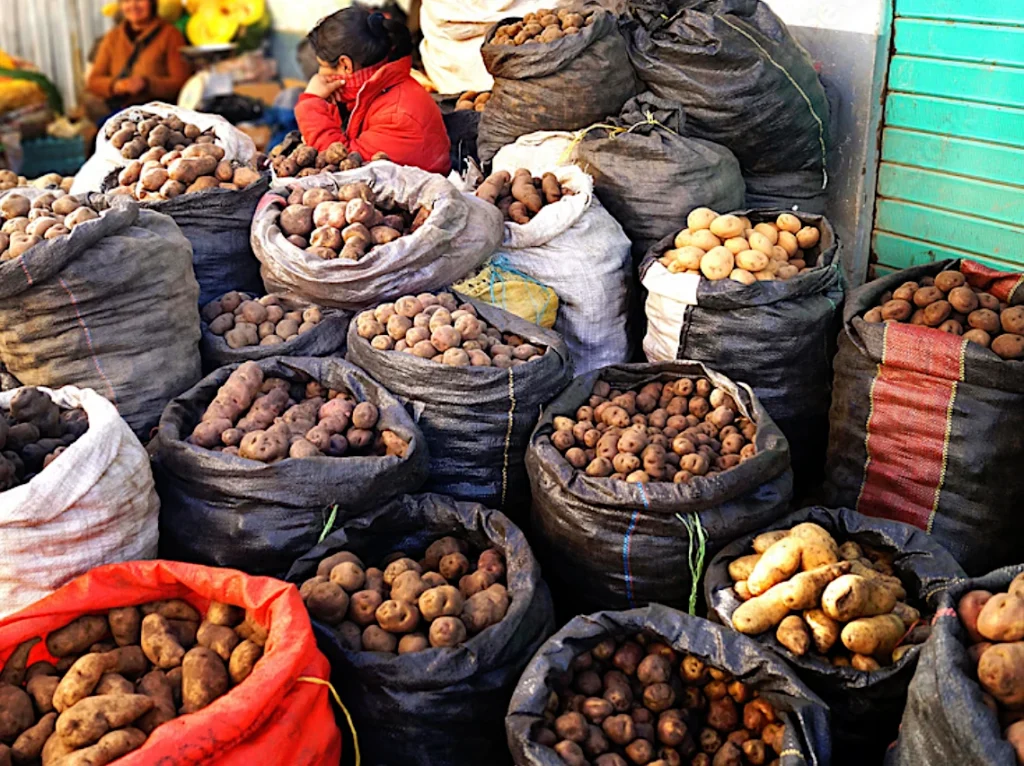
In Peru there is no single potato. There are over 4,000 varieties, each with its own name, its own story, its own flavor. They are children of the Andean soil, cultivated since long before the Incas, and today they are one of the most extraordinary living heritages of humankind.
The Origin Of It All: The Andes As Cradle
Approximately 8,000 years ago, on the shores of Lake Titicaca — that liquid border between Peru and Bolivia — the first inhabitants of the Andes began domesticating the wild potato. What they found was a bitter, hardy tuber, but with enormous potential.
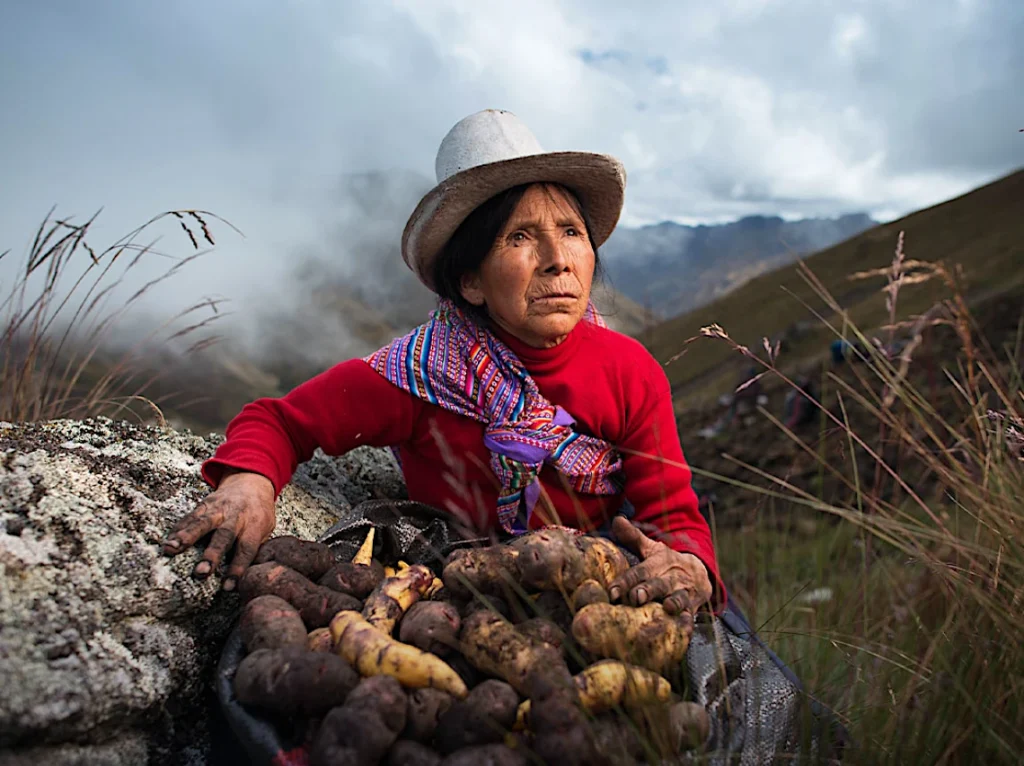
Through generations of observation and selection, they learned to turn bitter into mild, wild into cultivable, scarce into abundant. They created techniques like Chuño — freeze-dried potato that lasts for years — which allowed them to survive frost, drought, and long journeys.
“The potato does not only feed the body. In the Andes, the potato is a living memory of our ancestors, the certainty that the earth always provides.”
— Patricia Cáceres Huamán, Traditional Agriculture from Huasahuasi, Tarma – Junín
A Rainbow Underground
The 4,000 varieties are not a myth. The International Potato Center (CIP), based in Lima, maintains the world’s largest potato germplasm bank: over 4,500 accessions of native potatoes.
There are potatoes in every imaginable color: purple, blue, red, yellow, orange, even a pink one with white spots they call “la huayro”. Each color is not just aesthetics: purple and blue potatoes are rich in anthocyanins (powerful antioxidants), while yellow ones contain more carotenoids beneficial for vision.
Some emblematic varieties:
- Papa Canchán — the queen of modern Peruvian potatoes, yellow and floury, perfect for huancaína and ocopa
- Papa Peruanita — small, elongated, pink skin with white spots; mild flavor and firm texture
- Papa Tumbay — dark purple inside and out; used in desserts and native potato fries
- Papa Huagalina — elongated and twisted shape, ideal for boiled dishes and soups
- Papa Q’ompis — from the inter-Andean valleys, intense yellow, the favorite for mashed potatoes
- Papa Leona — huge, rough, light brown skin; yields generously in stews
From The Andes To The Supermarkets Of Europe
Today, what began on the slopes of the Andes feeds the entire world. The potato is the third most important food crop on the planet, after rice and wheat. But in that global journey, most of the varieties that reach the Netherlands are just a fraction of what Peru holds.
In any Dutch supermarket you find potatoes, of course — the typical aardappel for stamppot, the vastag, the kruimig — but native Peruvian potatoes are almost impossible to find. However, there’s hope: more and more specialized Latin American stores in the Netherlands are beginning to import dehydrated native potatoes, purple potato flour, and Chuño. You can also find frozen native potatoes at some toko’s and farmers’ markets.
If you’re a Peruvian in the Netherlands, the best way to reconnect with this flavor is by looking for yellow potato varieties at Latin markets. It’s not the original Peruanita, but its texture comes close enough for a good causa or lomo saltado.
How To Cook Peruvian Potatoes In Your Dutch Kitchen
The magic of native potatoes is that they don’t need much. Their flavor is so deep that simply boiling them with salt and a drizzle of olive oil is enough to experience them.
Quick ideas to try:
- Roasted Native Potatoes: cut into wedges with rosemary, garlic, and olive oil. They turn golden outside and stay creamy inside. Perfect as a side for salmon or a good steak.
- Purple Potato Causa: if you find Papa Tumbay or purple potatoes, boil them, mash with lime, yellow chili, and oil. Layer with pulled chicken, avocado, and mayonnaise. The purple color makes the causa visually stunning.
- Peruvian Stamppot: a cultural crossover — yellow potato mash with curly kale (boerenkool), smoked bacon, and a touch of huacatay or yellow chili. Serve with smoked sausage. Your Dutch grandmother would approve.
- Native French Fries: purple potatoes make crispy fries on the outside, soft inside, in a color that looks like art. Just salt and pepper.
A Legacy Worth Knowing
The 4,000 varieties of Peruvian potatoes are not just a fun fact to impress at dinner. They are the result of thousands of years of indigenous knowledge, love for the land, and cultural resilience.
Every time you eat a potato, you are eating a story. The story of a people who saw potential where others saw only a bitter tuber. The story of a biodiversity that the world is only beginning to appreciate.
Next time you walk through the potato aisle at a Dutch supermarket, remember: there are over 4,000 stories waiting to be discovered. Maybe some of them will soon arrive on Dutch shelves.
Have you ever tasted a native Peruvian potato variety? Let us know in the comments. We’d love to hear if you found it in the Netherlands or brought it back from a trip to Peru.